The chief beauty about time is that you cannot waste it in advance. The next year, the next day, the next hour are lying ready for you, as perfect, as unspoiled, as if you had never wasted or misapplied a single moment in all your life.– Arnold Bennett
After a good night’s sleep we were looking forward to today’s drive right across the South Island to Christchurch. Before leaving Greymouth, we decided to have a little look around the town which is the largest town on the West Coast. However, large is a relative term because the whole of the Grey District around the town comprises only 14,200 people which accounts for 43% of the West Coast’s inhabitants. In June 2022, the town itself had an estimated population of 8,320.
We were fortunate to have a sunny day in Greymouth because its mean annual rainfall is high by New Zealand standards and is distributed relatively evenly throughout the year.
Judging from its prominent monuments, it seems that the town has had more than its share of unfortunate events.
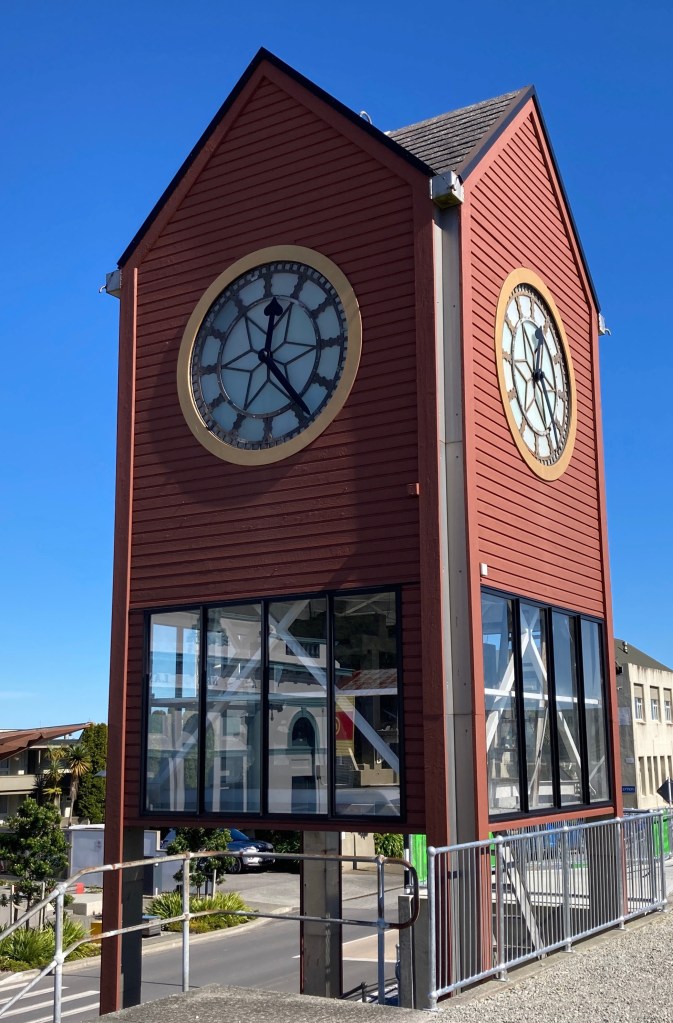
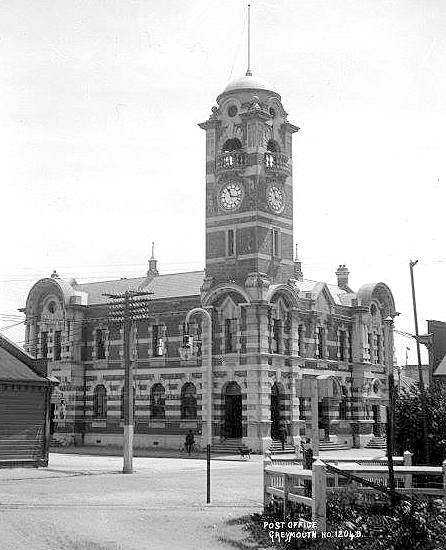
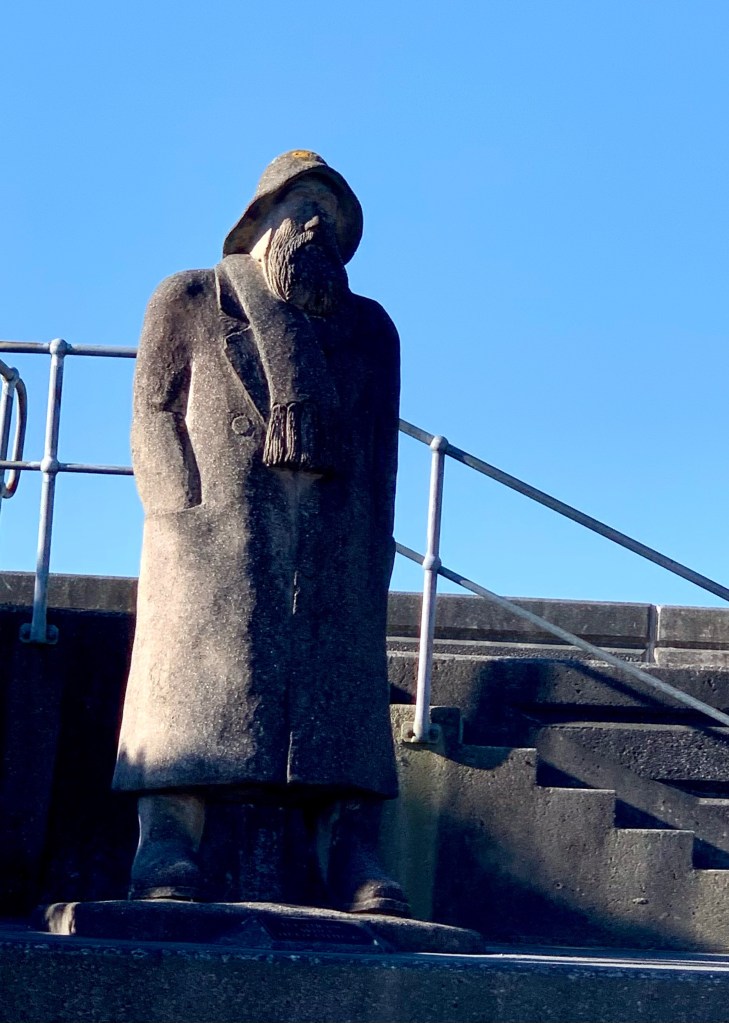
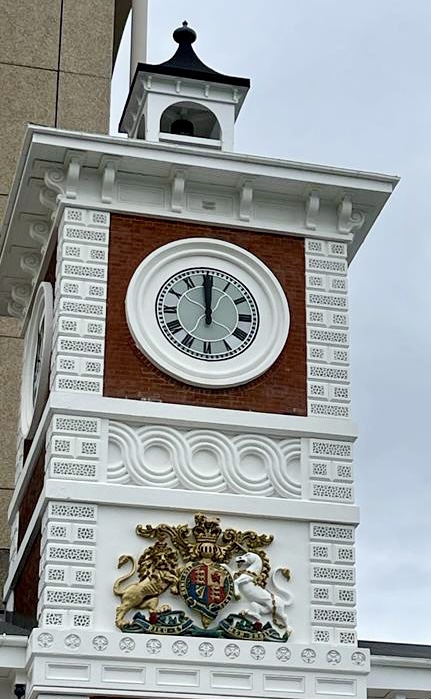
Greymouth Clock Tower is a replica that was erected in 1992 of the tower from the old demolished Post Office. In my opinion, the original was considerably more attractive and aesthetically pleasing. Sadly, the old Edwardian Baroque style Post Office building was badly damaged in the 1929 Murchison earthquake:The Fisherman Statue on the waterfront is dedicated “To those who help others”, it was carved by James Newby to commemorate the collective attempt to save the town from flooding with a sandbag wall in 1988. Shortly afterwards the Grey River Flood Protection wall was built.
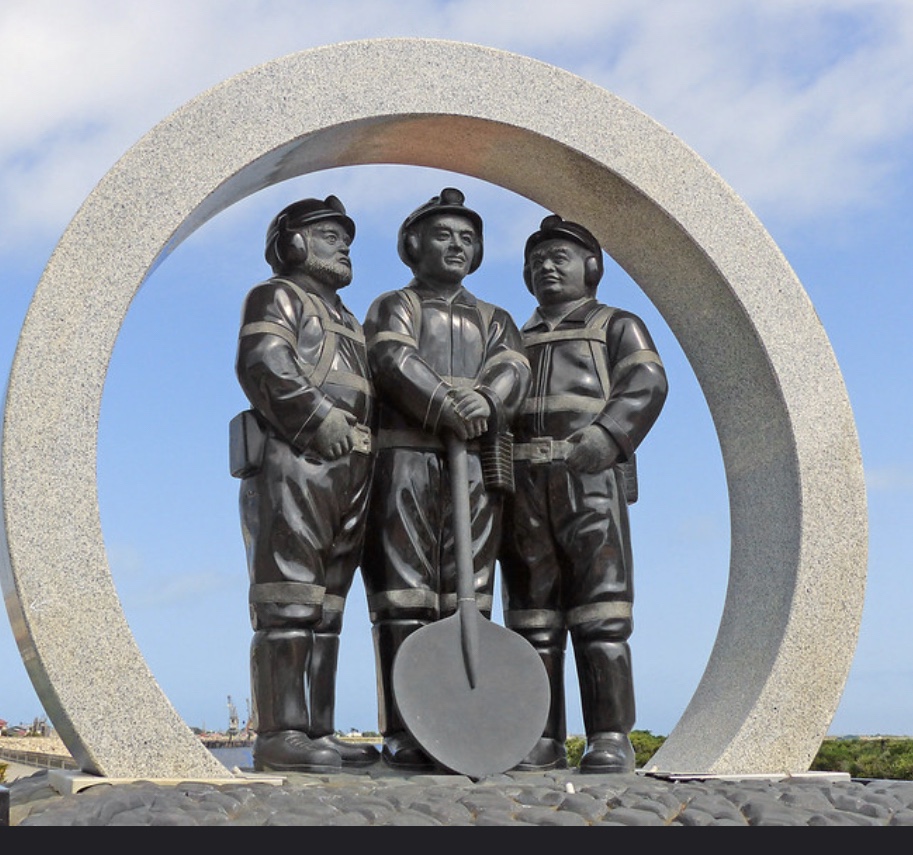
Also on the waterfront is a memorial “In memory of those lost in coal mining incidents within the West Coast Inspection District” – unveiled by the Mayor at the time – Tony Kokshoorn – on 19 January 2013 on the anniversary of the 1967 Strongman Mine disaster. By coincidence we were looking at the memorial on the 19th of January 2023, 56 years after that tragic event.
The sombre and solemn memorial statue commemorating the lives of miners who died in several mining disasters
The state-owned Strongman Mine was New Zealand’s largest underground coal mine. It had been open since 1939, and had an accident-free record. On 19 January, 1967, just after 10am, an explosion underground killed 19 of the 240 men who were working in the mine at the time.
The memorial also commemorates the lives of men lost in two other mining accidents. The deadliest mining accident in New Zealand’s history occurred at the Brunner mine on the 26th of March 1896 when an explosion tore through the mine at 9.30am killing almost half of Brunner’s underground work force. The final death toll was 65.
The most recent of the 3 accidents occurred at Pike River mine on the 19th of November 2010 when there was a large explosion caused by methane gases. A second explosion took place while the rescue attempt was underway and all 29 men still trapped in the mine died.
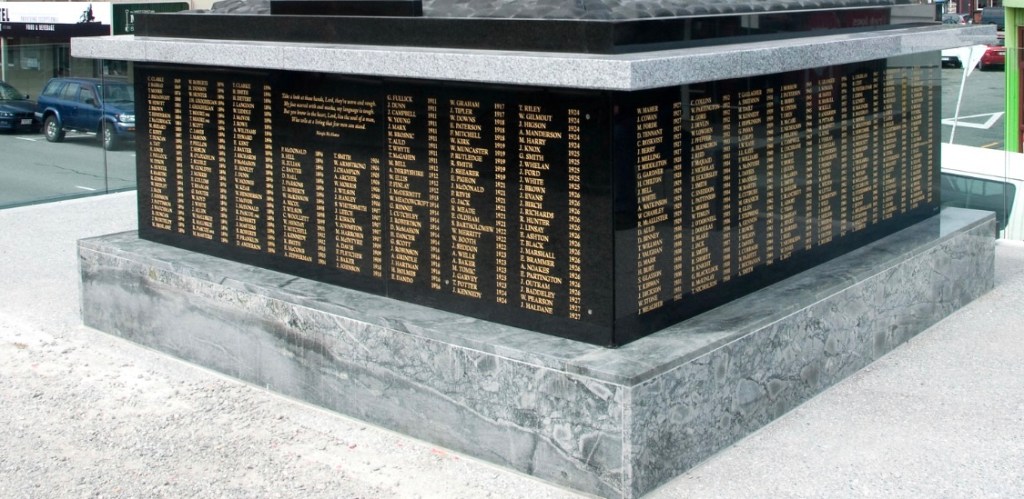
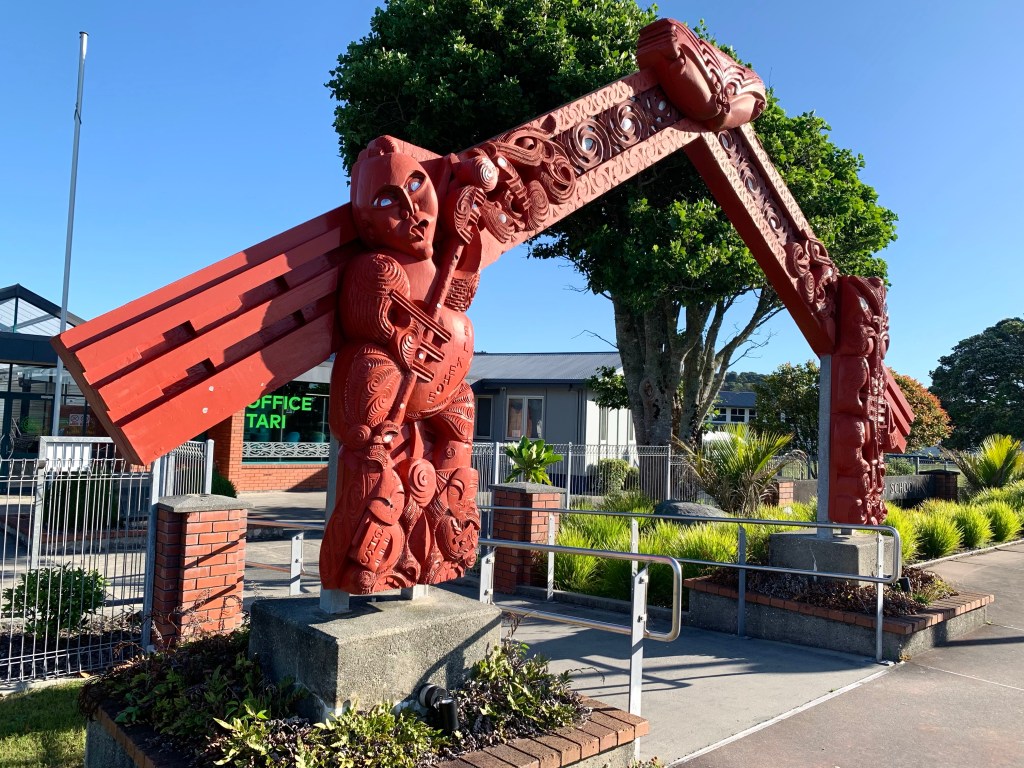
The base of the memorial statue lists the names of all the miners who have lost their lives in mining accidents on the west coast of the South IslandThe impressive entrance to Greymouth High School – the optimistic promise for the future A Greymouth treasureA somewhat disconcerting but perhaps prophetic juxtaposition
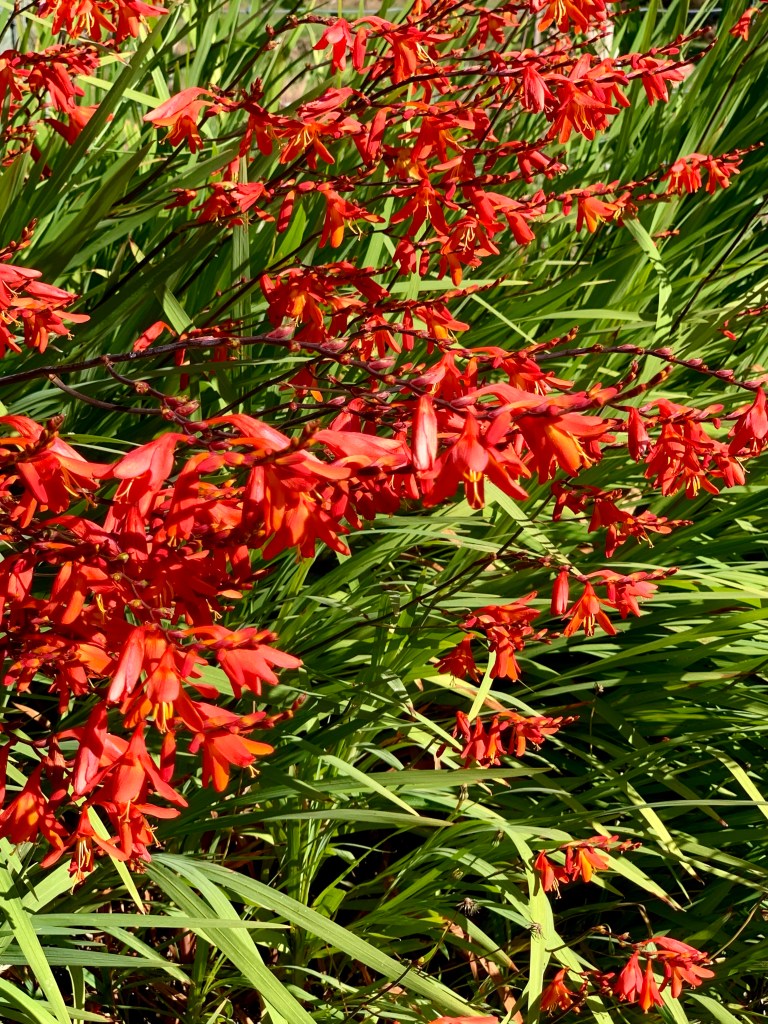
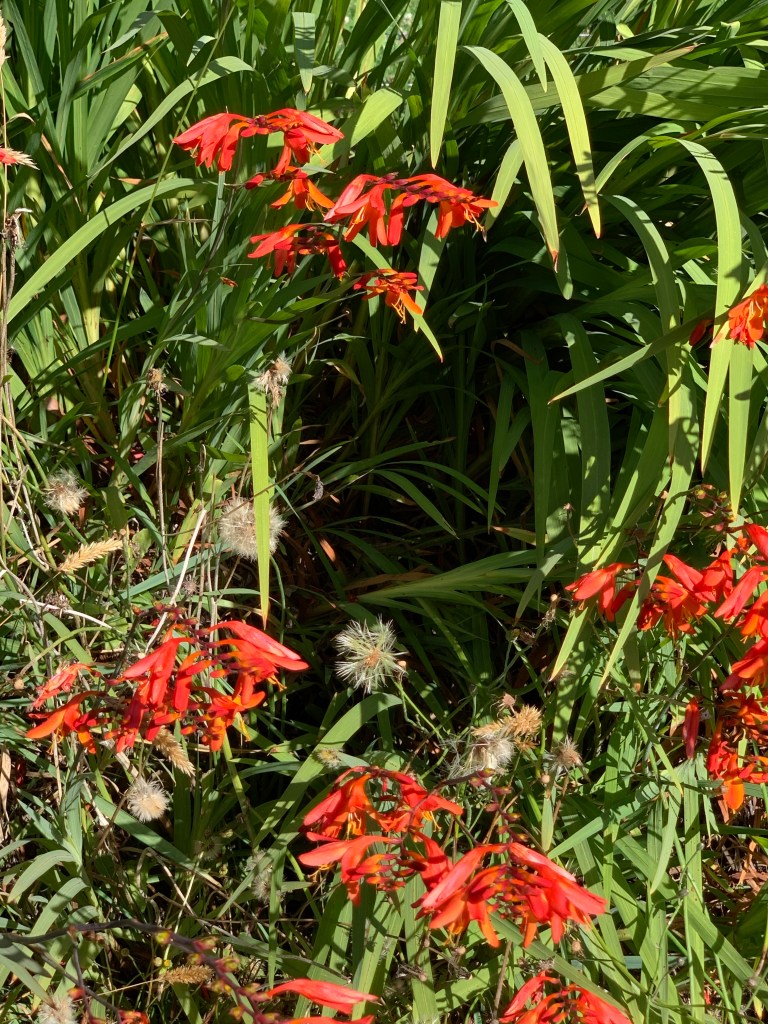
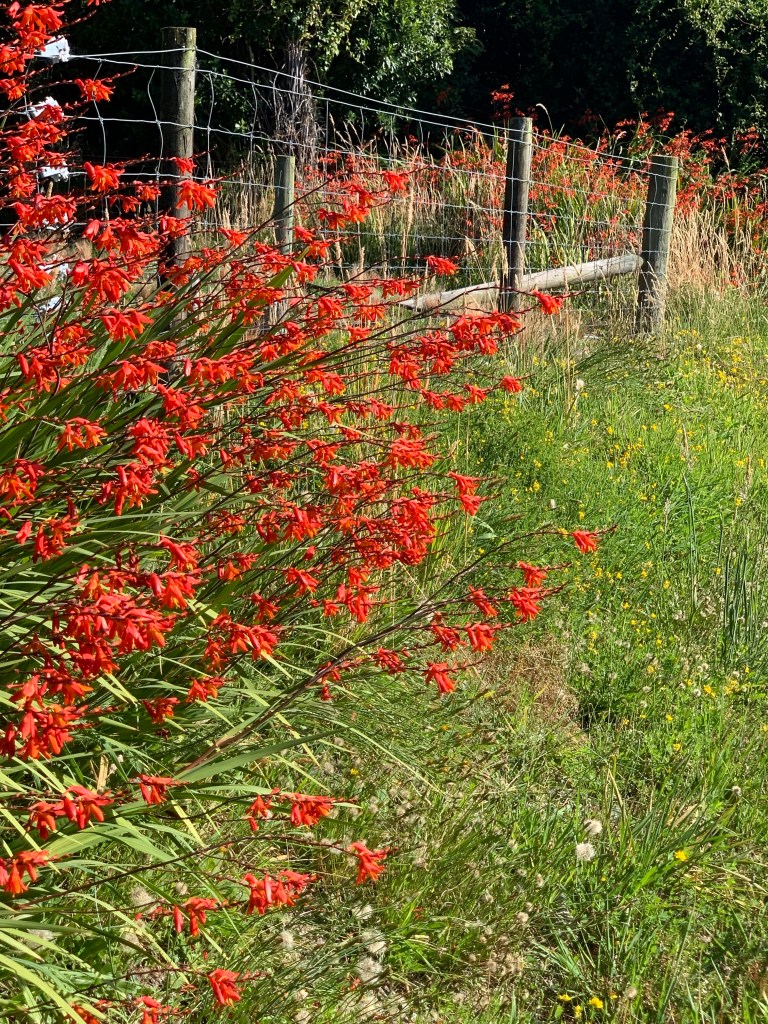
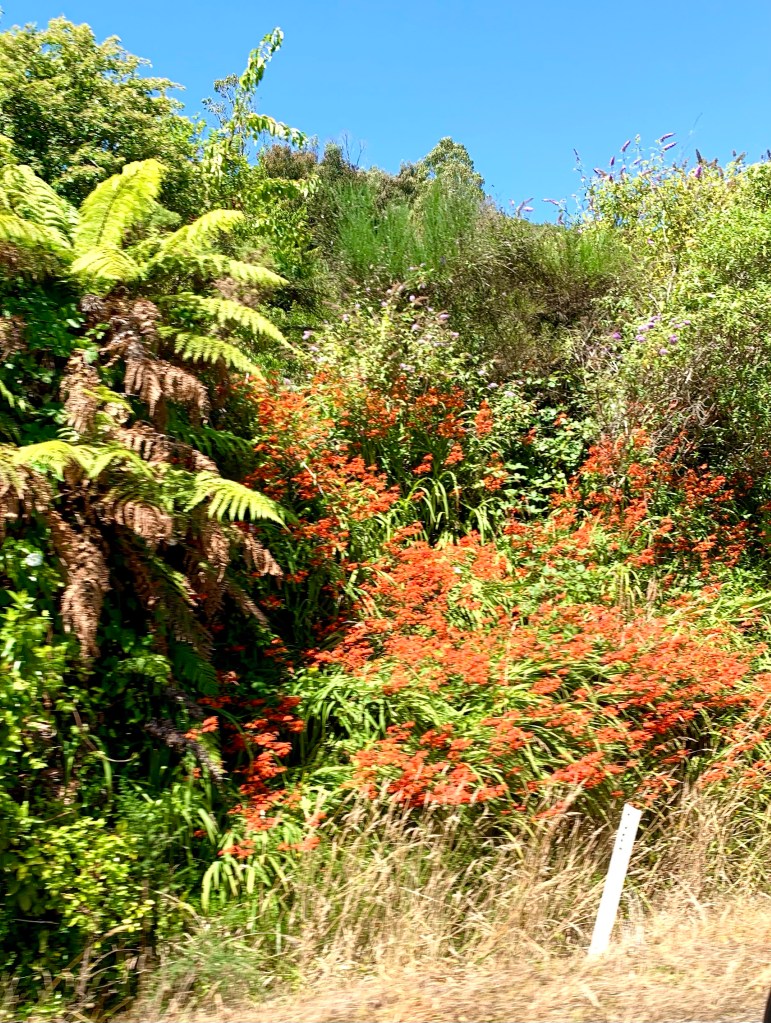
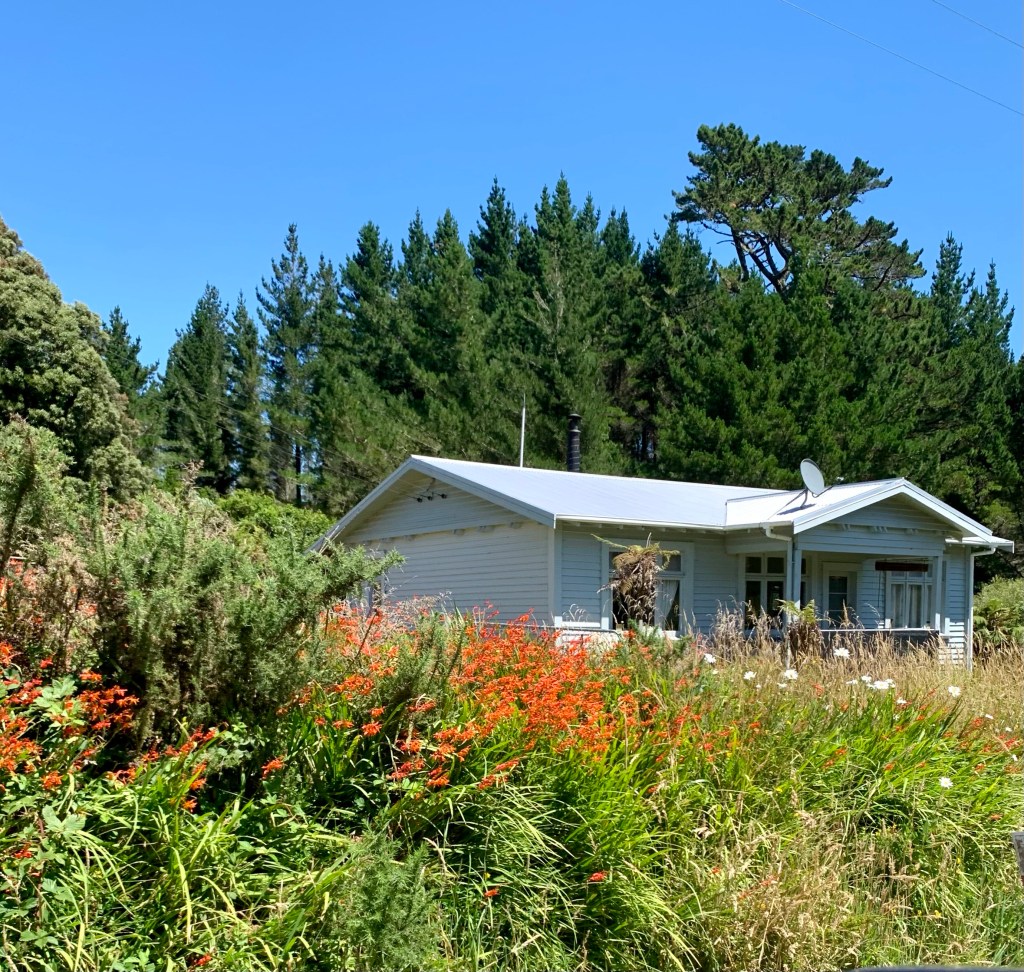
The South Island has an abundance of wild flowers and plants growing along the verges of all its roads which vary from one area to another. For quite a long distance towards Greymouth and away from it again, you can’t help noticing a very striking red flowering plant growing prolifically on both sides of the road like a red carpet.
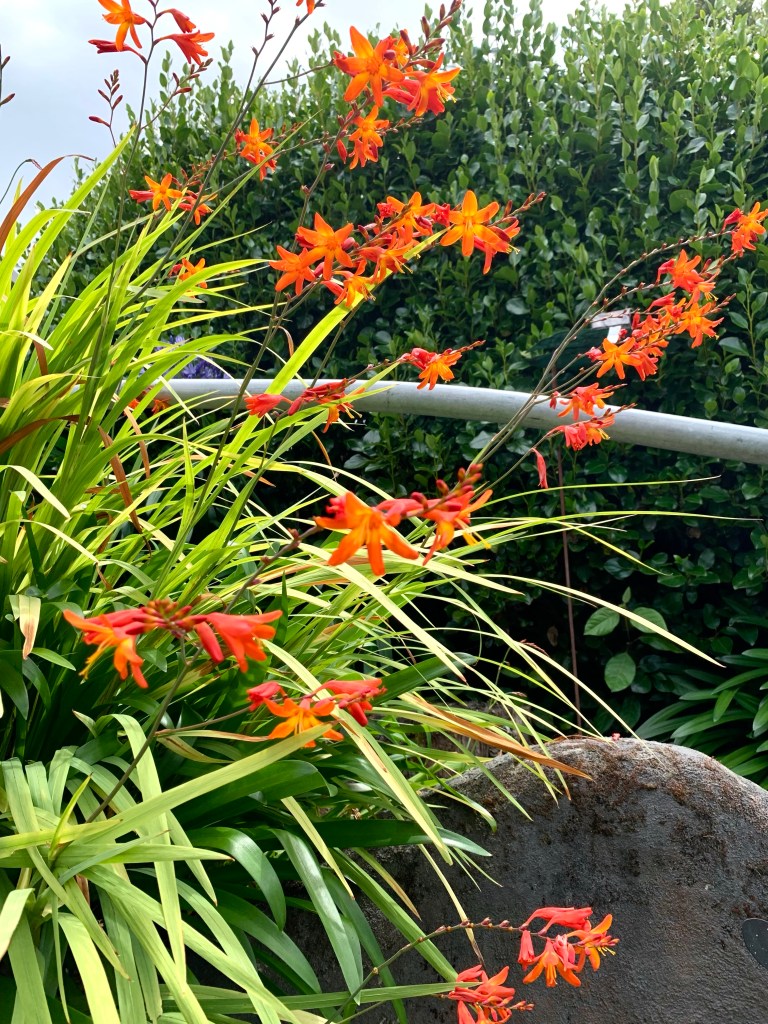
The gloriously coloured and beautiful Montbretia (Crocosmia x crocosmiiflora)
The Montbretia plant originates in Africa and tropical South America and was introduced to New Zealand as an ornamental species. It was recorded as naturalised in 1935. It is a hardy and fast-growing member of the iris family whose corms and rhizomes multiply rapidly. For this reason, it is considered an invasive plant species in the UK and, under the Wildlife and Countryside Act in England and Wales, it is an offence to plant or otherwise cause to grow this species in the wild.
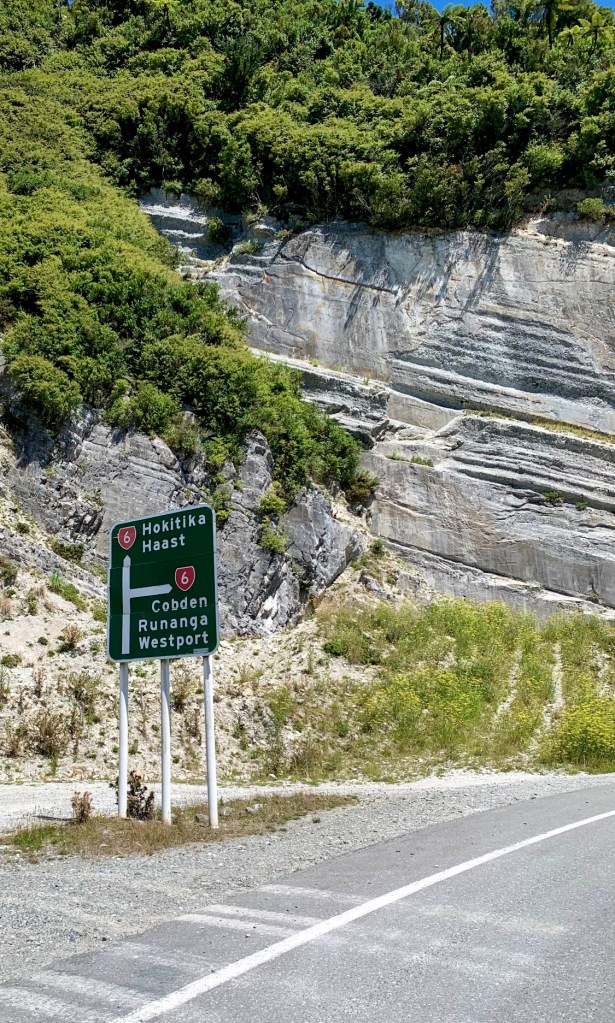
Leaving Greymouth in the direction of Hokitika and Haast and following the little flames of the Montbretia all the way to the junction of SH6 and SH7
We’re all mad here. I’m mad. You’re mad.” “How do you know I’m mad?” “You must be,” said the Cat, “or you wouldn’t have come here. Lewis Carroll Alice in Wonderland
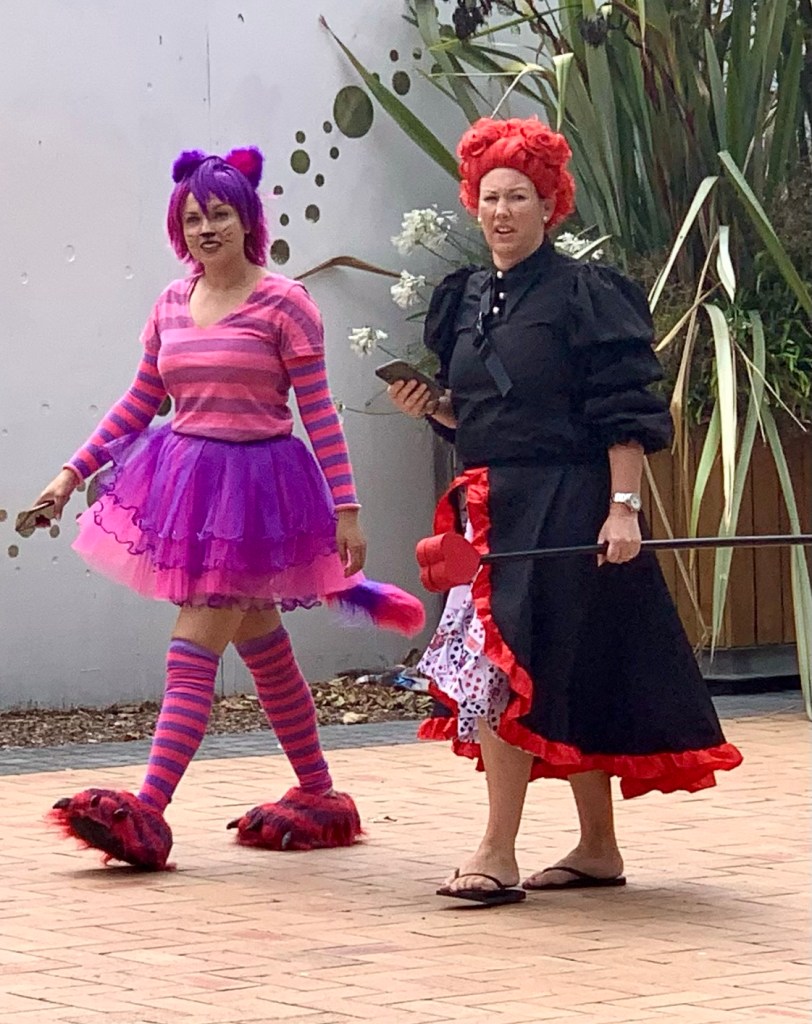
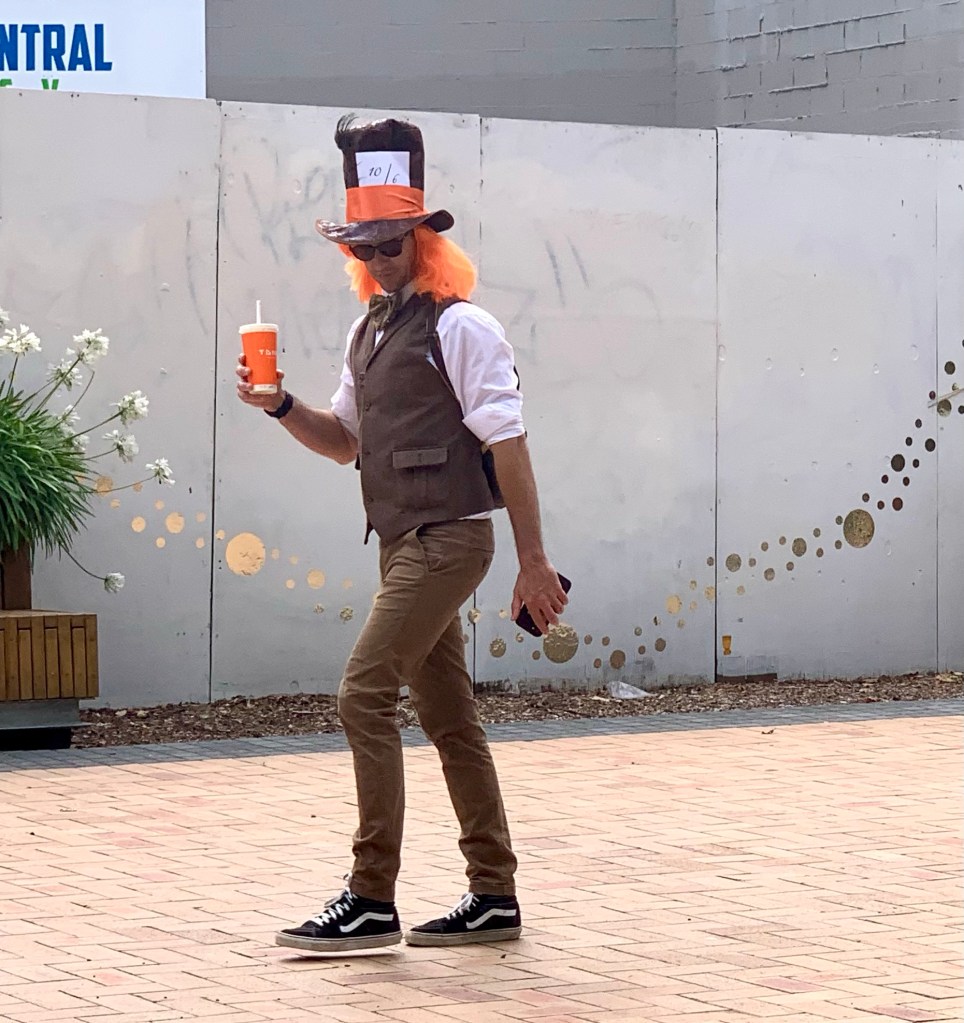
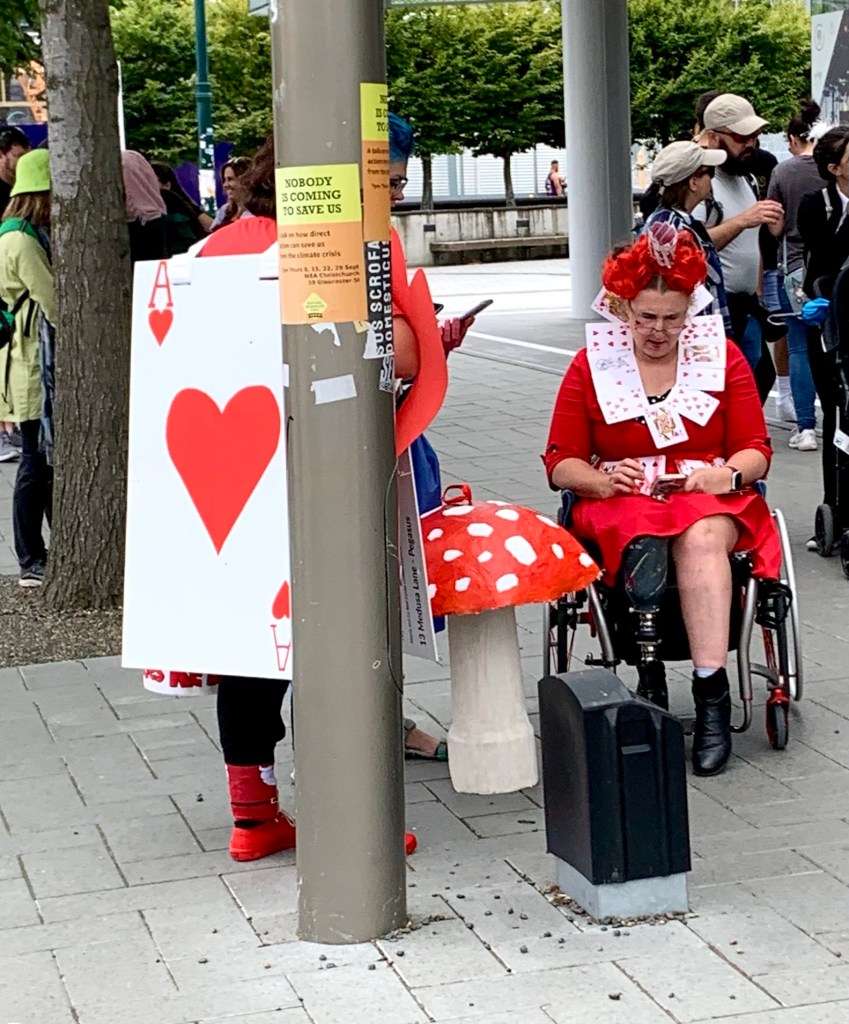
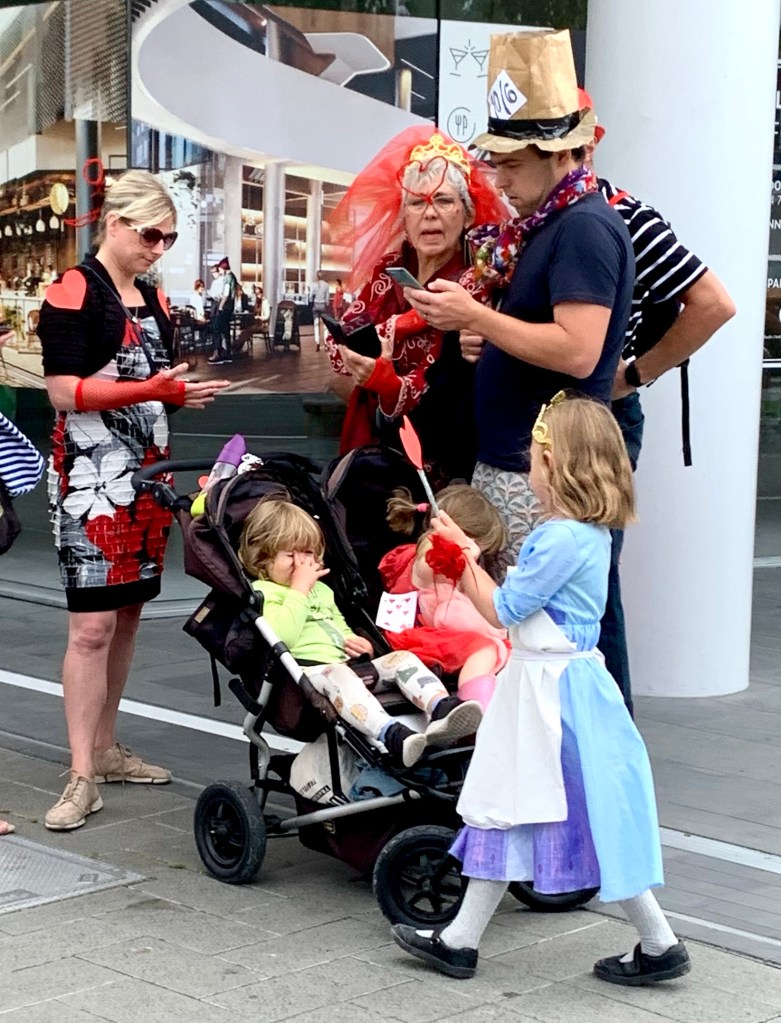
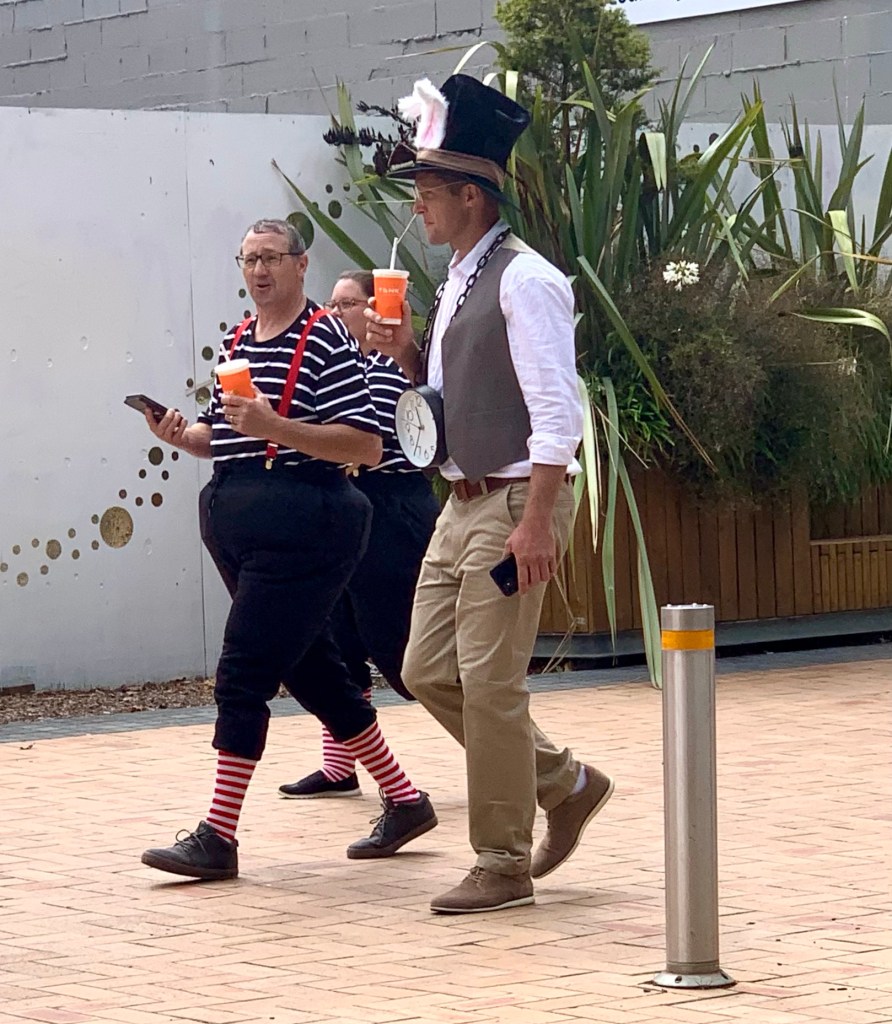
Neither of us has been to Christchurch before and so we didn’t quite know what to expect but, as it was Saturday today and a lovely sunny day, we anticipated that the city centre would probably be busy and full of people enjoying the sunshine. We had only just parked the car in a downtown pay parking area when we started seeing strange sights.
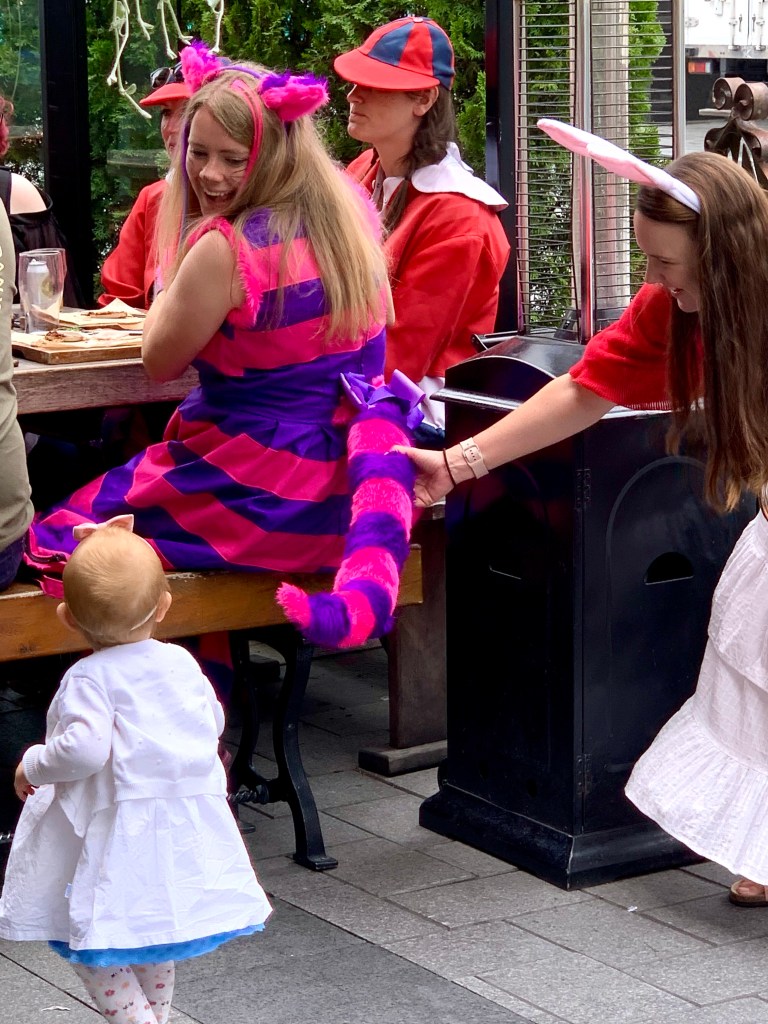
We never did find out why there were large numbers of people dressed up for a Mad Hatter’s party in town but my guess is that it was for some charitable purpose
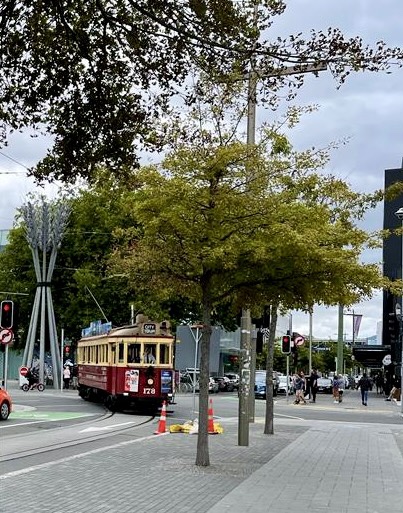
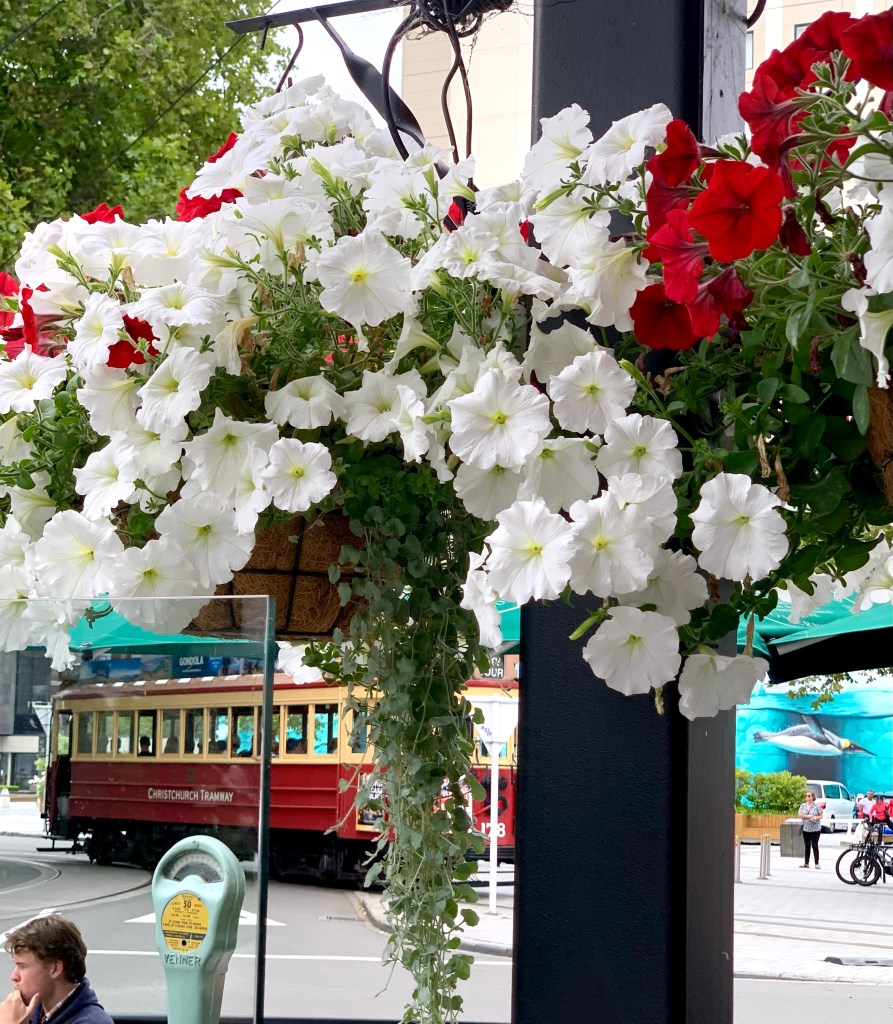
We decided to take a tram tour of the city to get an overview of the downtown area.
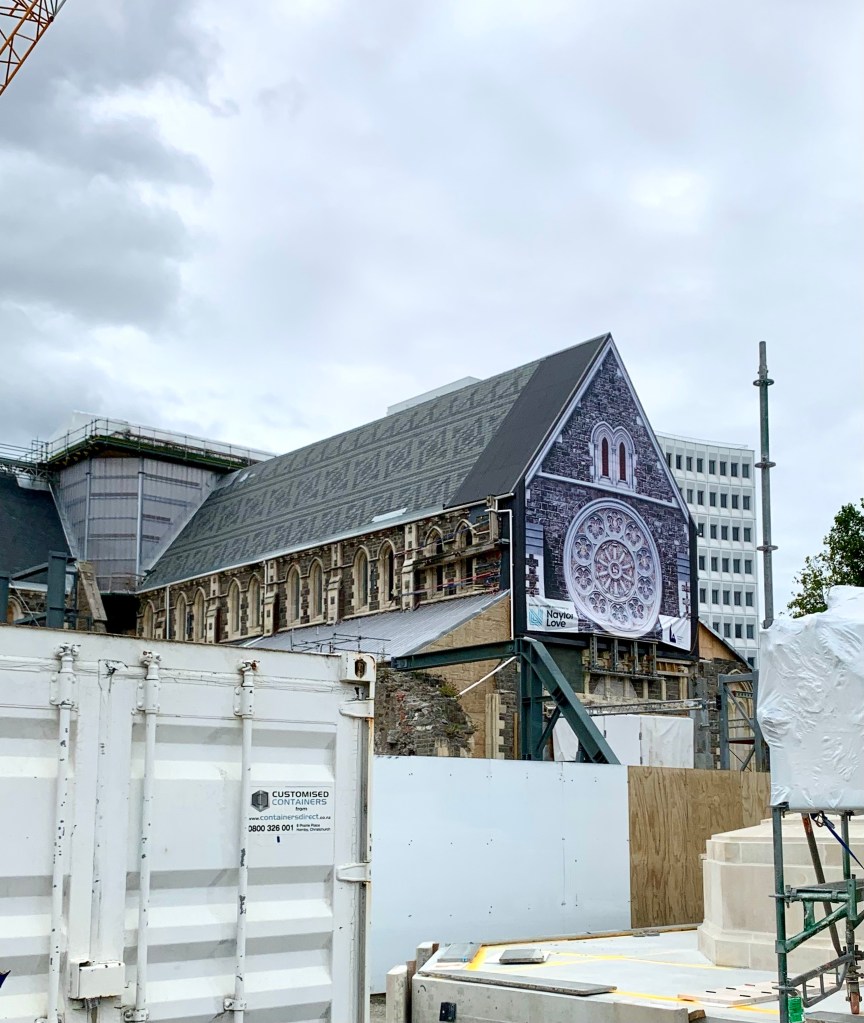
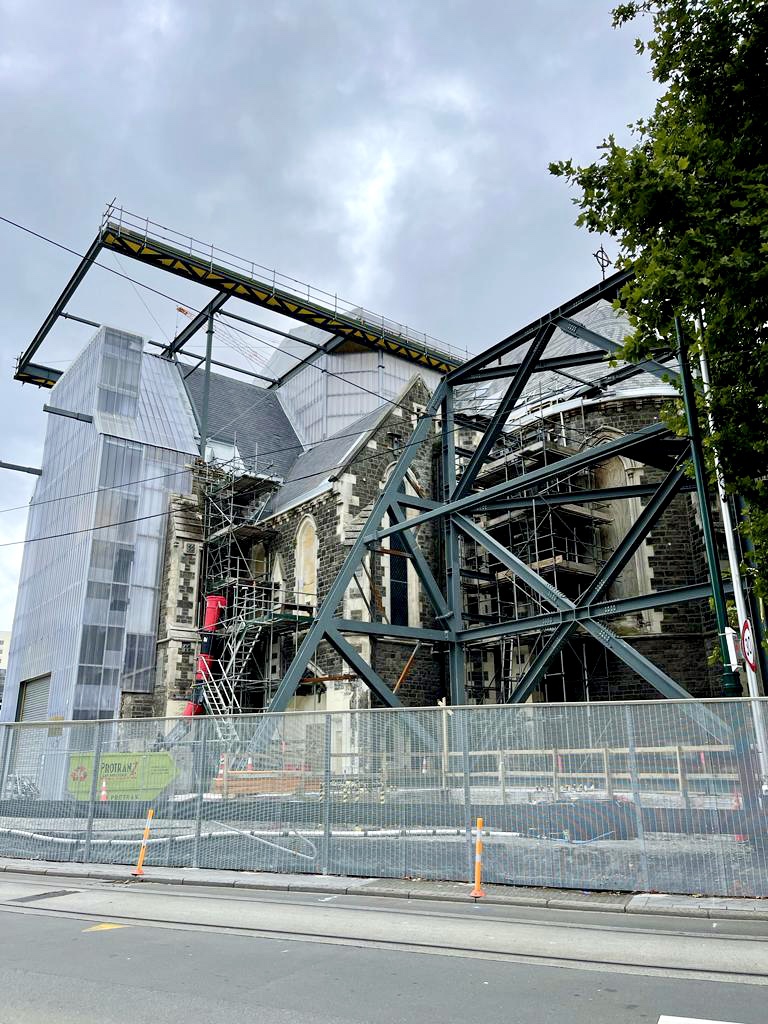
We boarded the tram in Cathedral Square which is where the Christchurch Anglican Cathedral is located. The cathedral was built between 1864 and 1904 and is right in the centre of the city. It seems to me to be a symbol for the whole city because it stands damaged and forlorn, shored up and wrapped up, waiting to be restored to its former state.
On the 4th of September 2010 a powerful earthquake struck the South Island of New Zealand with a magnitude of 7.1. Only a few months later, on Tuesday, the 22nd of February 2011 at 12:51 p.m, another major earthquake struck Christchurch and the whole of the Canterbury area with a magnitude of 6.2. The earthquake’s epicentre was only 6.7 kilometres south-east of the central business district, causing severe and widespread damage across Christchurch because many buildings and infrastructure had already been weakened by the September 2010 earthquake and its aftershocks.
Most of the damage occurred to older buildings, particularly those with unreinforced masonry and those built before stringent earthquakes codes were introduced in 1992. There were 185 casualties of the 2011 earthquake; most of whom were killed when buildings collapsed or by falling masonry.
Numerous earthquakes since 1881 have repeatedly damaged the Christchurch Anglican Cathedral, mostly the spire. The February 2011 earthquake destroyed the spire and the upper portion of the tower, and severely damaged the rest of the building. A lower portion of the tower was demolished immediately following the 2011 earthquake to facilitate search and rescue operations. The remainder of the tower was demolished in March 2012. The badly damaged west wall, which contained the rose window, partially collapsed in June 2011. Stabilisation and restoration work on the church began in mid-2019 but it is a very costly process and will take quite some time to complete.
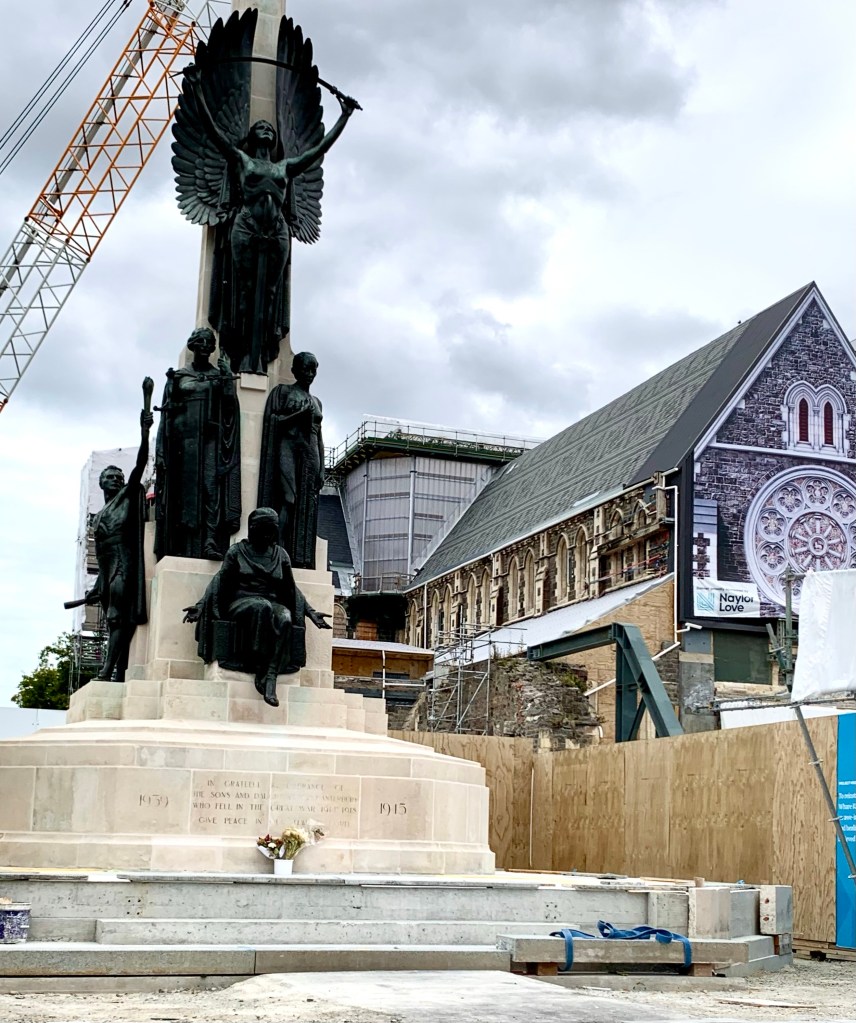
Christchurch First World War Memorial by William Trethewey. It was unveiled near the Christchurch Cathedral in June 1937.
The 16m tall bronze Soldiers’ War Memorial was originally proposed in 1919 and was finally completed very close to the outbreak of the Second World War. It consists of a group of allegorical figures: the centrally placed mourning figure of Sacrifice, flanked by Youth holding a torch, a blindfolded Justice holding scales, Peace with a dove and olive branch, and Valour in the armour of St George. Towering over them is a winged female figure representing Victory breaking the sword of battle. The engraving at the base of the memorial reads: In grateful remembrance of the sons and daughters of Canterbury who fell in the Great War 1914–1918 Give peace in our time o Lord.
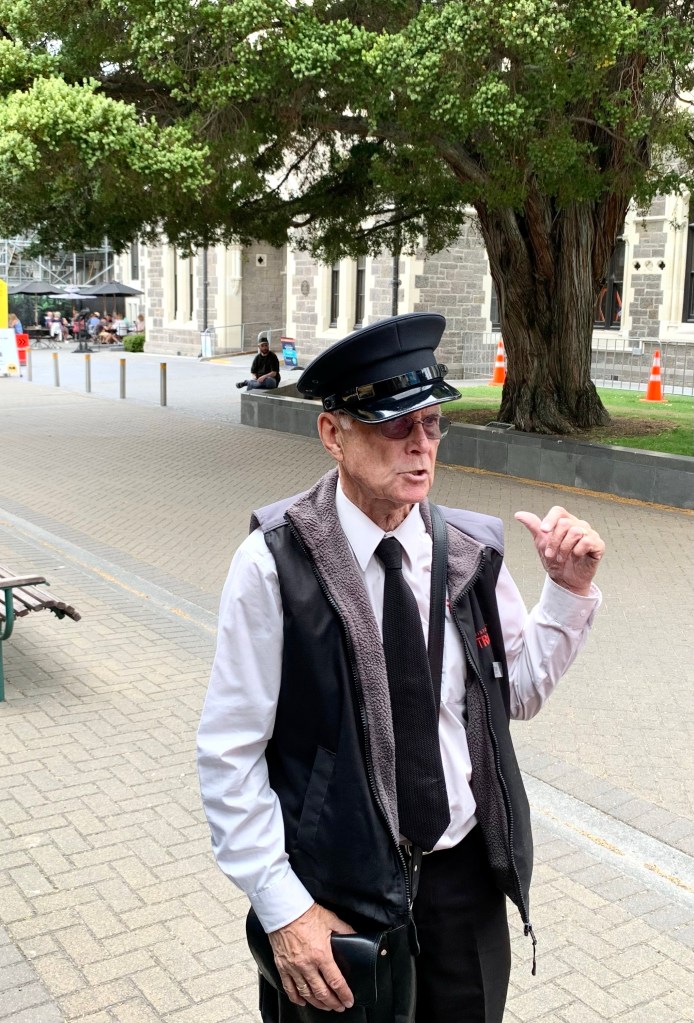
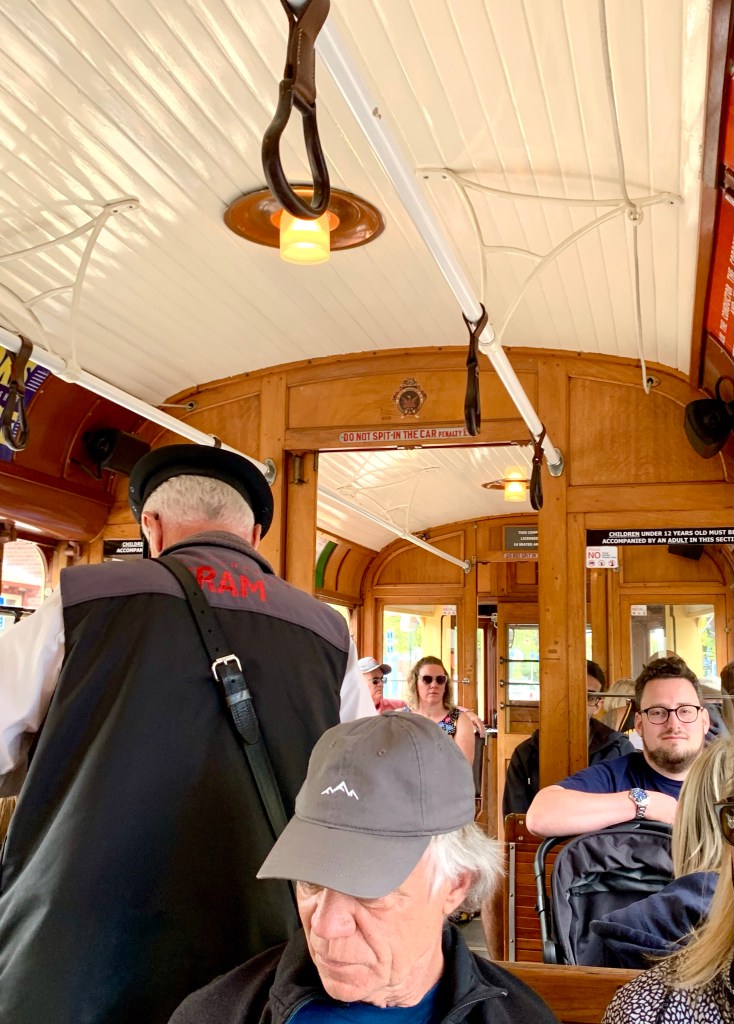
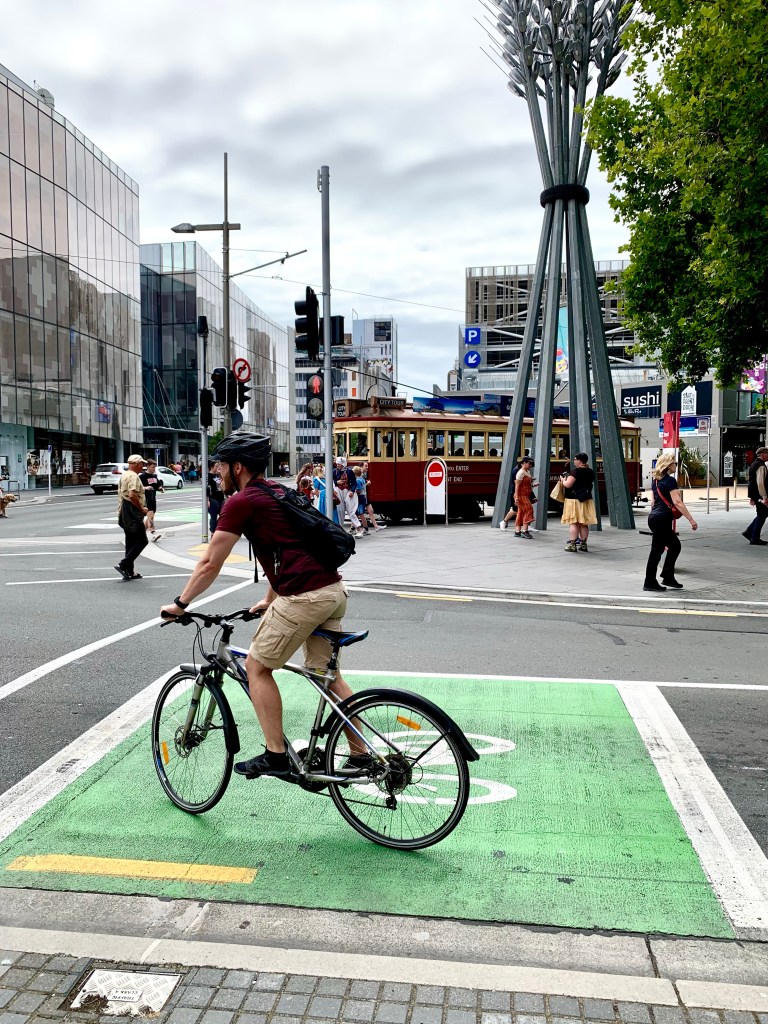
We boarded the tram and set off on the route around the centre of town. The tram driver was quite a curmudgeonly character with some strong views but he was also very knowledgeable and had good stories. It was a very informative and entertaining ride. The driver pointed out some of the vacant lots where buildings have been demolished and also some of the new modern buildings that have been built since the earthquake. The scale and extent of the loss to the city became apparent as the tram made its way through the city streets. The driver explained that, although the insurance payouts were huge, the cost of reconstruction is even greater and it is clear that it is going to take years for the many wounds of the earthquake to be healed.
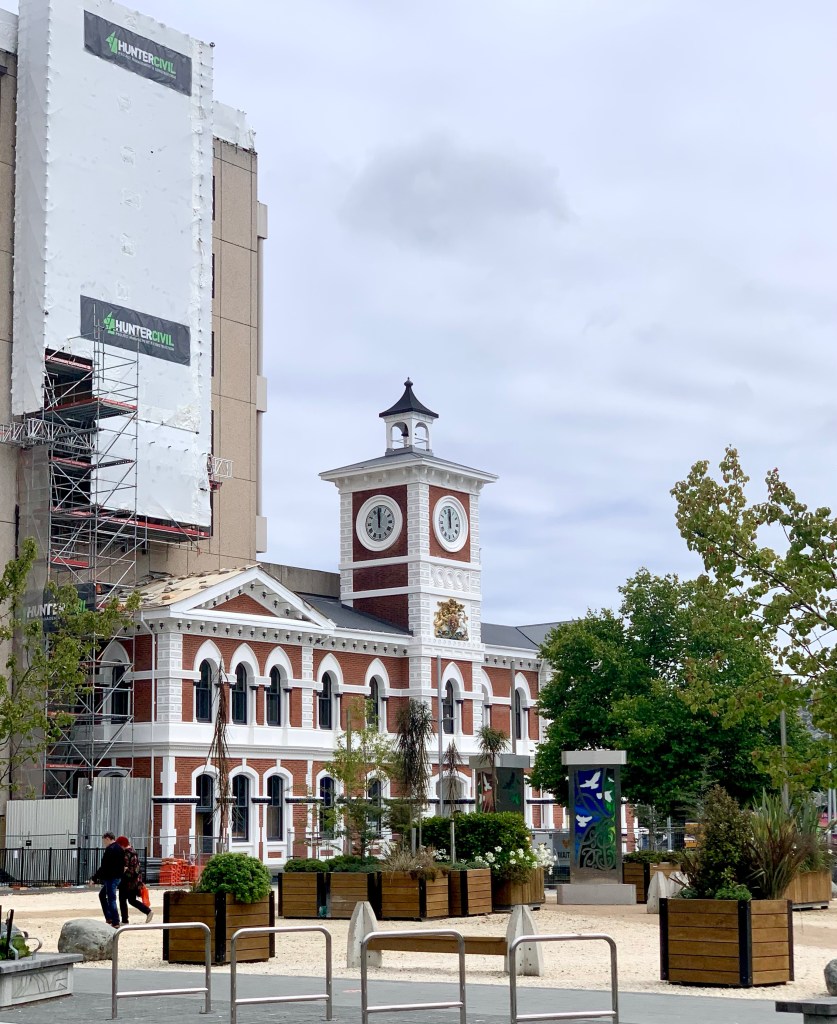
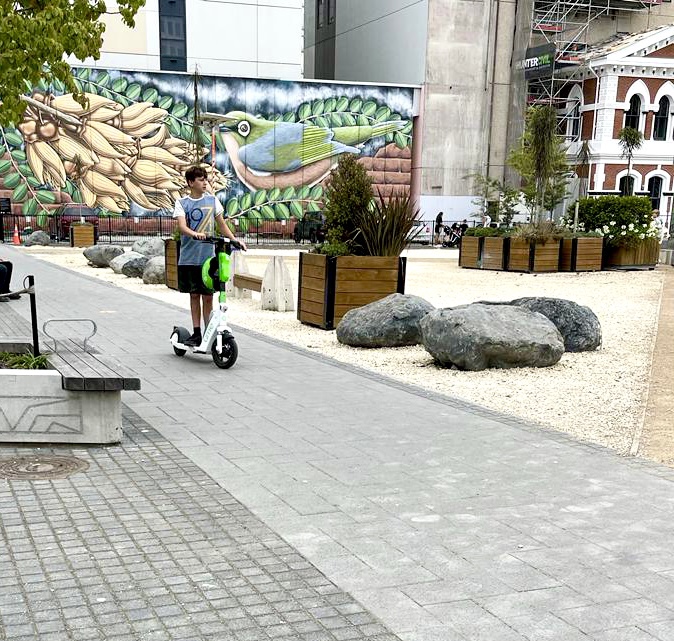
Happy chappy conductor Christchurch Central Post Office, originally known as the Government Building in Cathedral Square. Until the 2011 earthquake it was a Visitors’ Centre but has since been closed. It should be ready to be reopened later this year. This mural, called Rise from the Rubble, of a silver-eye bird and a kowhai flower on the wall of the Ibis Hotel on Hereford Street was painted by street artist Brandon Warrell for a design competition run by the city council
All photographs are memento mori. To take a photograph is to participate in another person’s (or thing’s) mortality, vulnerability, mutability. Precisely by slicing out this moment and freezing it, all photographs testify to time’s relentless. – Susan Sontag
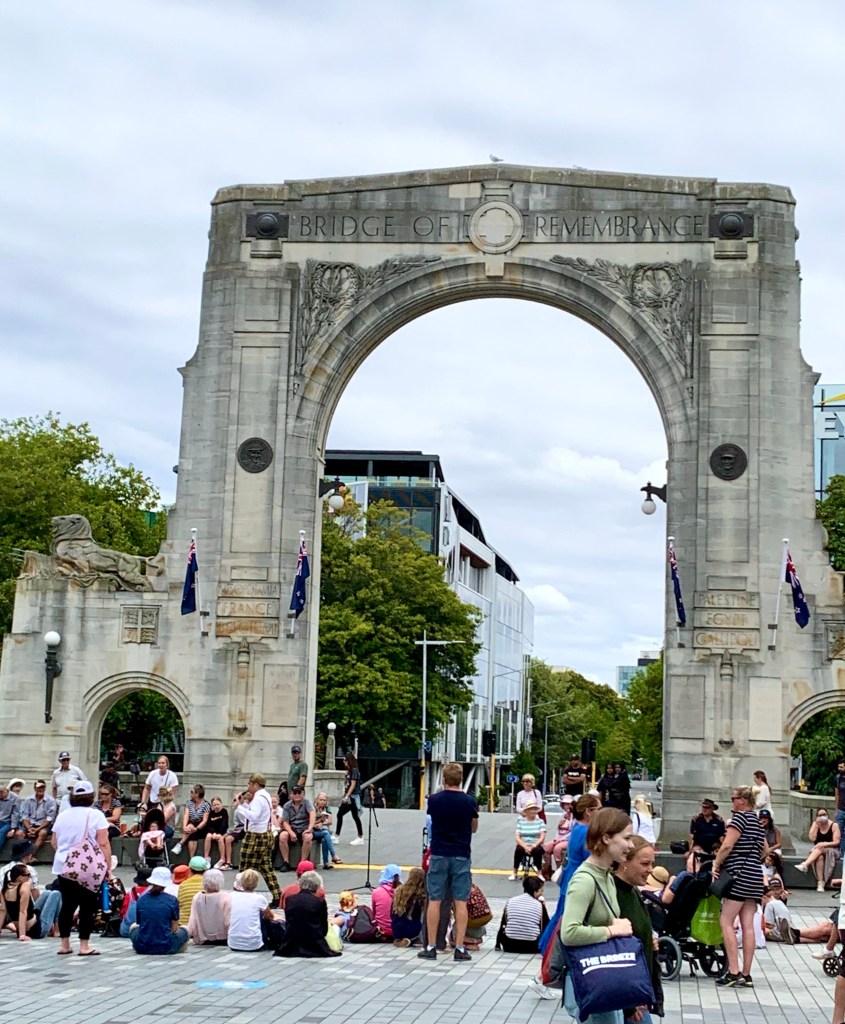
A few moments frozen in time recorded on the streets of Christchurch on Saturday, the 21st of January 2023:
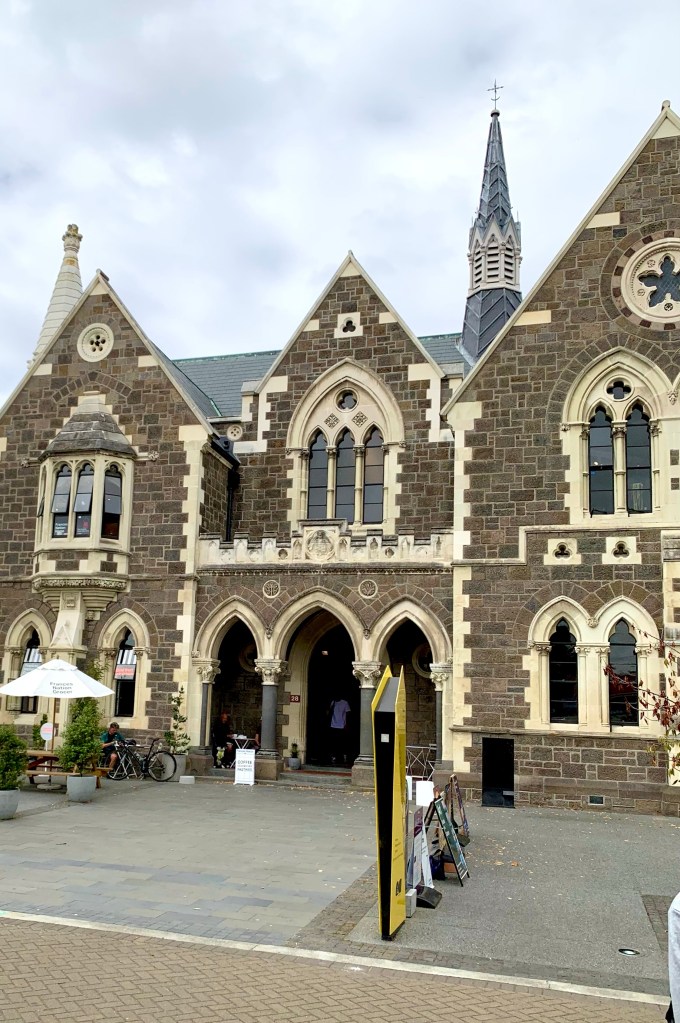
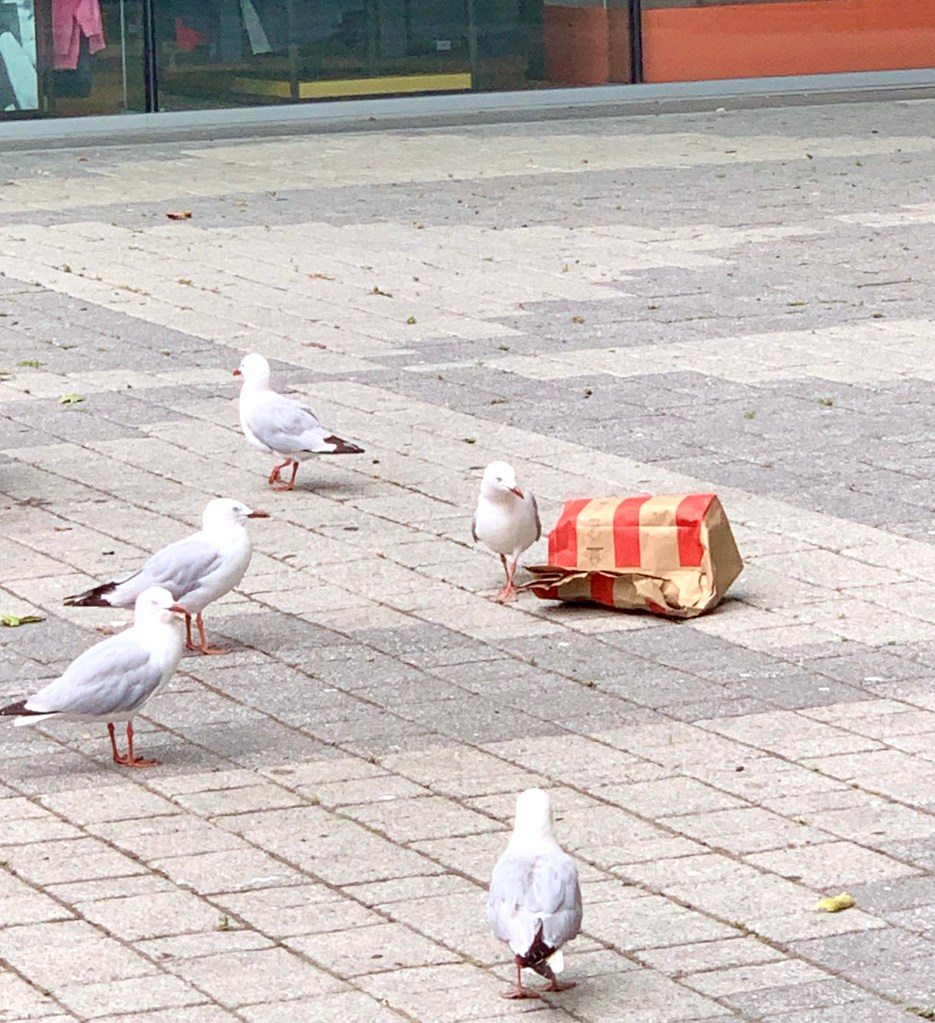
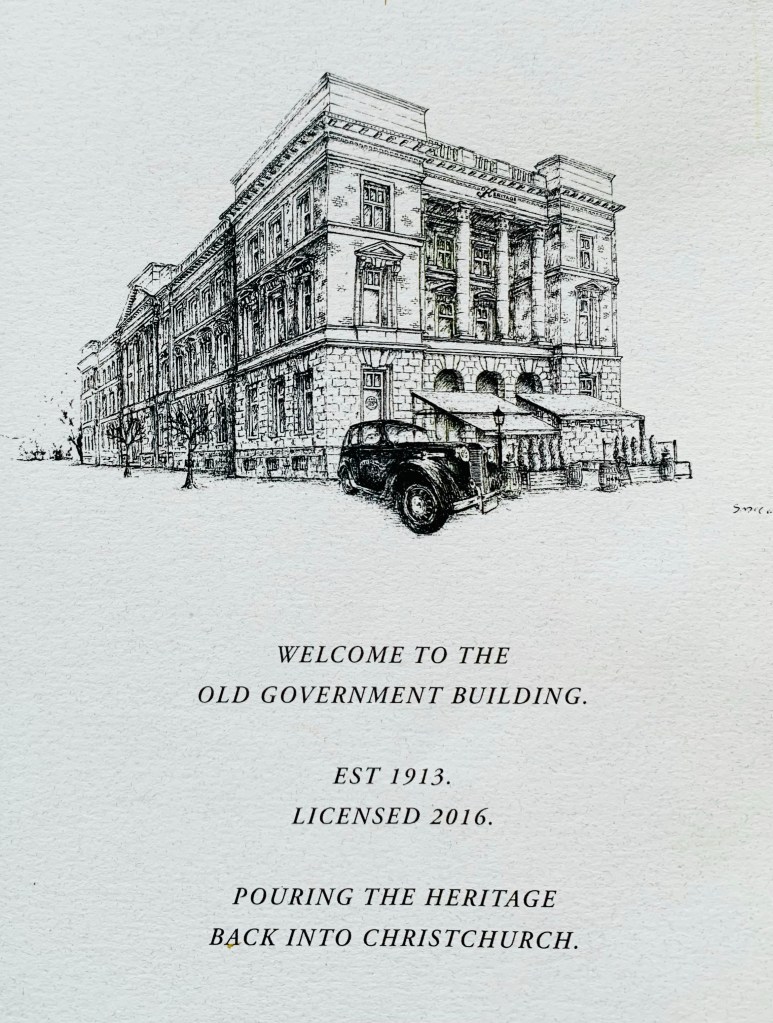
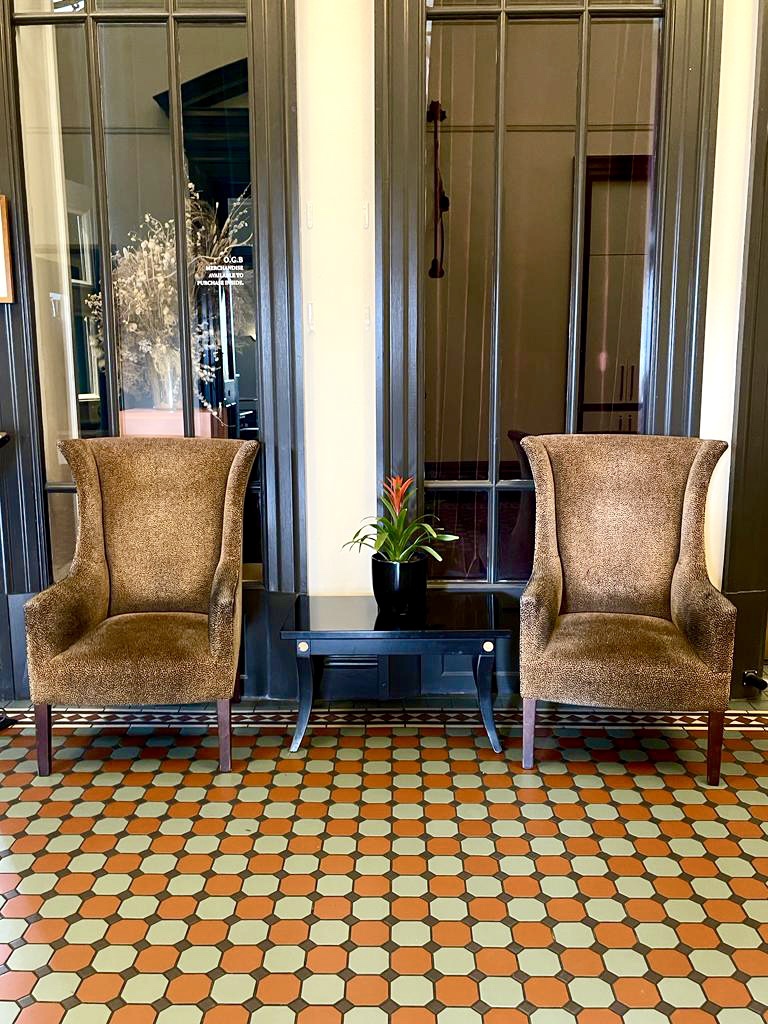
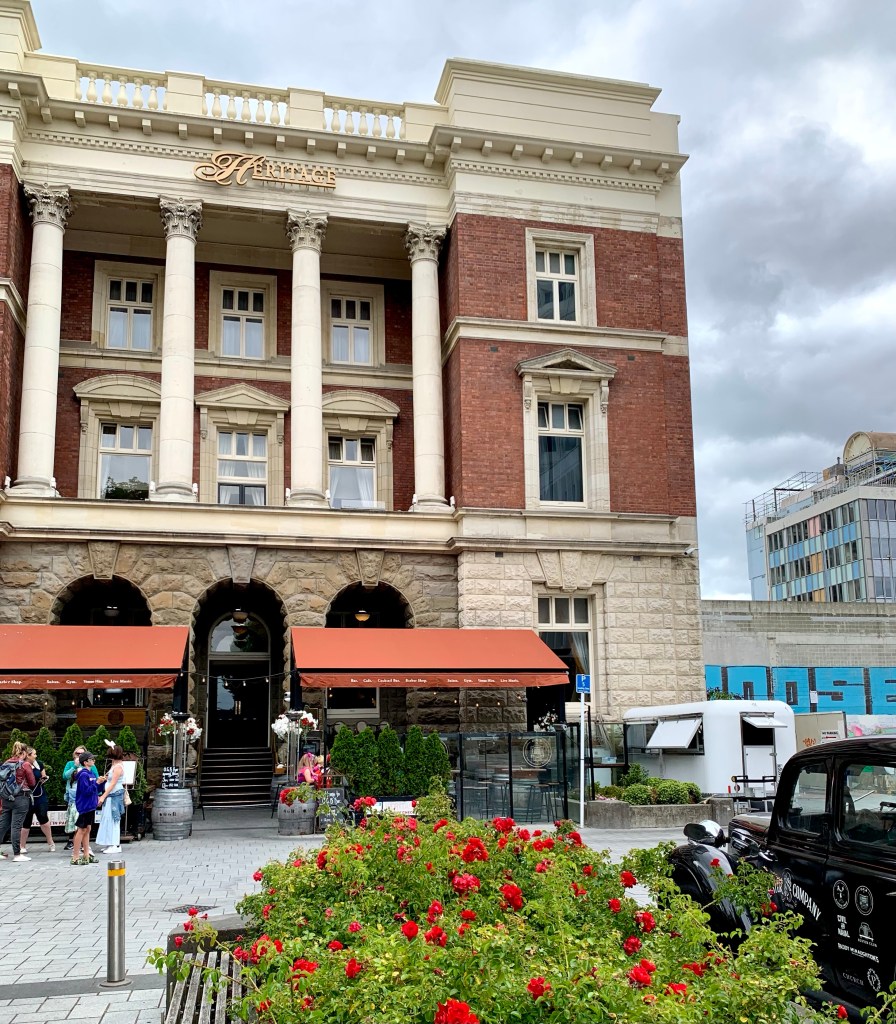
Lunchtime and we decided not to join the seagulls for a KFC meal but to have lunch at a café located in a grand building that used to be known as the Old Government Building. We had a very nice lunch there.
If we could see the miracle of a single flower clearly, our whole life would change. – Jack Kornfield Buddha’s Little Instruction Book
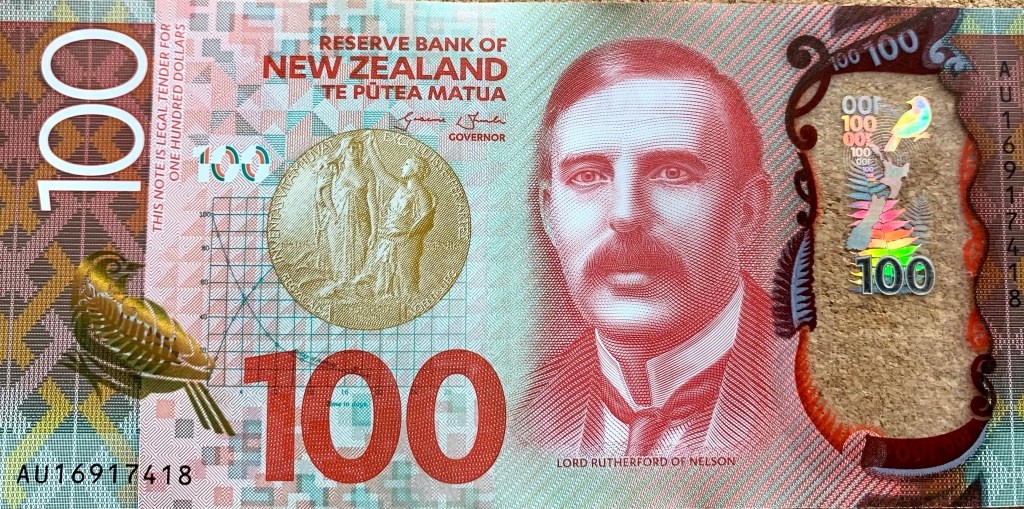
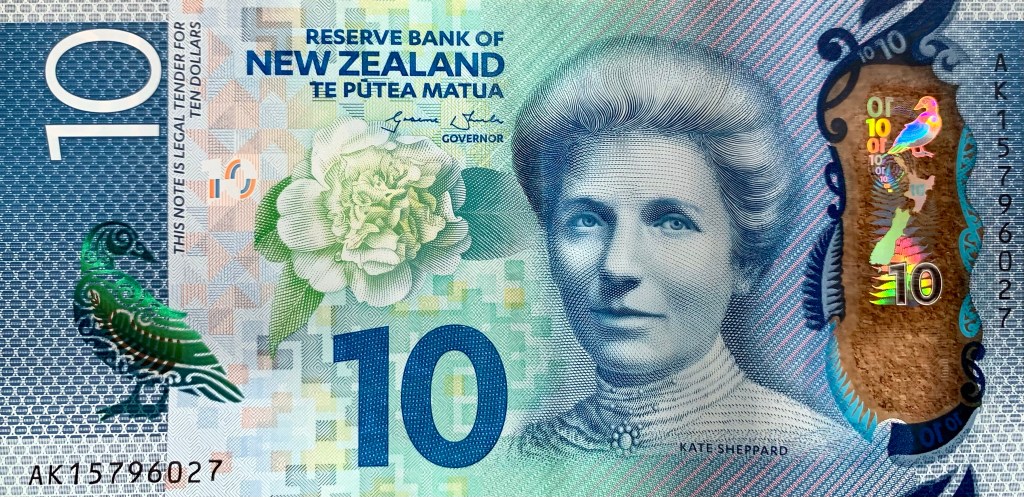
During our stay in Christchurch we learned a lot about two famous New Zealanders whose lifetime achievements and contributions made an impact not only on their own country but internationally. They are both commemorated on New Zealand bank notes.
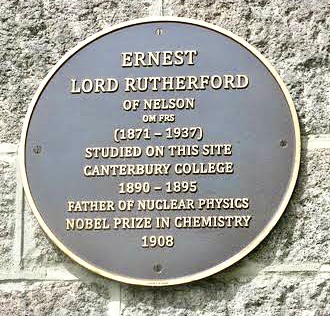
The motel we stayed at in Nelson was located on Rutherford Street and we saw numerous other references to the name Rutherford. At the time, I thought it was perhaps the name of a prominent local family and didn’t realise the connection to THE Rutherford; the pre-eminent New Zealand physicist, Ernest Rutherford, who is known as the father of nuclear physics.
It was only when the tram driver talked, with clear admiration and regard, about Ernest Rutherford and his connection to Christchurch that the penny dropped and I realized to whom all the Rutherford citings in Nelson had been referring.
Ernest Rutherford was born in 1871 at Spring Grove near Brightwater in the rural hinterlands of Nelson. Brightwater is about 16km south west of Nelson’s city centre just off the SH6 and is today the location of the Lord Rutherford Memorial.
Although Ernest spent many of his adult years studying and working overseas, in both England and Canada, he always regarded Nelson as his home and when he was made a peer in the Honour’s list of 1931, it was as 1st Baron Rutherford of Nelson and of Cambridge in the County of Cambridge.
While at Nelson College, Ernest won one of the very few university scholarships available in the whole country and decided to enrol at Canterbury College. He arrived in Christchurch in 1890 where he was fortunate to have some outstanding teachers and mentors at Canterbury College.
In 1895, Rutherford made his way to England and to Cambridge University’s Cavendish Laboratory whose 37 year-old director, JJ Thomson, had built a strong reputation as an experimental physicist. In 1898, with no immediate prospects of advancing further at the Cavendish, Ernest accepted a job as professor of physics at McGill University in Montreal, Canada and boarded a steamer for North America.
While he was at McGill, Ernest returned briefly to New Zealand in June, 1900 to marry his fiancée, Mary (May) Georgina Newton, who was the daughter of his former landlady in his undergraduate days at Canterbury College. He and May returned to Montreal via Hawaii and the Canadian Rockies in September and on 30 March 1901 their only child, Eileen Mary was born. She later married the physicist, Sir Ralph Howard Fowler in Cambridge. UK.
Ernest was awarded a Nobel Prize in 1908 in Chemistry, not Physics, for his work into the disintegration of the elements and the chemistry of radioactive substances. Three years later, in 1911, he published a very important seminal paper that first identified the atomic nucleus and its essential role in the structure of matter and initiated the science of nuclear physics.
The three major discoveries Ernest made that have played a large part in the development of modern science and the beginning of the nuclear age are that: he found out that the structure of elements can change; he developed the nuclear model of the atom which formed the basis of that model still used today, and his successful disintegrated of nitrogen atoms with alpha particles in 1919 led to the splitting of the atom by physicists John Cockcroft and Ernest Walton.
Ernest Rutherford was both a thinker and a prolific practical inventor who was endlessly curious about the world. He lived a distinguished life devoted to scientific exploration and the pursuit of knowledge. His hard work and genius has profoundly shaped our modern world.
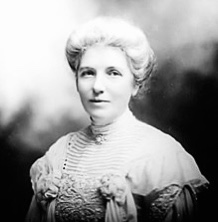
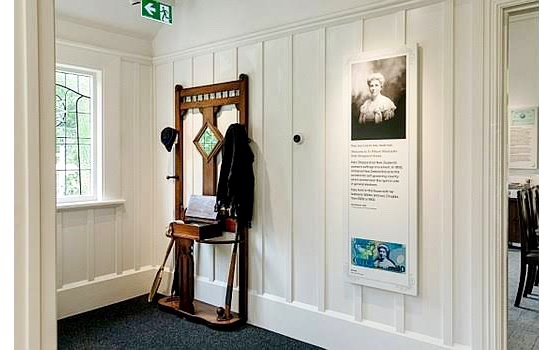
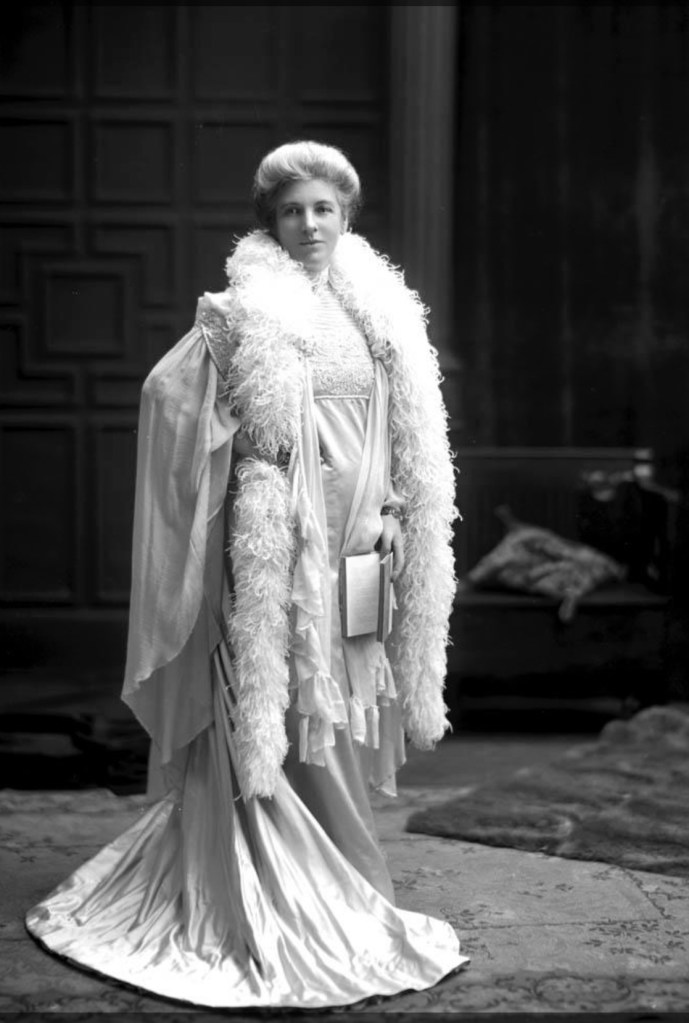
After lunch, we went to visit the beautiful home of Kate Sheppard who was the most prominent member of the woman’s suffrage movement in New Zealand.
Do not think your single vote does not matter much. The rain that refreshes the parched ground is made up of single drops. – Kate Sheppard
The movement for women’s rights which began in the late 19th century was concerned with two main issues: equal political rights for women and social reform, particularly dealing with the abuse of alcohol and its consequences for women and children.
Born in Liverpool in 1847, Catherine (Kate) Wilson Malcolm migrated to Christchurch in her early twenties with her family and in 1871 married merchant Walter Sheppard. In 1885 she joined the new Women’s Christian Temperance Union (WCTU), which advocated women’s suffrage as a means to fight for liquor prohibition.
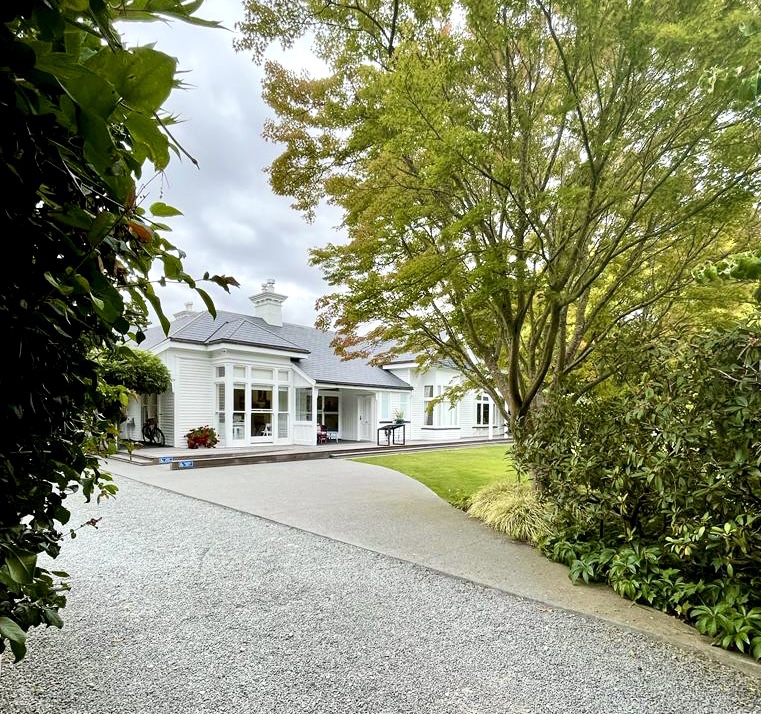
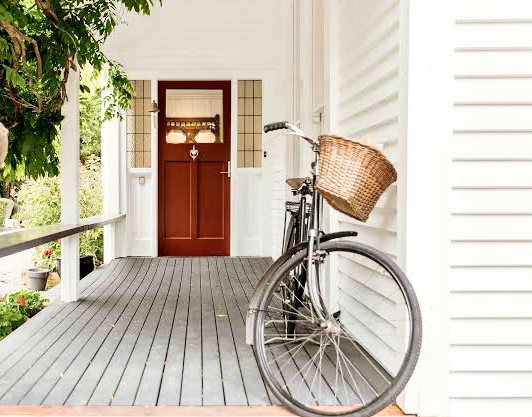
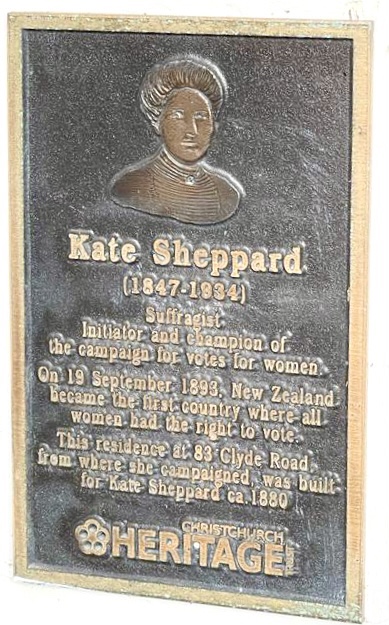
In 1888, Kate Sheppard and Walter moved to a house they had built at 83 Clyde Road. This remained their home until 1902 and was a regular meeting place for suffrage campaigners.
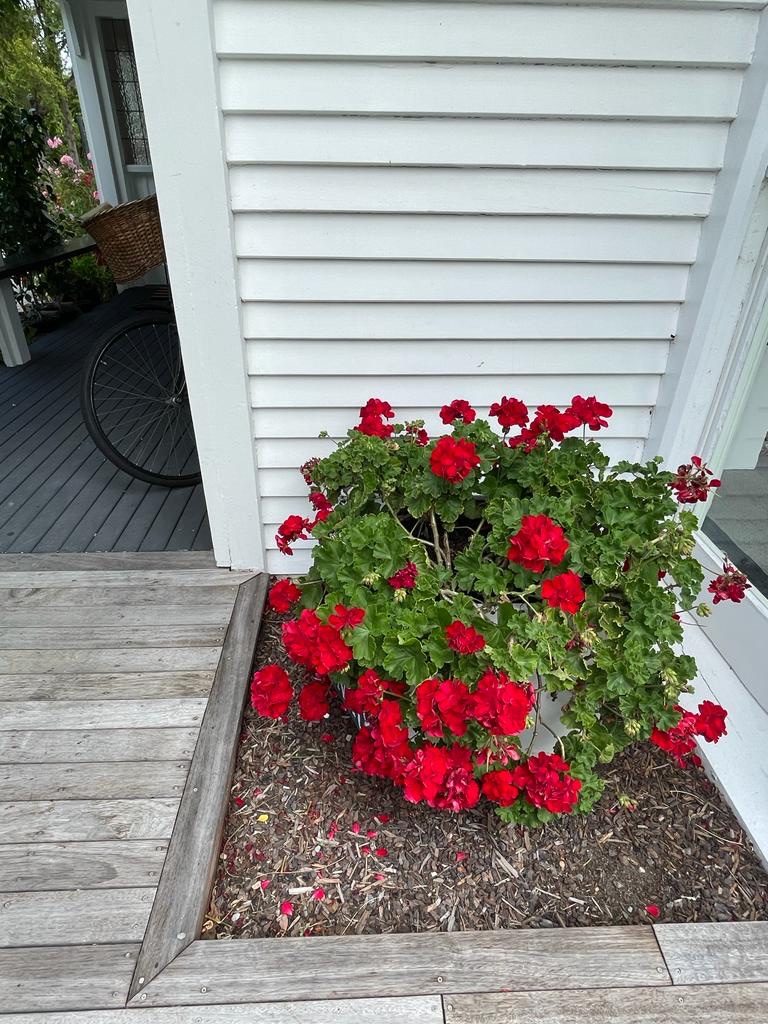
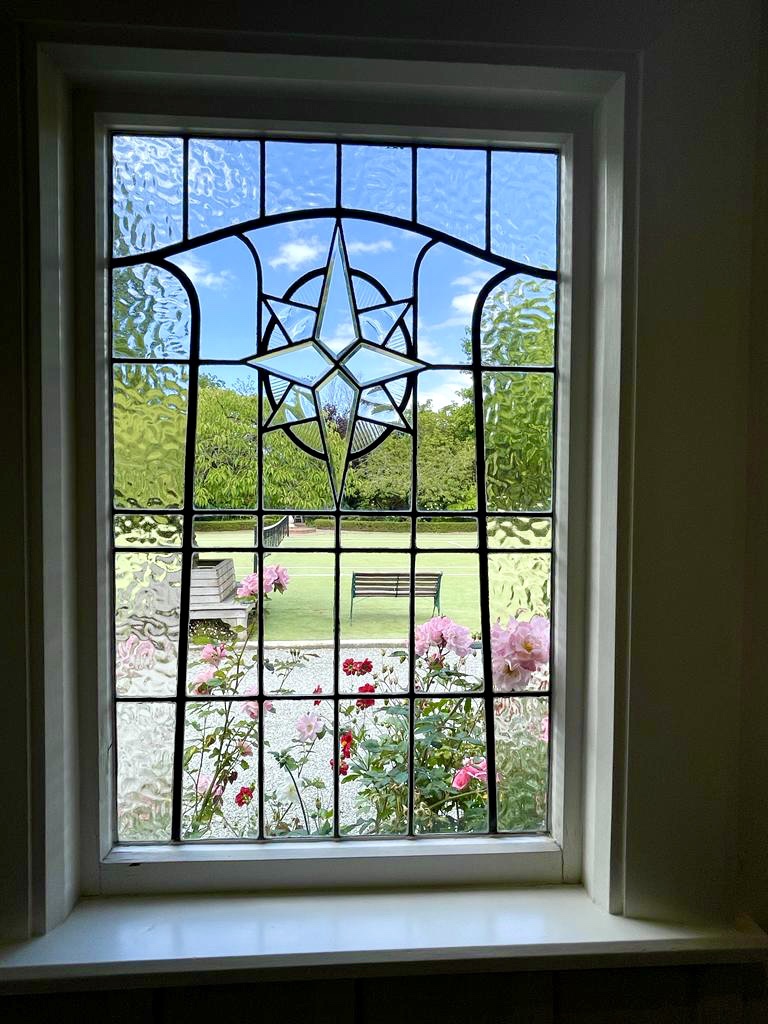
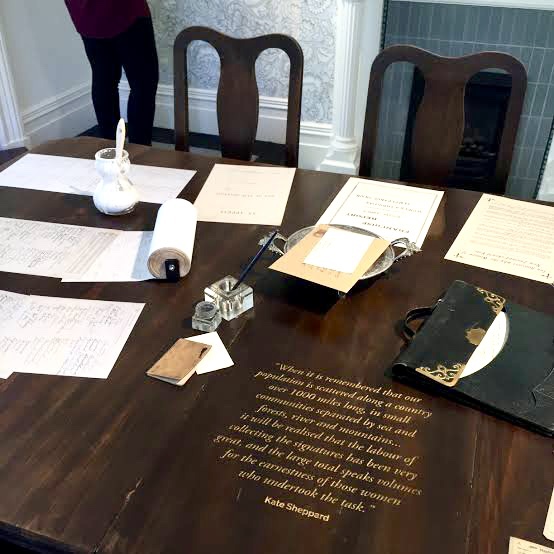
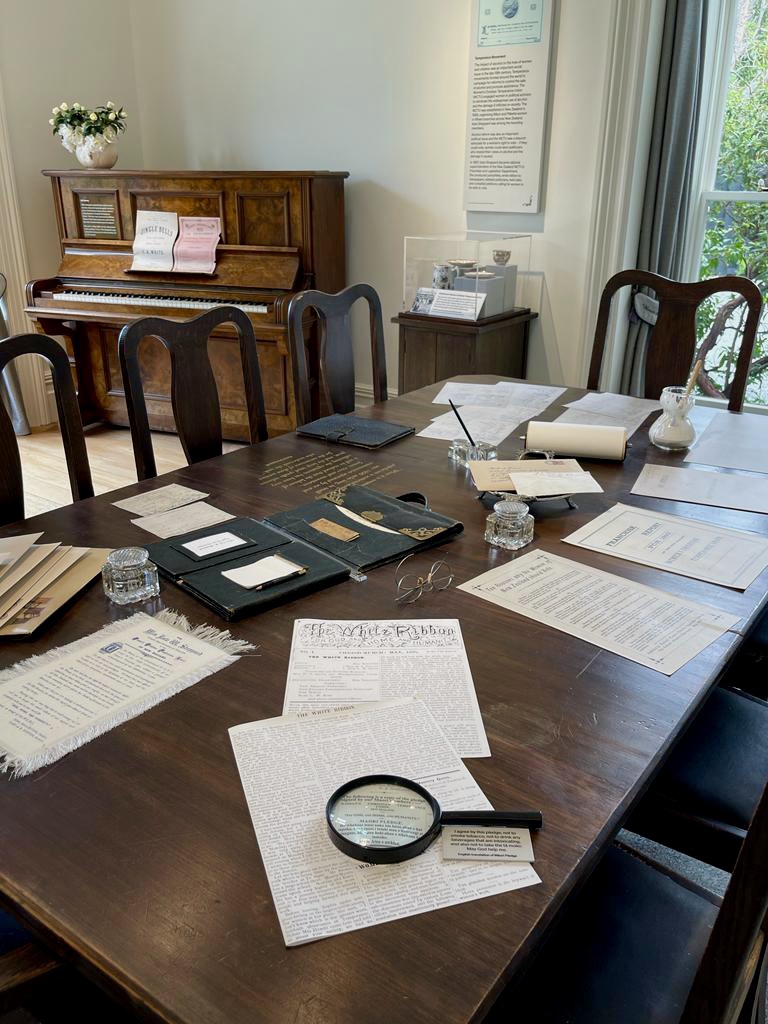
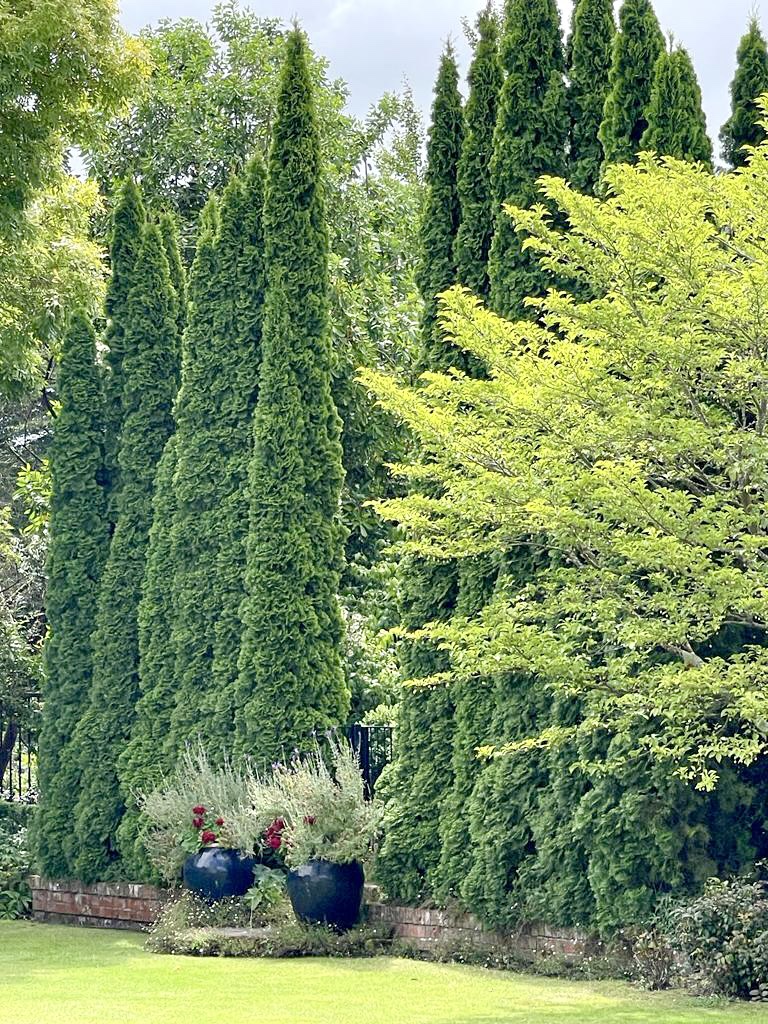
This house and its elegant garden was the home of Kate Sheppard from 1888 until 1902, during her most active years of the campaign for women’s rights.
All that separates, whether of race, class, creed, or sex, is inhuman, and must be overcome. – Kate Sheppard
Kate translated her political philosophy into practical proposals for reform. She tirelessly co-ordinated and encouraged the work of local unions and organised petitions to Parliament asking for women to have the right to vote. She was an excellent public speaker and writer and held public meetings; wrote letters to the press and developed contacts with politicians. She persuaded Sir John Hall, a leading member of Parliament, to support them. Her younger sister Isabella May was also heavily involved in the Women’s Christian Temperance Union and accompanied Kate to most of her speaking engagements.
Through her persistence and drive and her skilful writing and persuasive public speaking, Kate successfully advocated for women’s suffrage. Her pamphlets Ten Reasons Why the Women of New Zealand Should Vote and Should Women Vote? contributed significantly to the cause.
Kate and her fellow suffragists gathered nearly 32,000 signatures in a petition to demonstrate the groundswell of support for their cause. In 1893, the 270m-long petition – then the largest ever presented to Parliament – was unrolled across the chamber of the House with dramatic effect. Despite the opposition of Premier Richard Seddon, the Electoral Act 1893 was passed by both houses of Parliament and became law on 19 September, 1893. As a result, New Zealand became the first country to establish universal suffrage whereby all women had the right to vote. Well done, Kate!
The news took New Zealand by storm and inspired suffrage movements all over the world. In 1895 Kate became the editor of the first newspaper in New Zealand to be owned, managed and published only by women. It was called The White Ribbon. Kate later travelled overseas to England and America to help the campaigns there. In 1909 Kate was elected honorary vice-president of the International Council of Women.
The Christchurch Times reported Kate’s death in 1930 as follows: A great woman has gone, whose name will remain an inspiration to the daughters of New Zealand while our history endures.
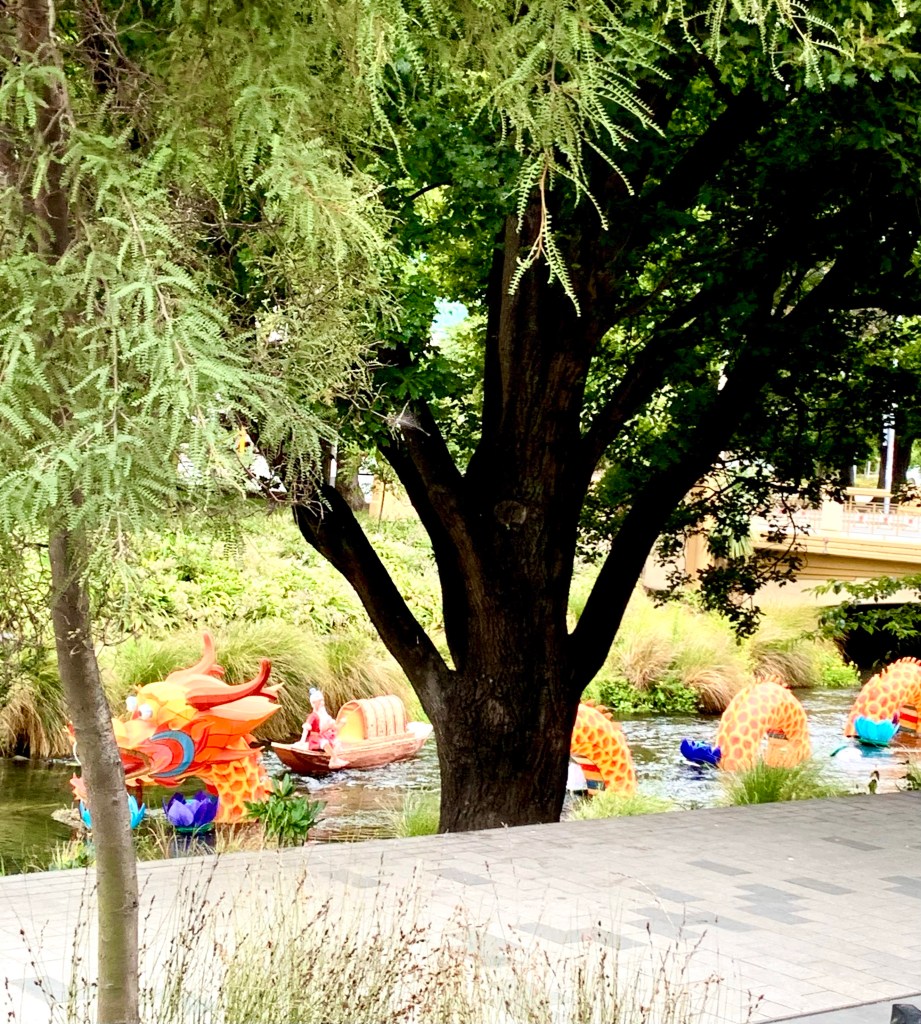
Today is the start of the Year of the Water Rabbit in the Chinese horoscope; it runs from the 22nd of January 2023 to the 9th of February, 2024. The sign of Rabbit is a symbol of longevity, peace and prosperity and 2023 is predicted to be a year of hope.
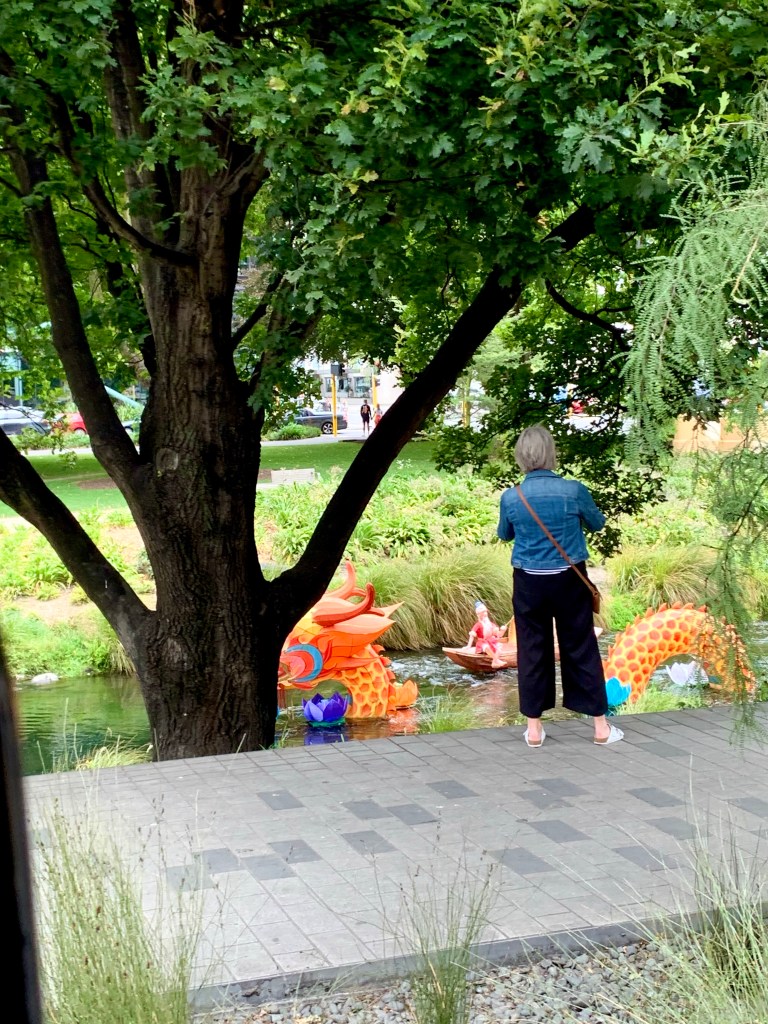
A dragon spotted in the River Avon, Christchurch
May the Year of the Rabbit bring you and your loved ones good health, happiness, friendship, love, contentment and good fortune.
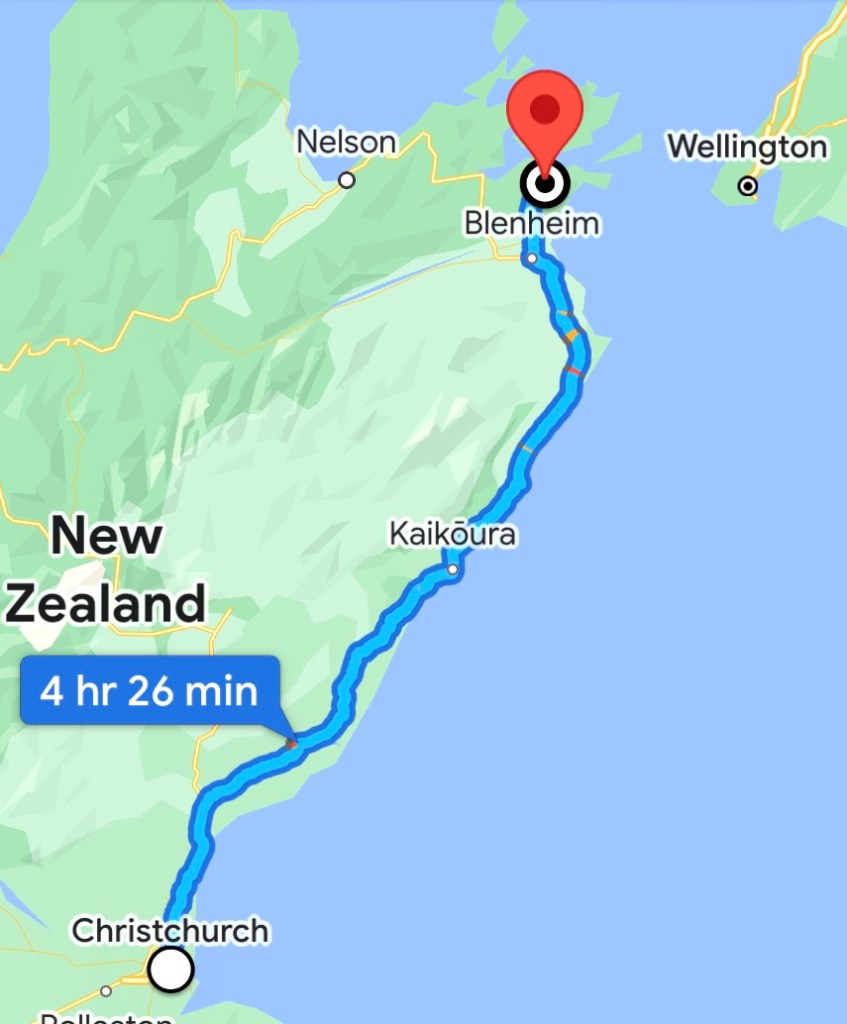
We set off after breakfast on our 336km drive to Picton up SH1 that runs along the east coast of the South Island. The weather was clear and bright and the sky was mostly cloudless.
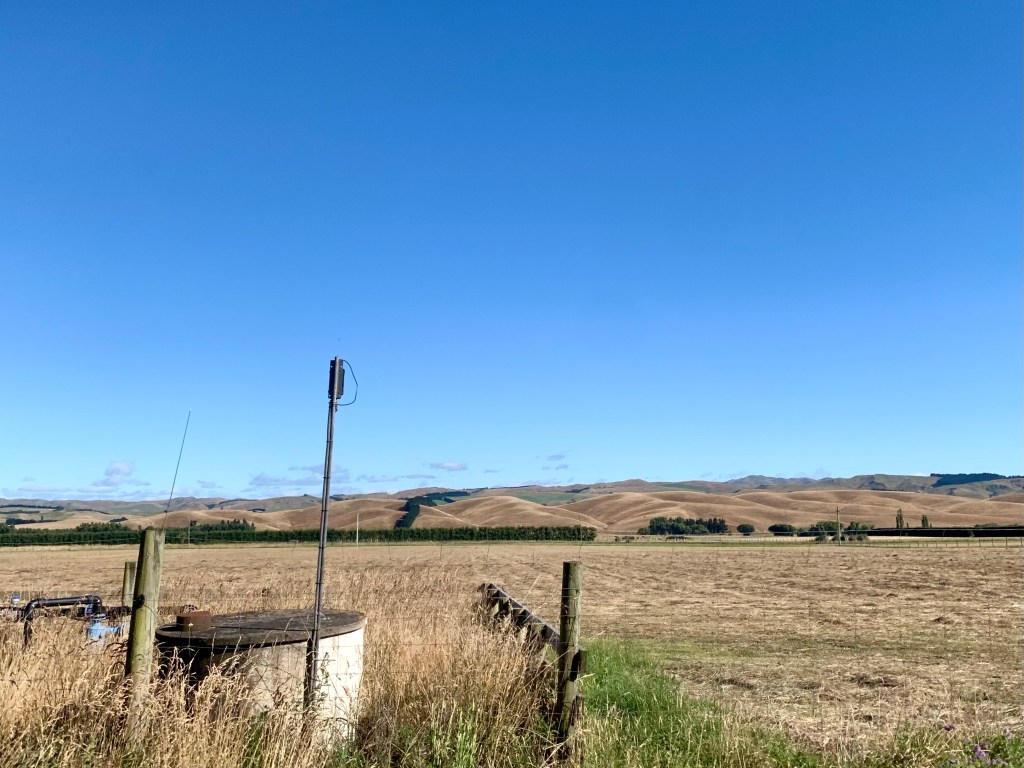
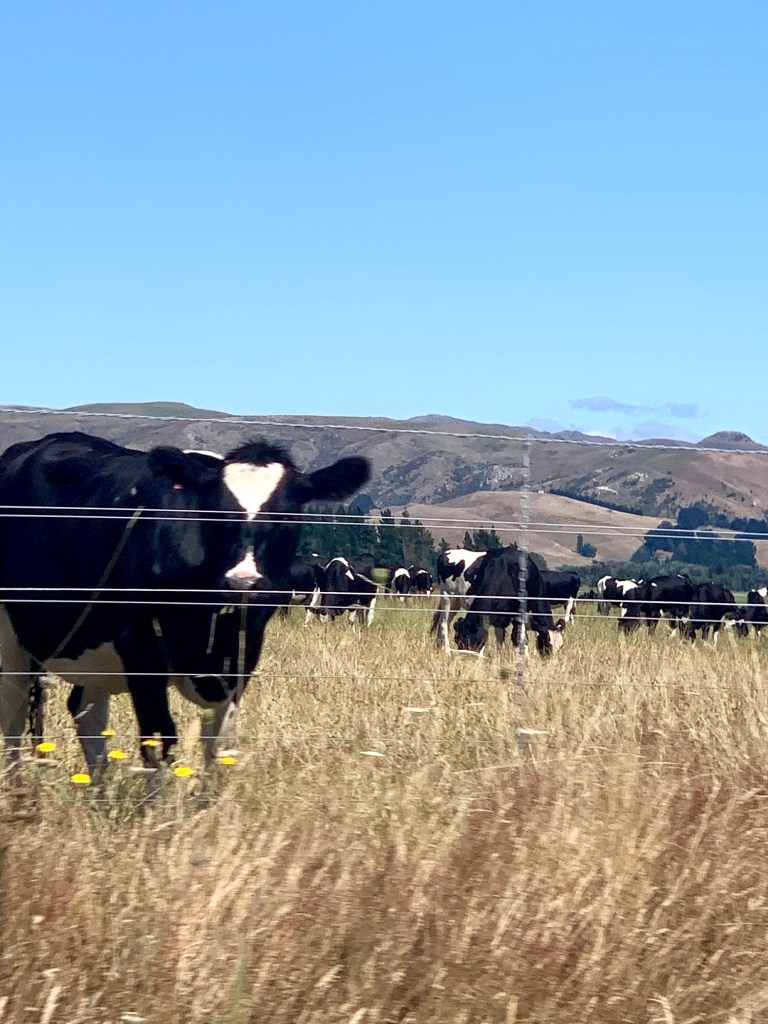
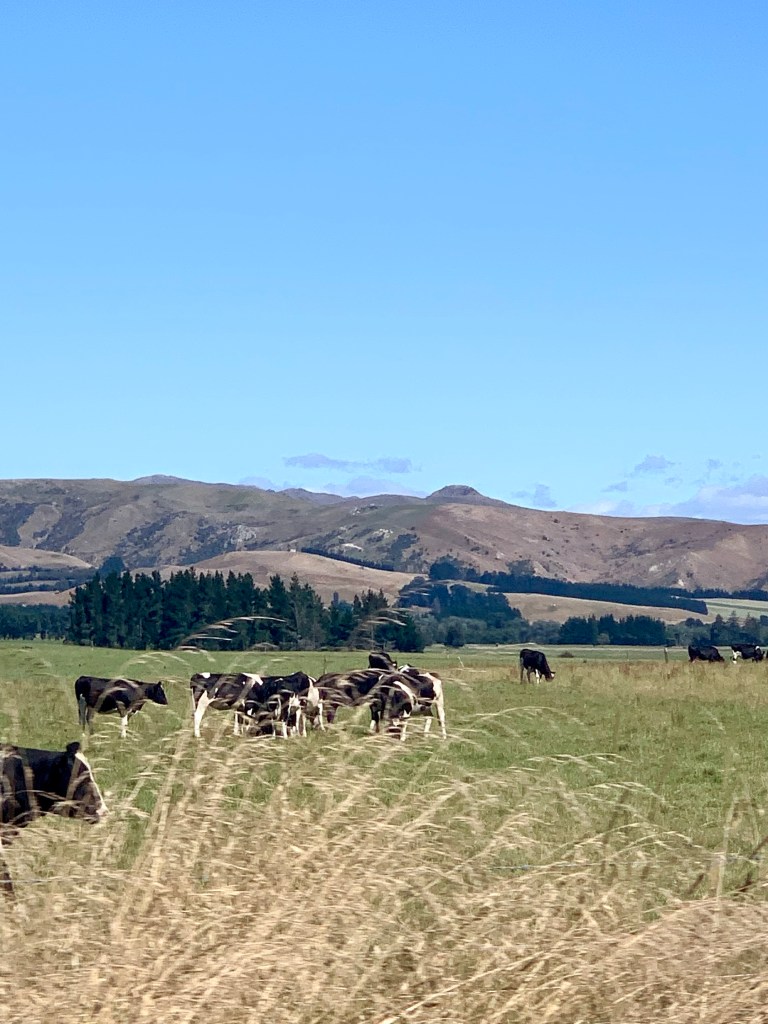
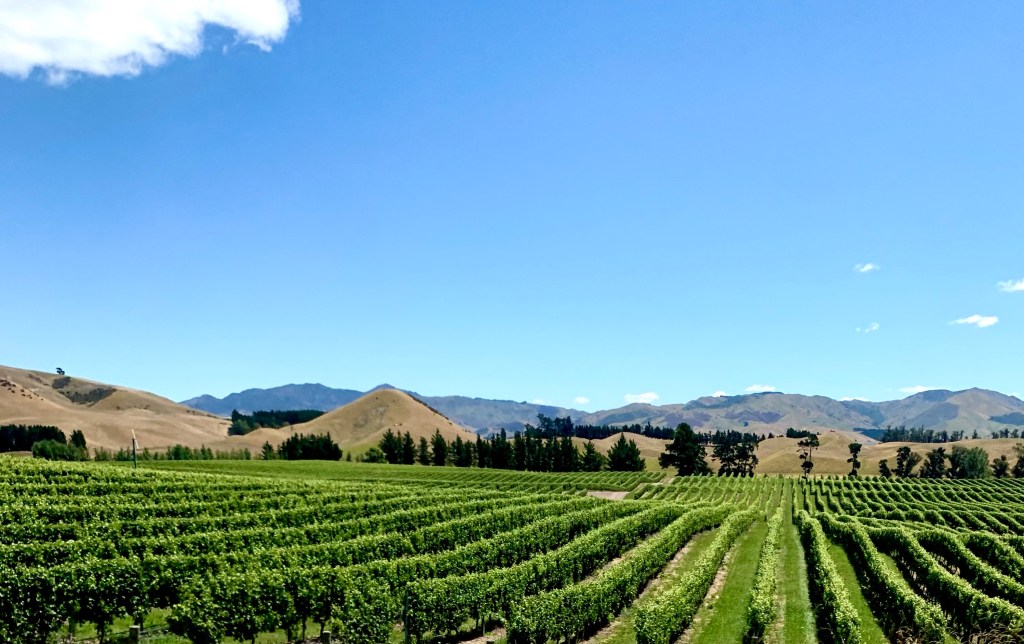
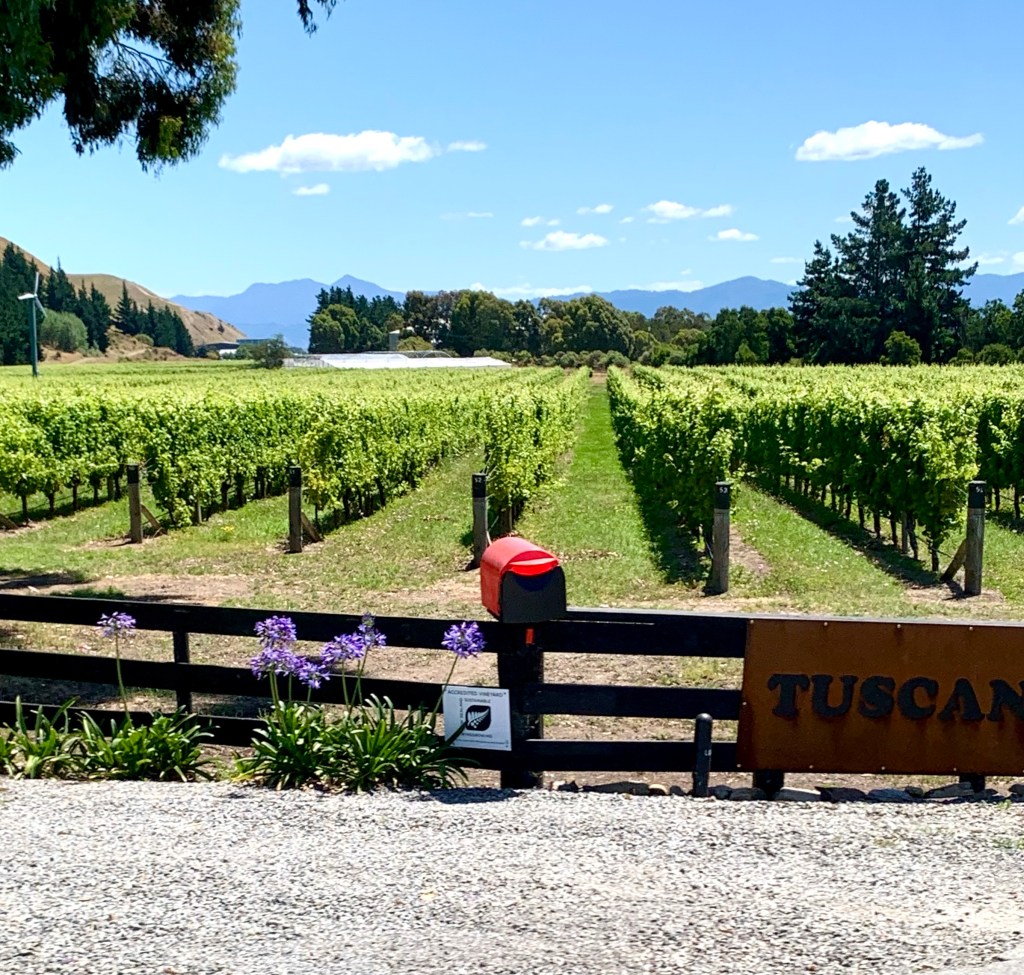
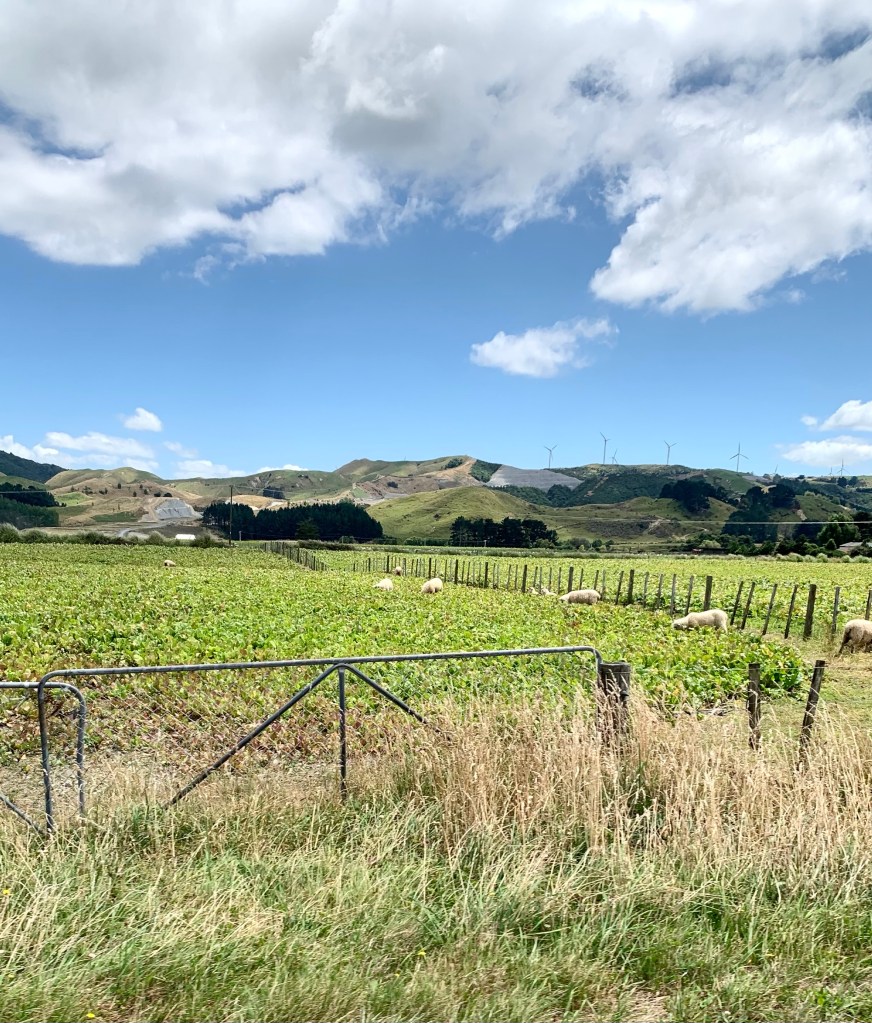
Very soon after we left the urban area and drove into the Canterbury region north of Christchurch we found ourselves once again in abundantly fertile farmland with a mixture of crops and animal husbandry, mainly cattle. It is also wine country and we passed a number of vineyards.
There are long flat plains stretching away into the distance on both sides of the road, with hills in the far distance and the railway tracks ran alongside us, as they did for most of today’s journey. The tracks are those of the Main North Line that runs between Christchurch and Picton. It was the longest railway construction project in New Zealand’s history, with the first stages built in the 1870s and not completed until 1945.
The towns along the way are few and far between and some of them are small rural settlements rather than towns: Woodend, Waikuku, Leithfield, Amberley, Waipara, Omihi. Jackie told me that the Māori word for water, like its counterpart in the Hawaiian language, is wai which explains why that word crops up so much. The early Polynesian settlers of the Hawaiian Islands identified water with wealth. Wai is the Hawaiian word for fresh water and waiwai means prosperity. Wai ola means the water of life and, indeed, there is no life without pure, clean water.
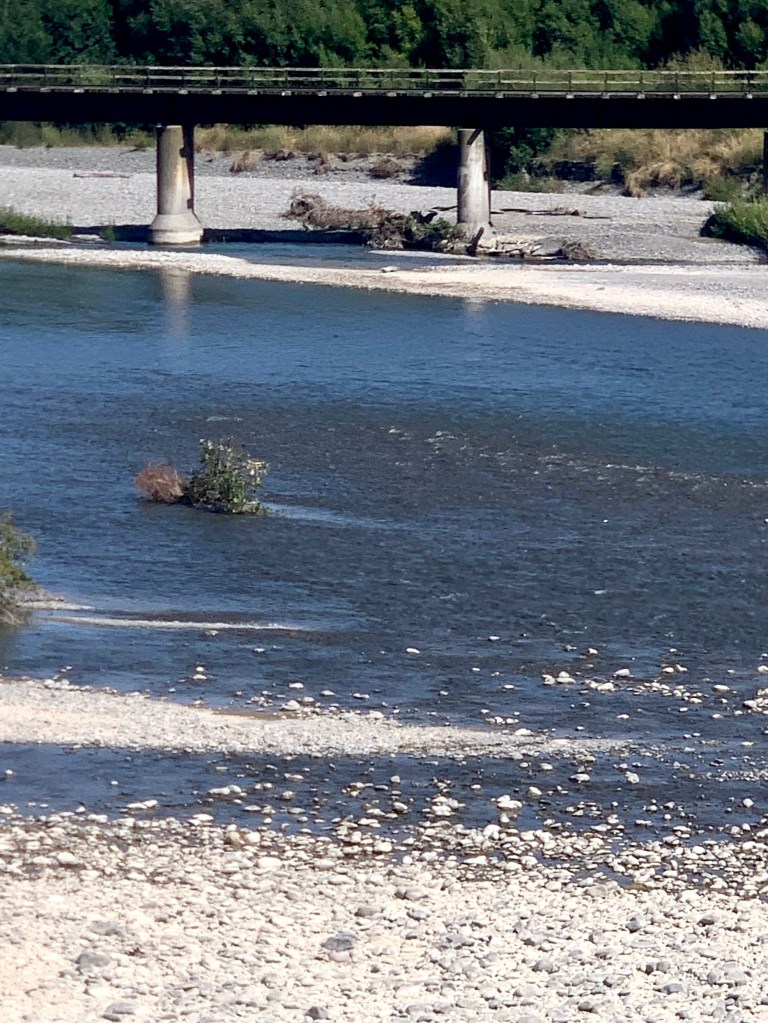
There is a lot of water in this country and we’ve already crossed quite a number of rivers on our trip. Waikuku has a population of 156 (2018 census) and is situated near the Ashley River. The Māori word waikuku translates as freshwater mussel waters. Waipara, population 312 (2018 census,) is situated on the banks of the Waipara River whose name translates to “Muddy Water”, wai meaning water and para meaning mud.
Thousands have lived without love, not one without water. – W. H. Auden
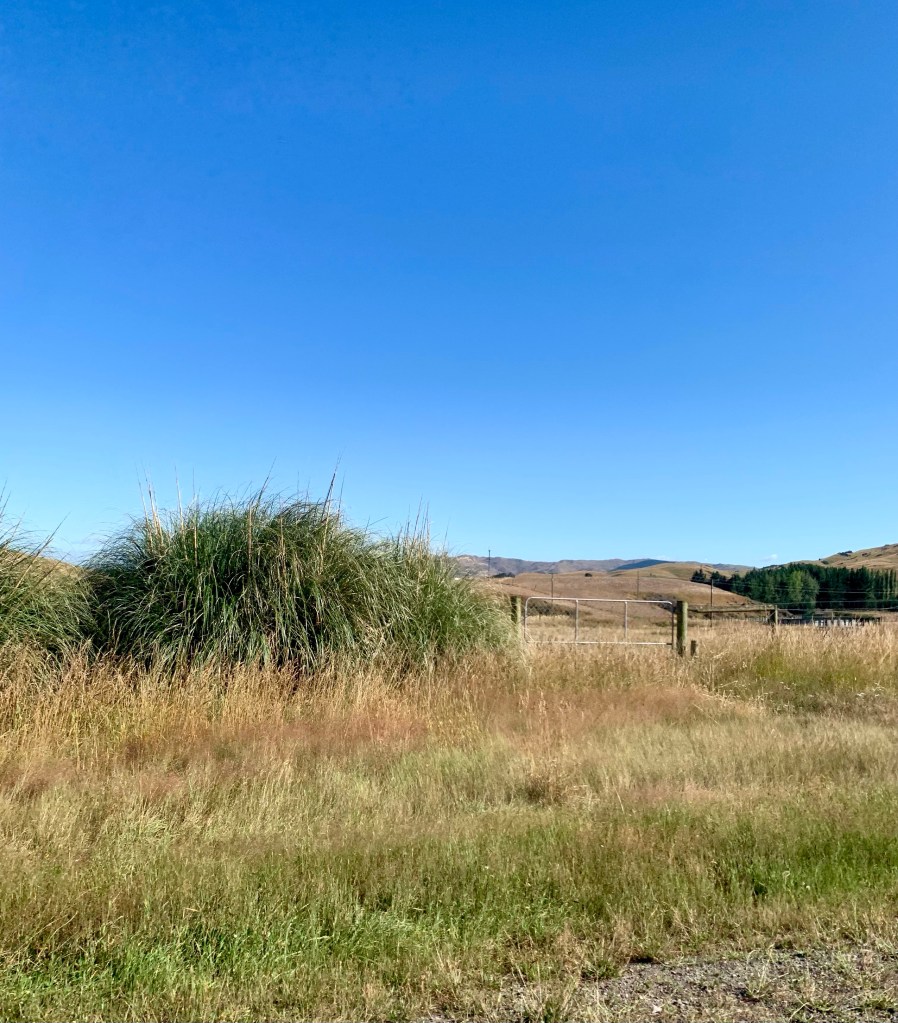
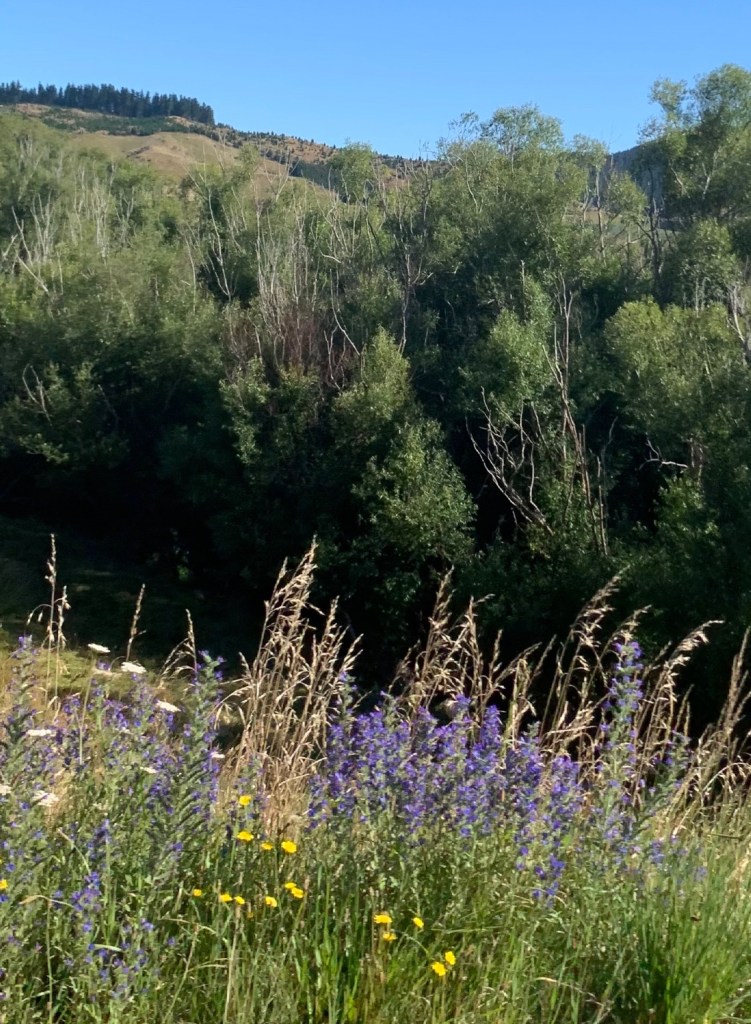
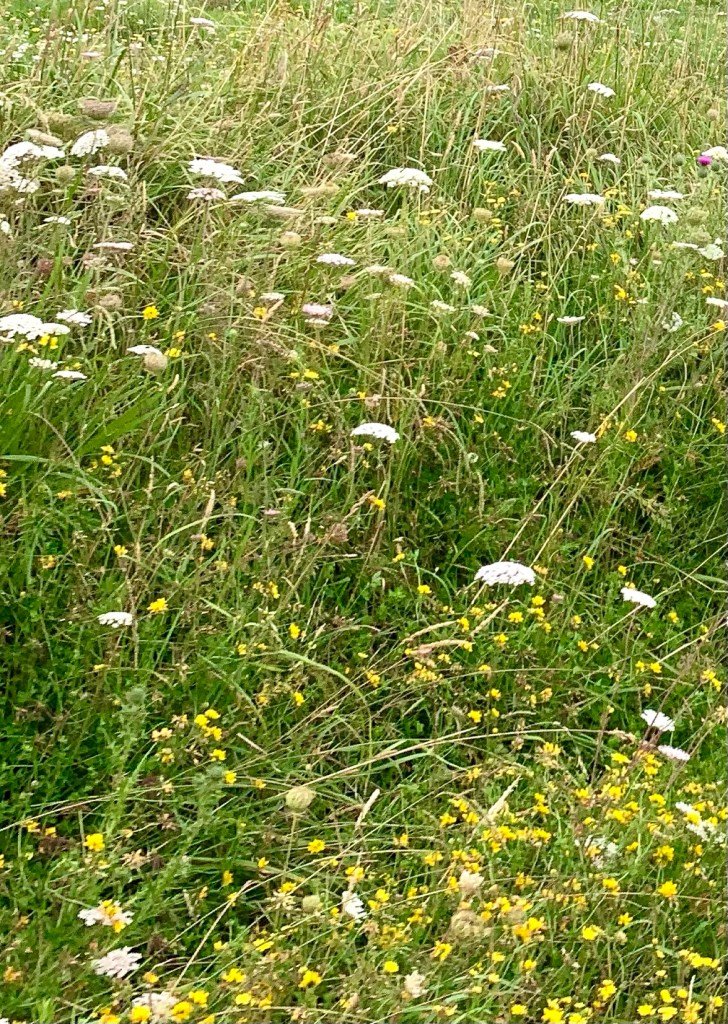
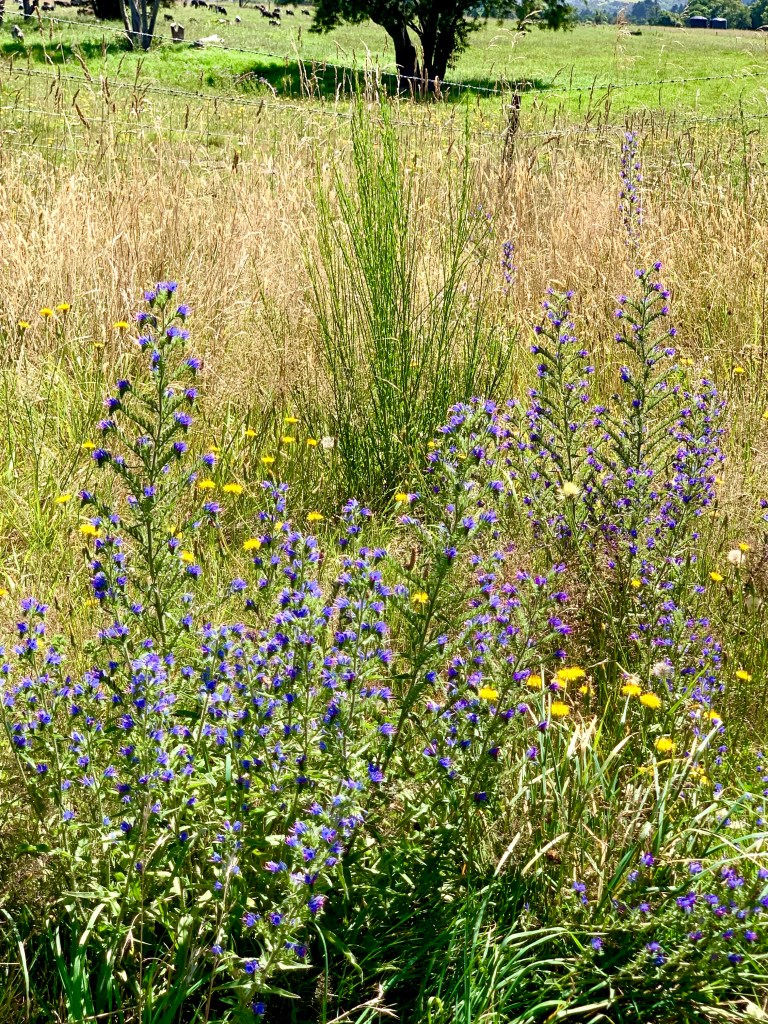
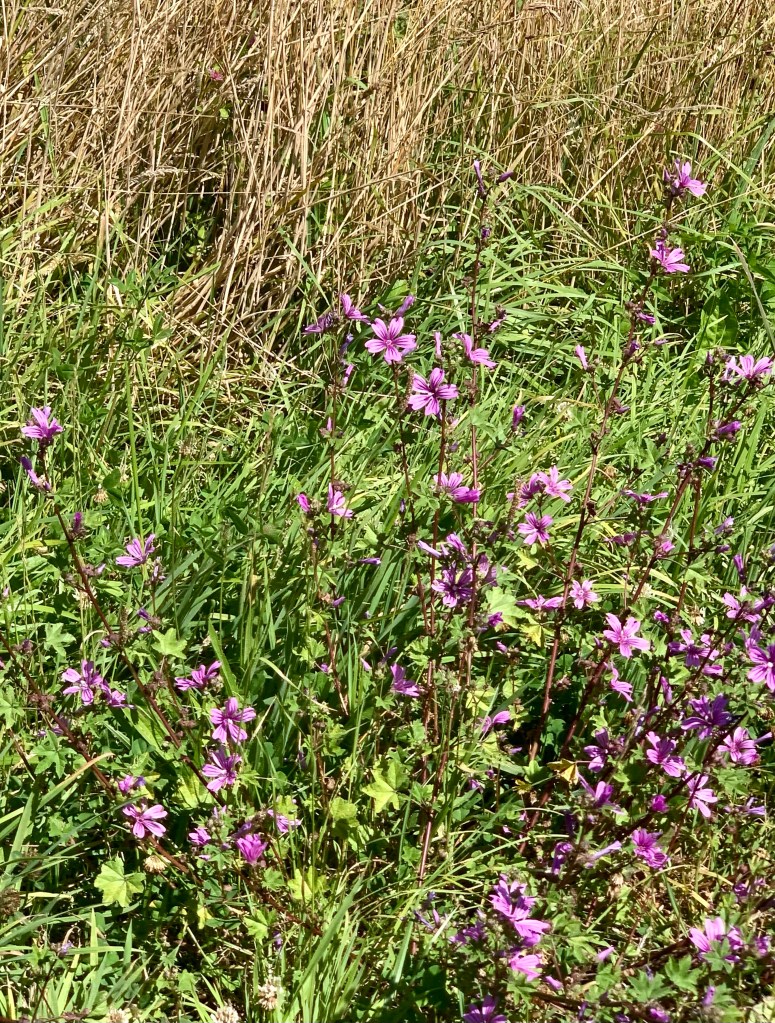
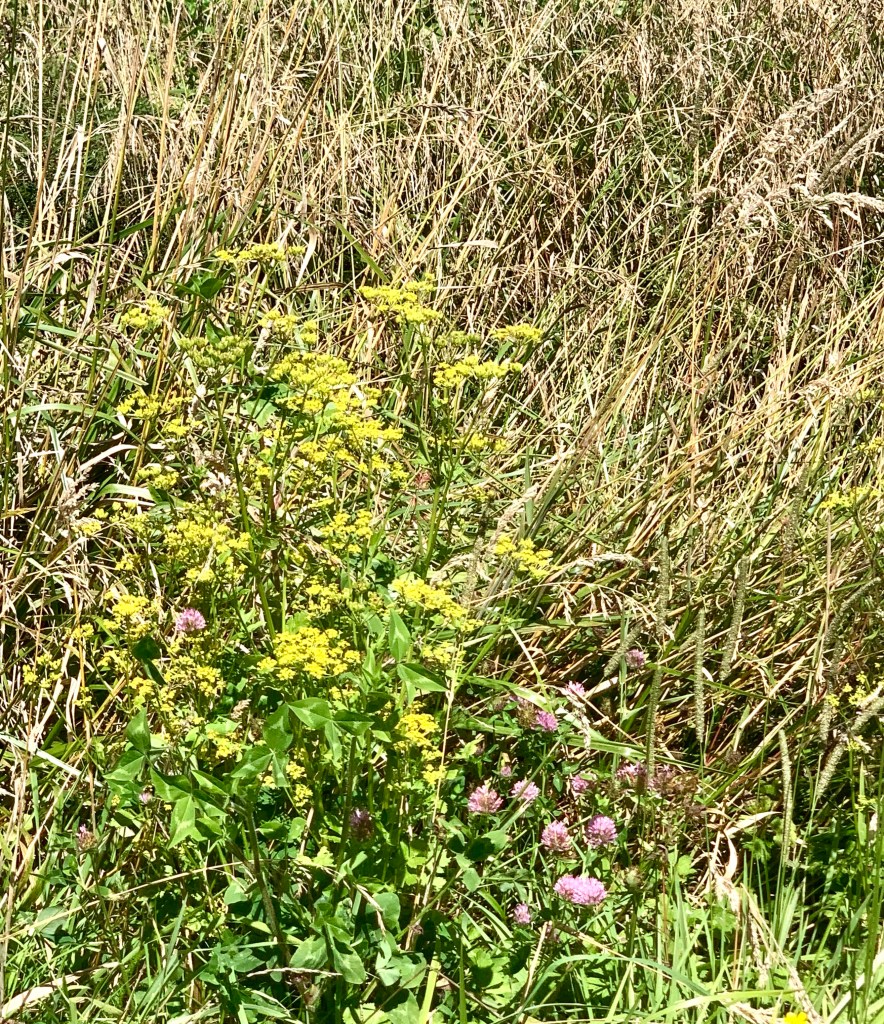
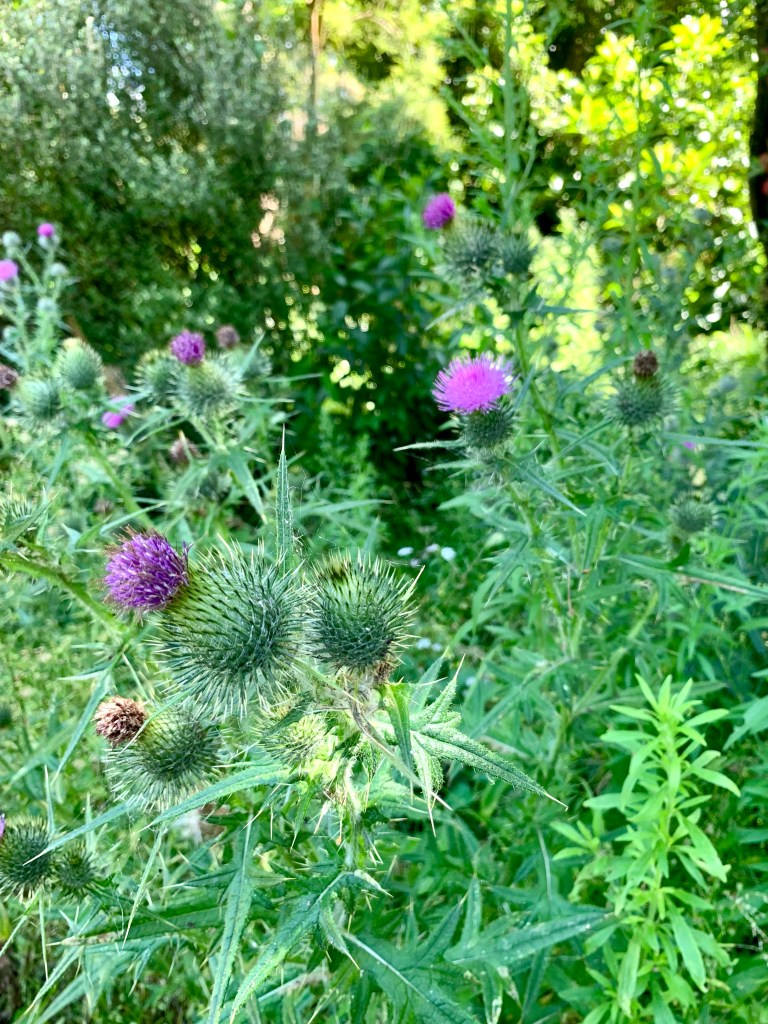
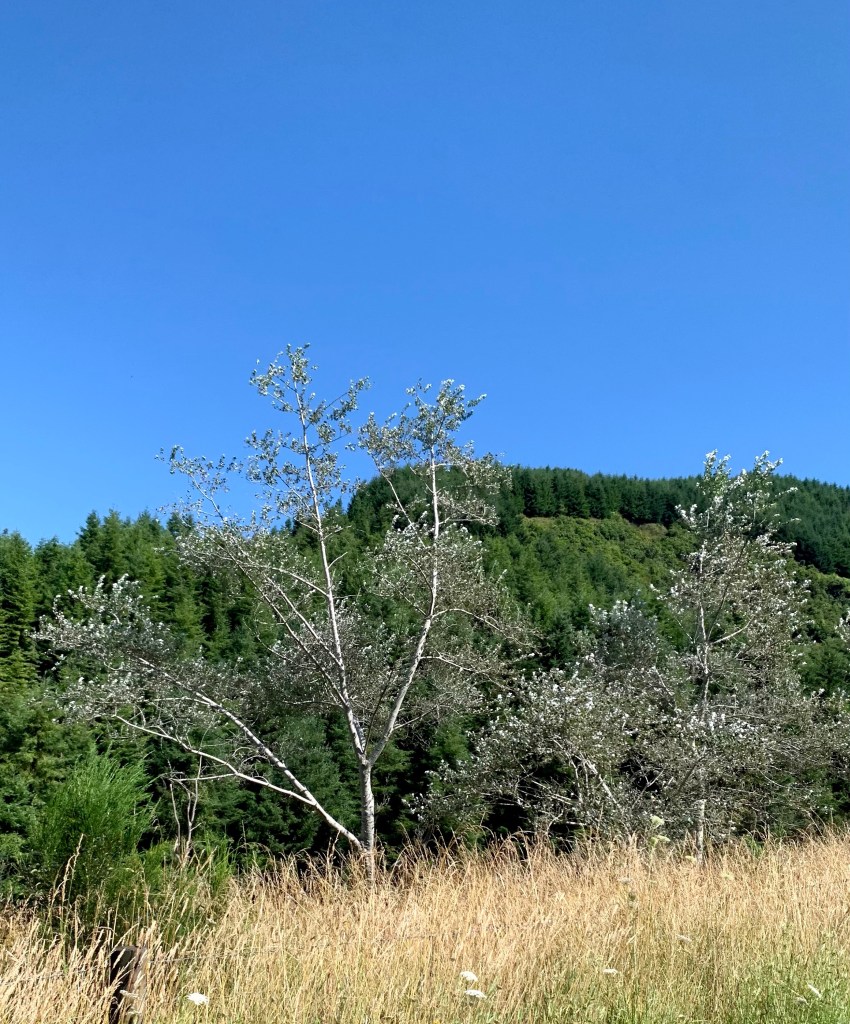
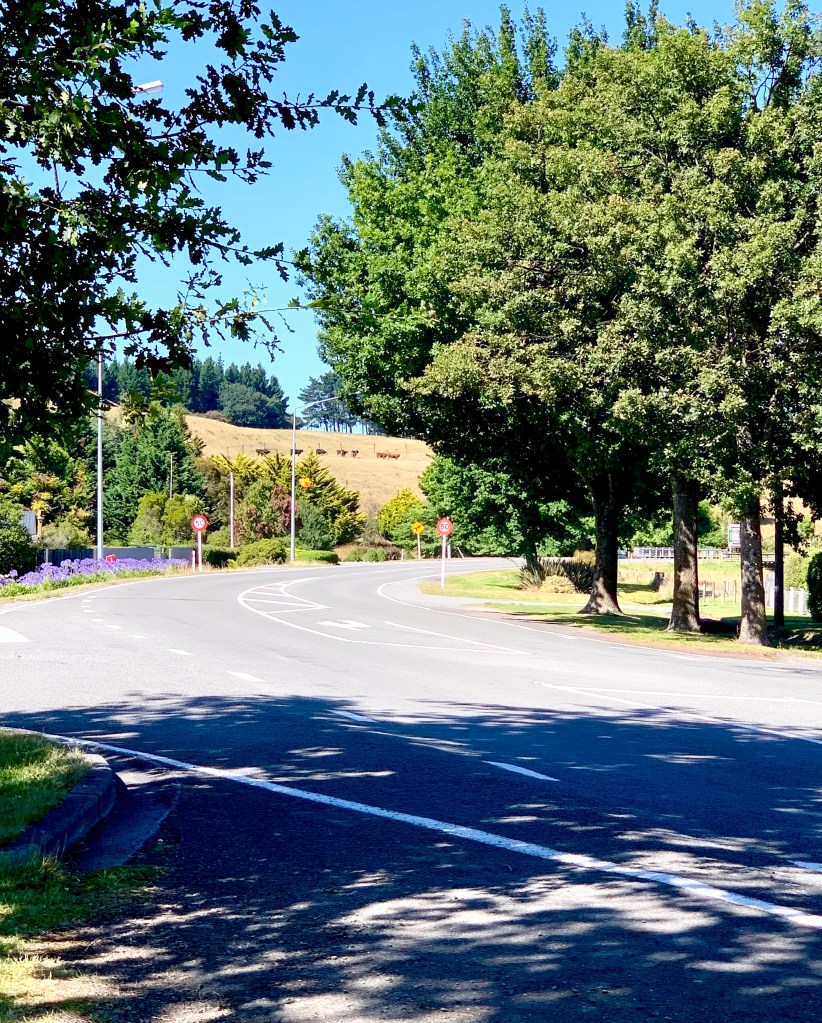
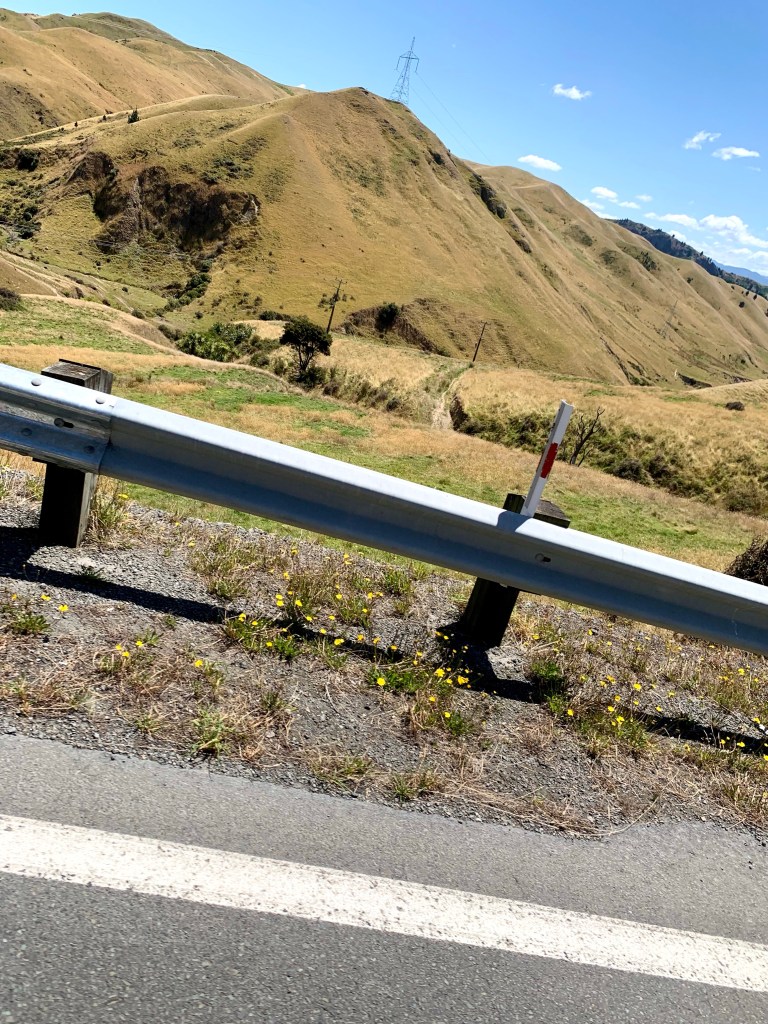
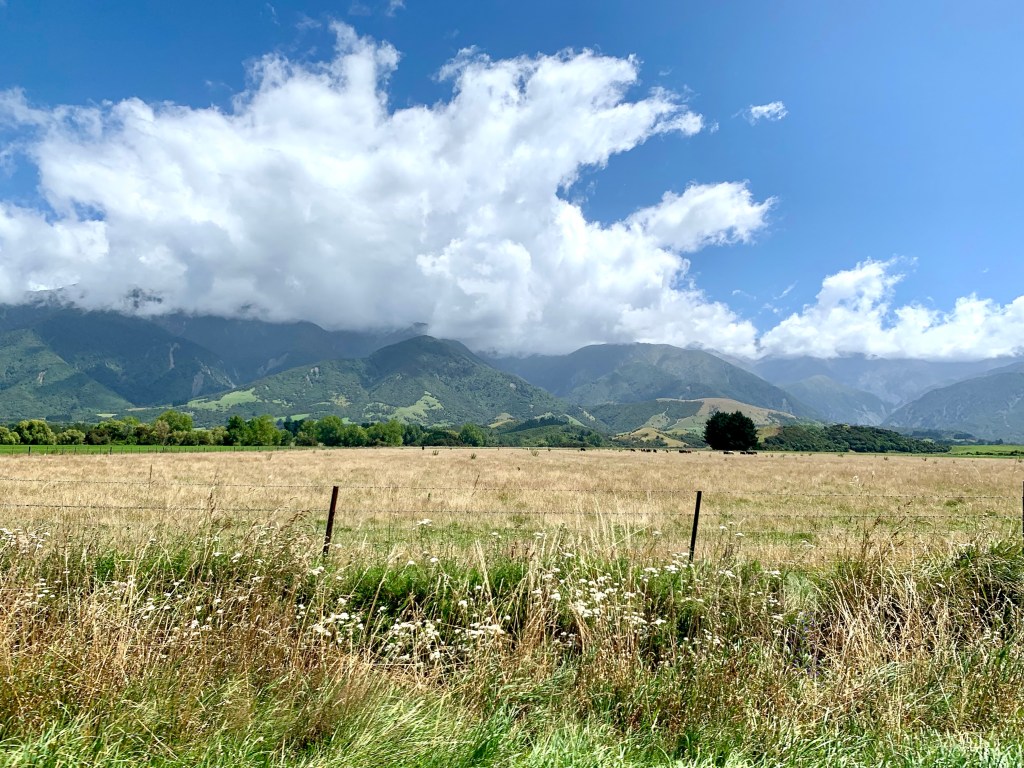
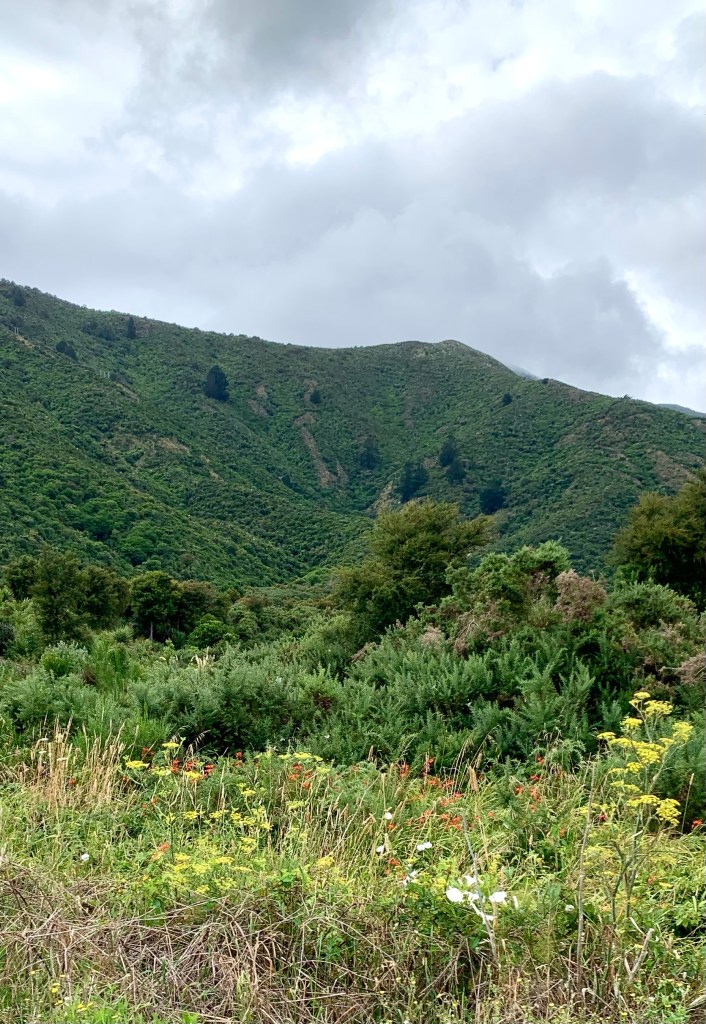
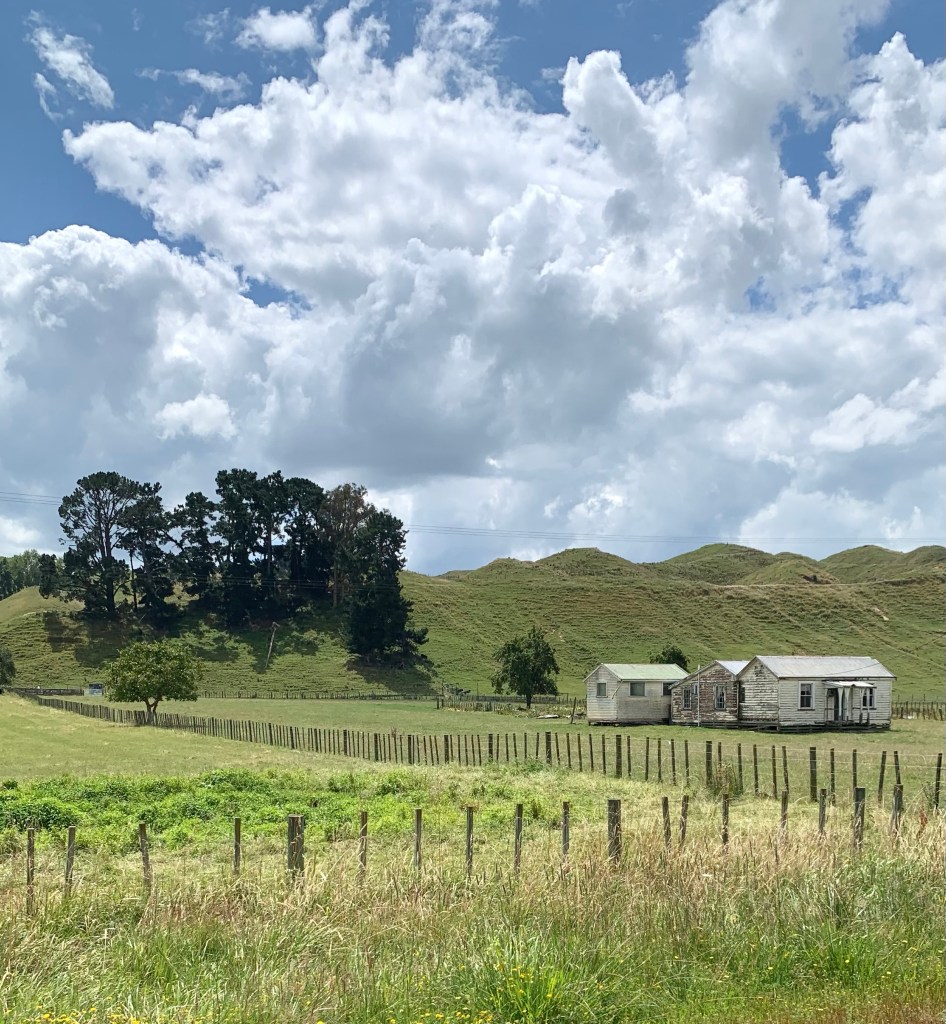
There are lots of wild flowers of different varieties that grow among the tall grasses along the verges of the road. You’ll see one, two or three varieties for a few kilometers and then another type will start appearing. Sometimes they occur together and at other times one type will definitely predominate.
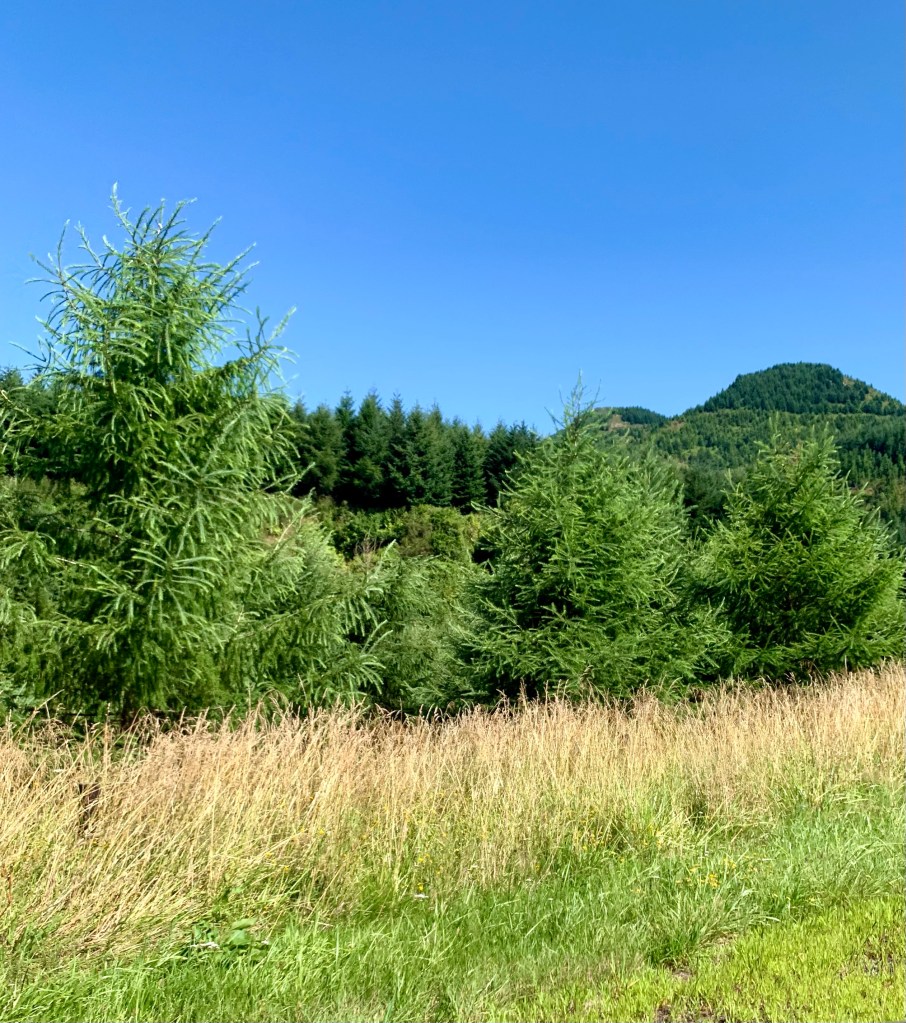
About 85km north of Christchurch the terrain becomes more hilly and wooded on both sides of the road.
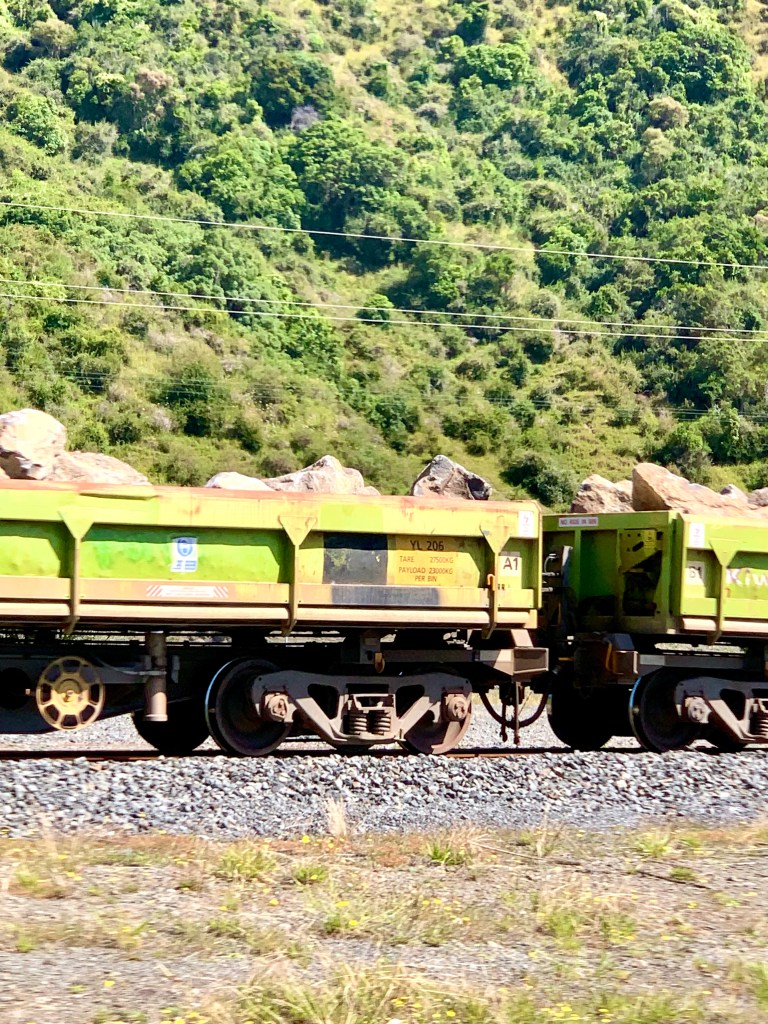
And always the railway line running alongside the road.
There are surprisingly few places to stop for refreshments on SH1 and it was quite late in the morning by the time we got to stop for morning tea and coffee at Cheviot which is the largest town on the coastal route between Amberley and Kaikoura. According to the 2018 census it has a population of 362, which gives you some idea of how sparsely populated this area is.
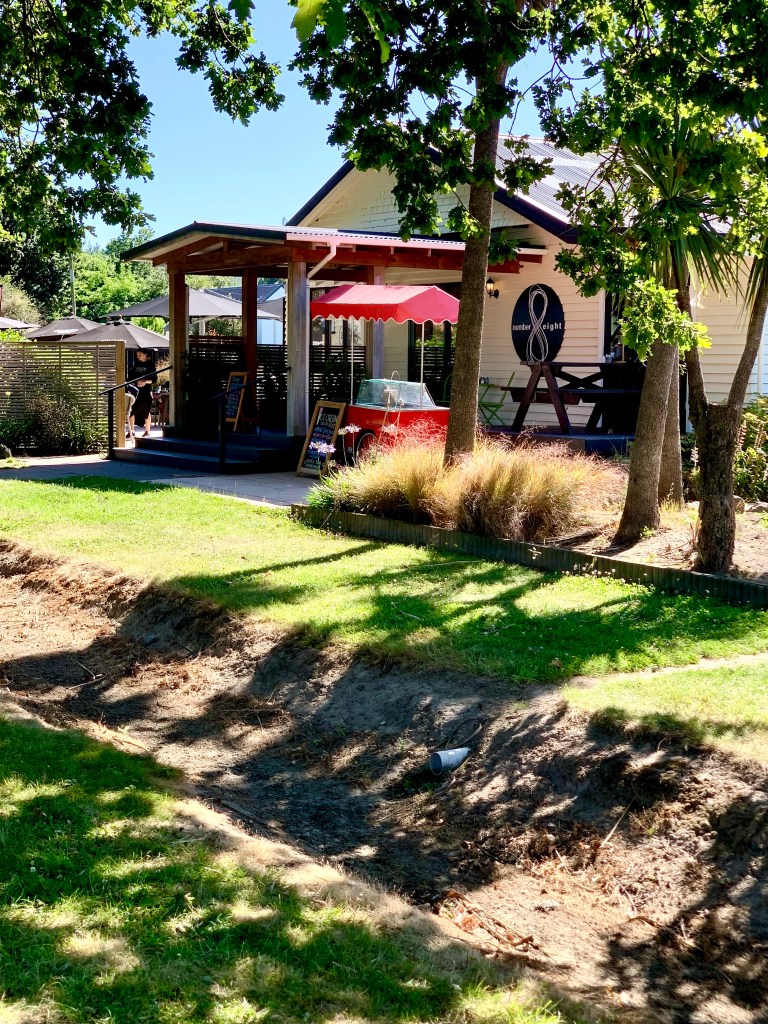
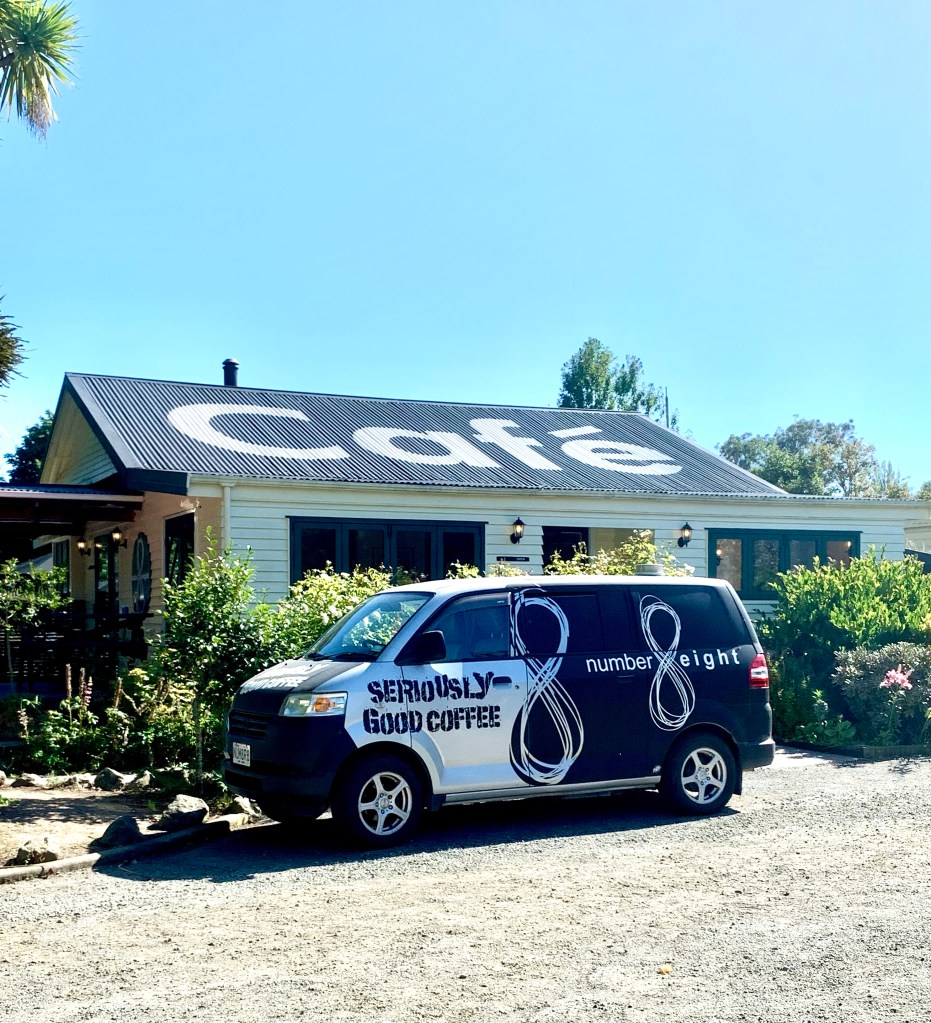
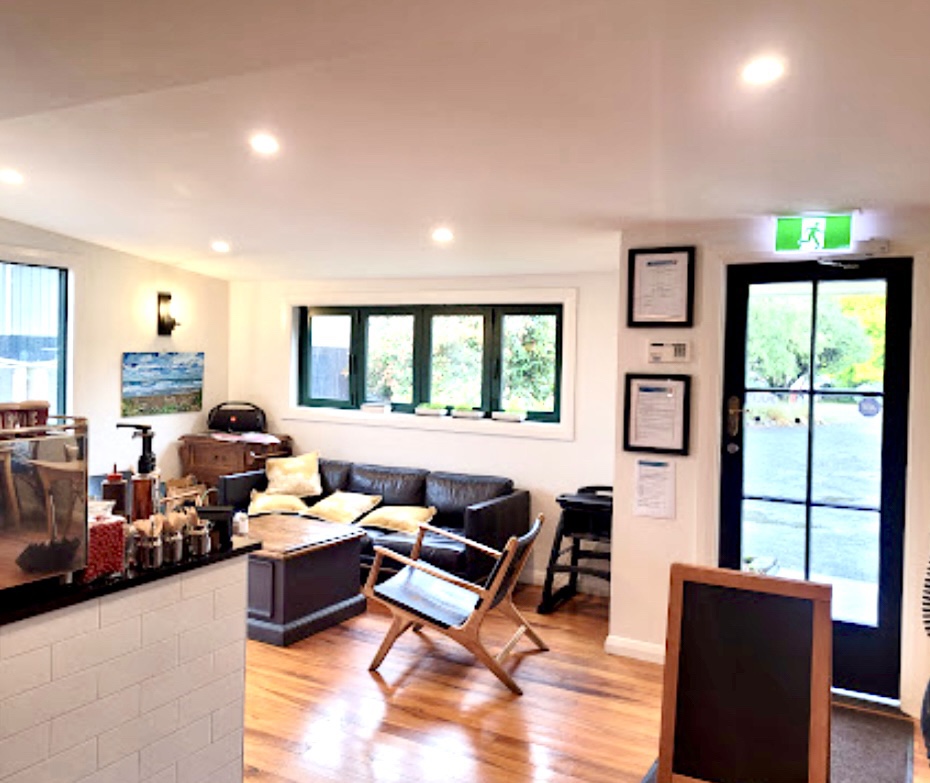
Being the first day of Chinese New Year, we would have had no option but to stop at the Number 8 Café in Cheviot anyway. The word for the number 8 in Cantonese 八 ( Ba) has the similar pronunciation with 发 (Fa) meaning wealth or fortune which is why 8 is considered to be the luckiest number in China.
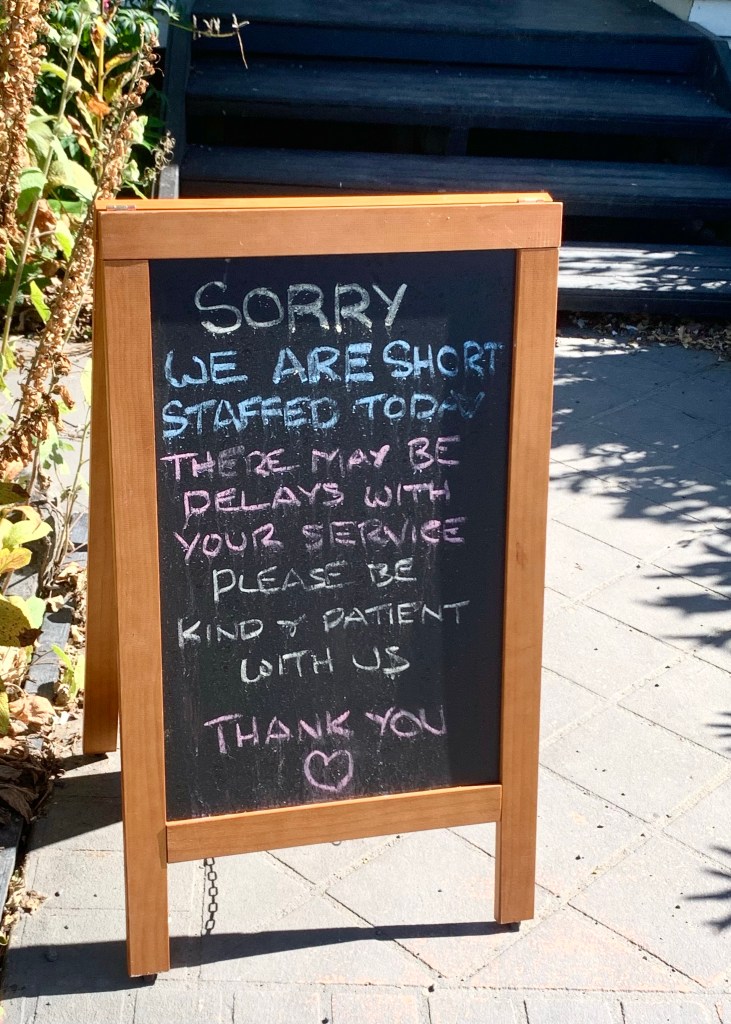
So many places we’ve been to here are advertising for staff and clearly having staff shortage issues. This seems to be a very widespread phenomenon because it is also the case in other countries.
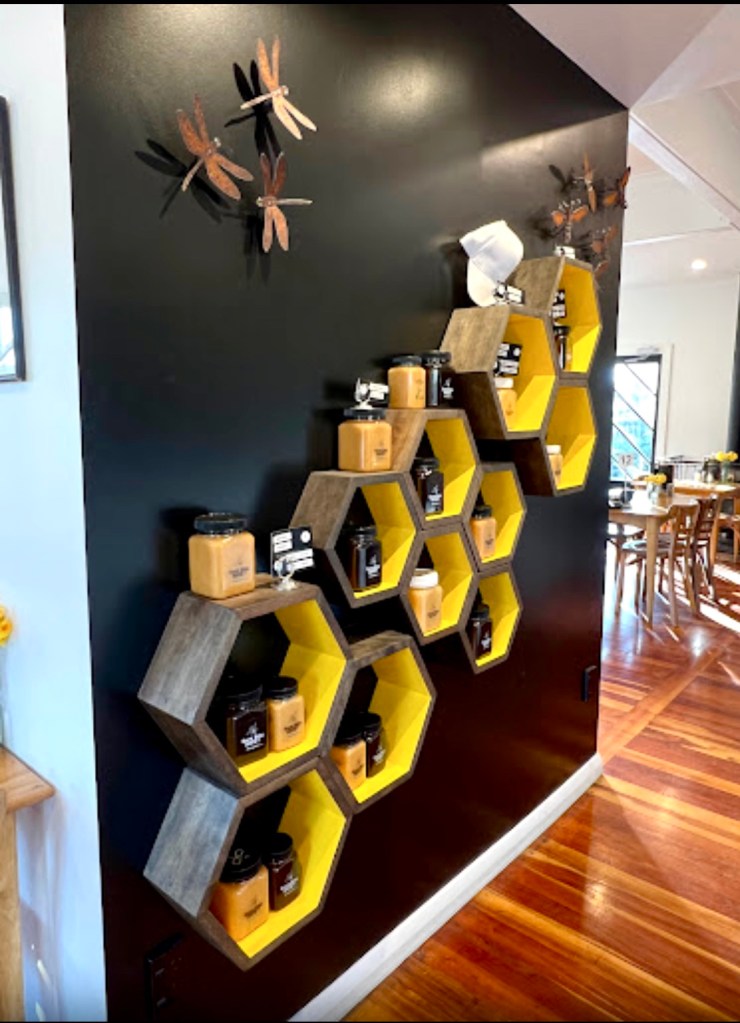
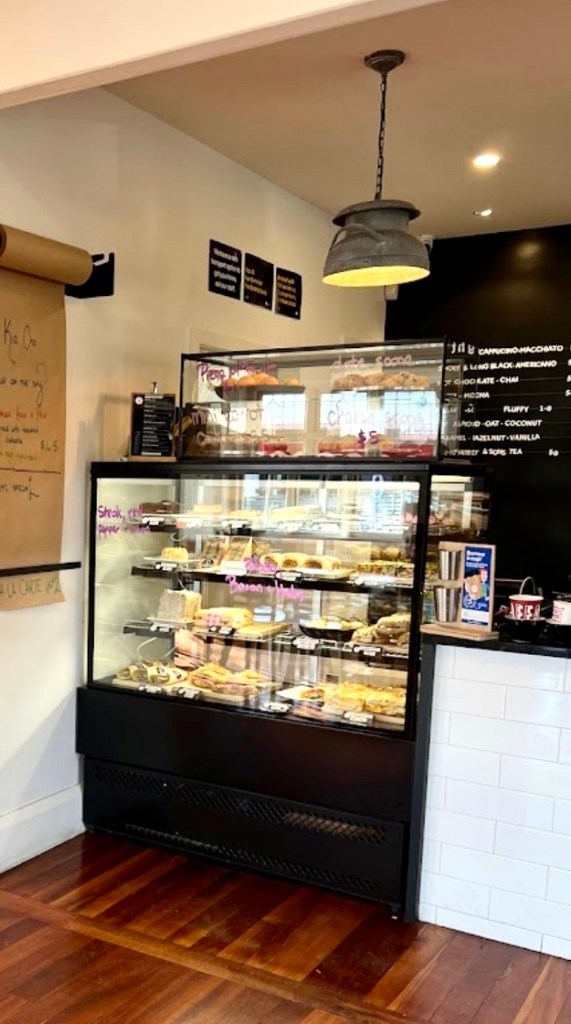
The Number 8 Café turned out to be a good place to stop anyway because it was attractively laid out inside and the food on offer was very nice. I had one of their delicious scones with my tea.
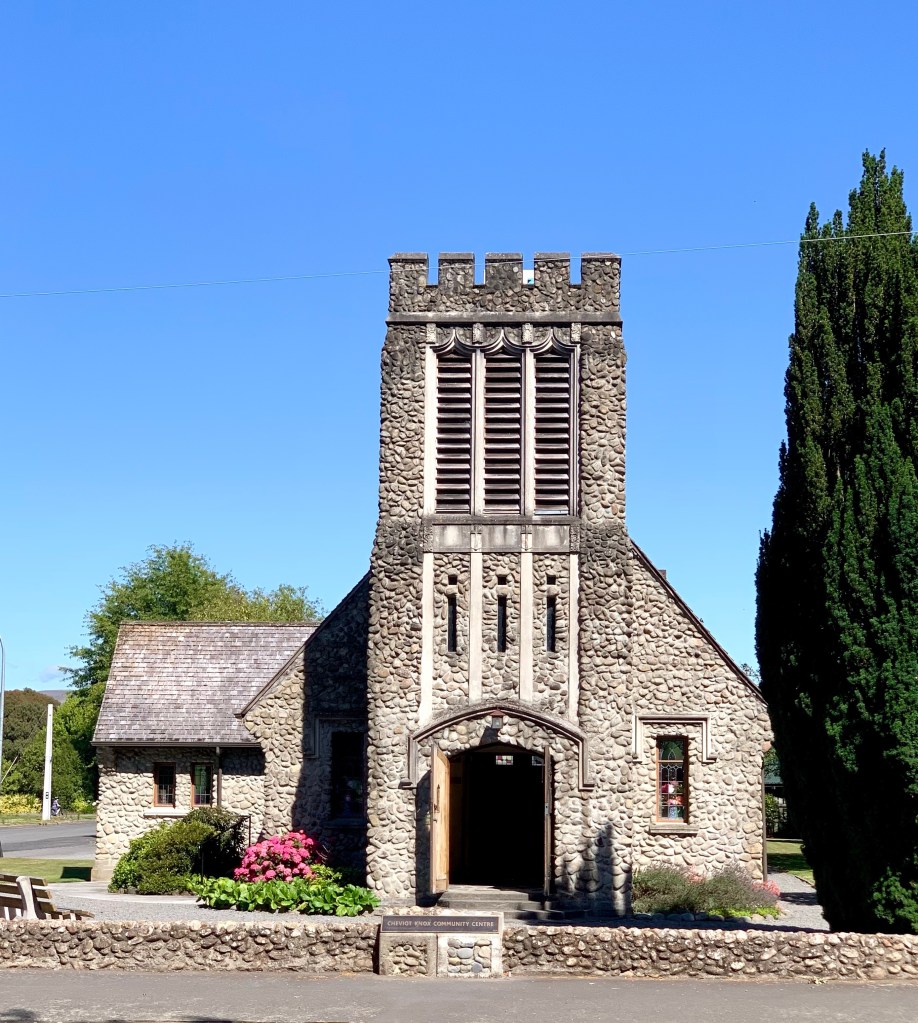
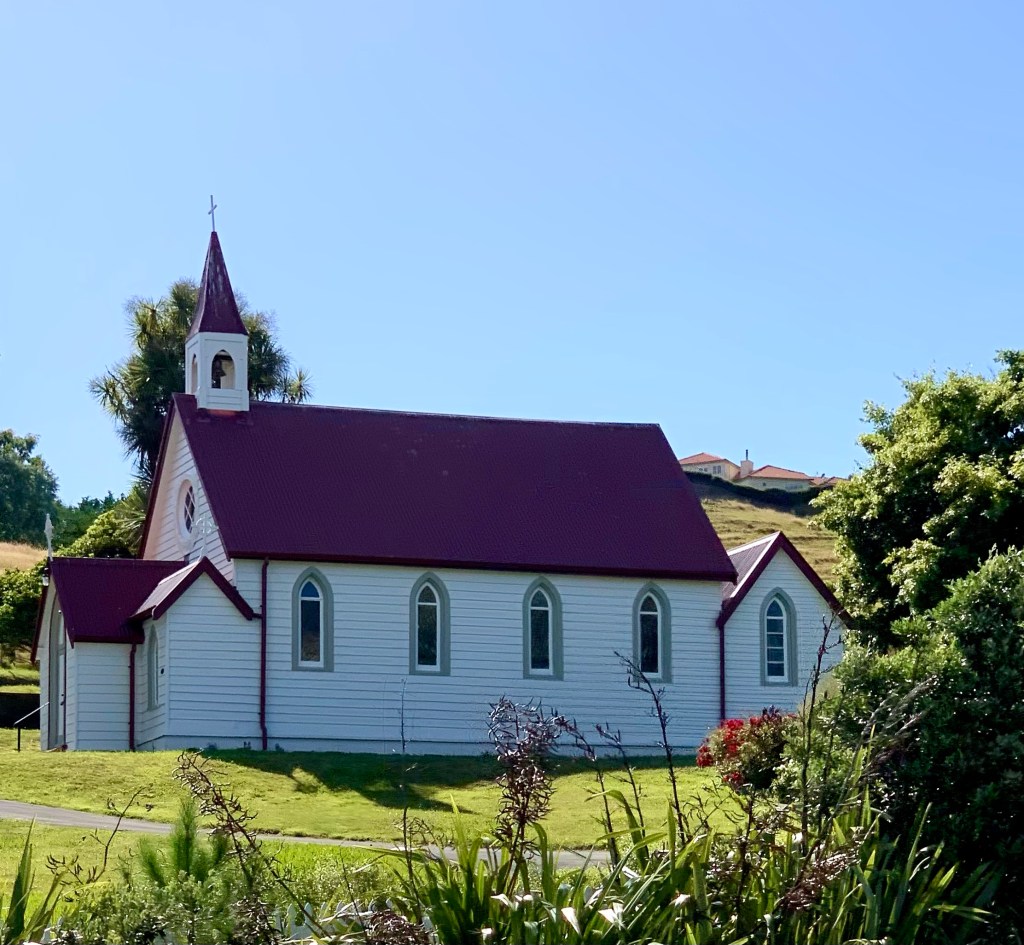
Across the road from the Number 8 Café is an old stone church, the Knox Presbyterian Church, that was built in 1955 to replace the original church built in 1896 that burned down. The new church was built with stone gathered from the nearby Hurunui River. In 2018 the church and hall were purchased by the Cheviot Knox Community Centre Trust on behalf of the Cheviot community.
The Cheviot Knox Community Centre
The Presbyterian church is a reminder of the the strong Scottish legacy in New Zealand. The first Scots to arrive in New Zealand were crew members of James Cook’s ship Endeavour in 1769. Over the next 200 years, they were followed by thousands more of their countrymen, seeking more opportunities and the chance of a better life for their families and bringing their sills, their ingenuity and determination to succeed. The largest number of the early Scottish emigrants settled in the South Island.
The town Cheviot itself was named by its Scottish founder, John Scott Caverhill, after a range of uplands called the Cheviot Hills, or just The Cheviots, which straddle the Anglo-Scottish border between Northumberland and the Scottish borders. John Scott Caverhill was born in 1820 in Jedburgh Scotland and emigrated to Australia in 1839, settling in New Zealand a few years later where he was the first settler in the Cheviot district in 1848. He died in 1897 at the age of 76 and is buried in Christchurch after a long and productive life.
After a short break, it was back on the road again, bound for Kaikōura and then Picton.
The cure for anything is salt water: sweat, tears, or the sea. – Isak Dinesen
5th February 2023
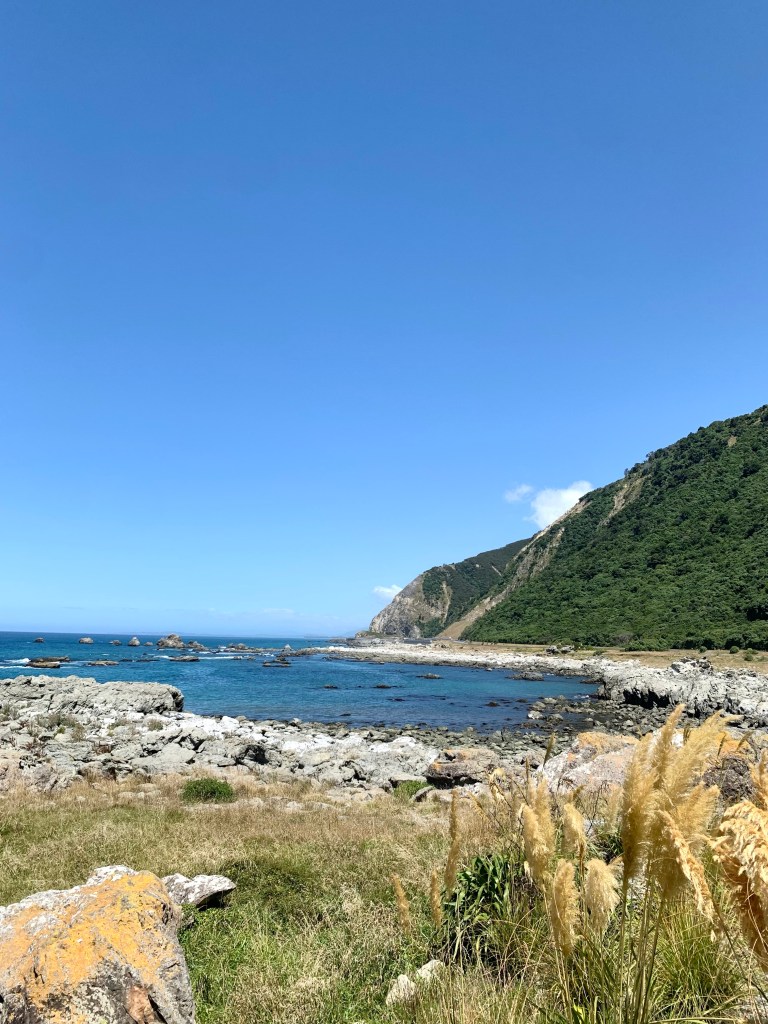
After Kaikōura the road continues to run snugly sandwiched between the mountains and sea, with the briny smell of kelp in the air. And what a glorious sea view it is! Absolutely mesmerising. We stopped at a lookout point and saw several seals out on the rocks. They were having such a grand time leaping off the rocks into the sea and then coming back and doing it all over again for the sheer joie de vivre.
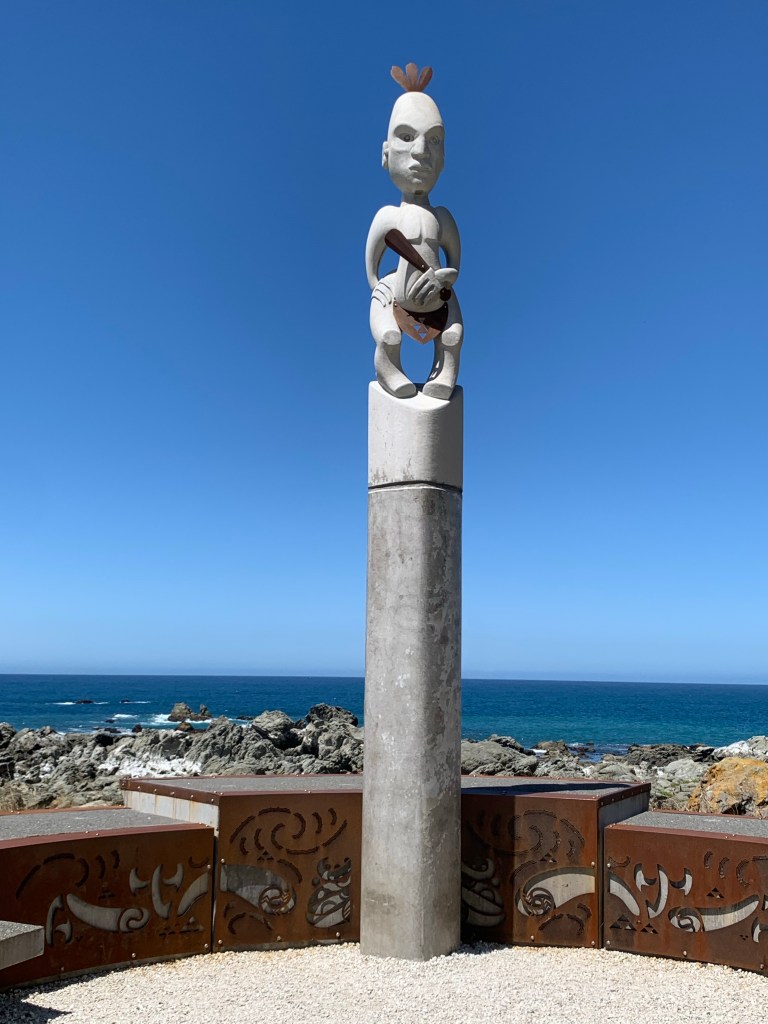
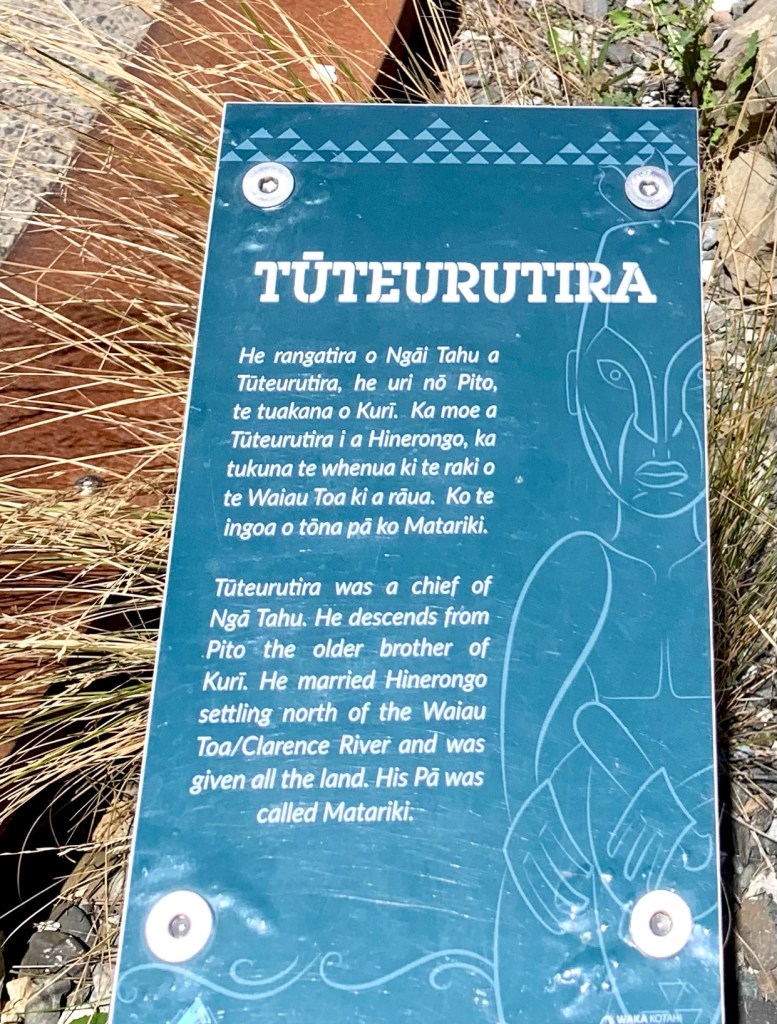
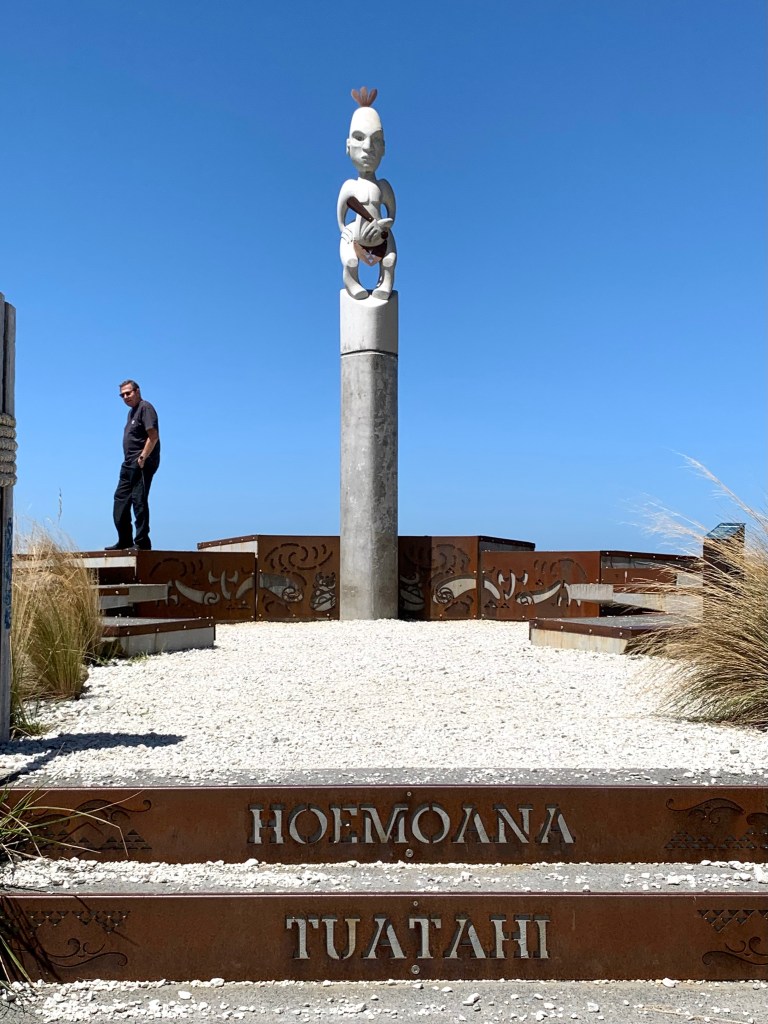
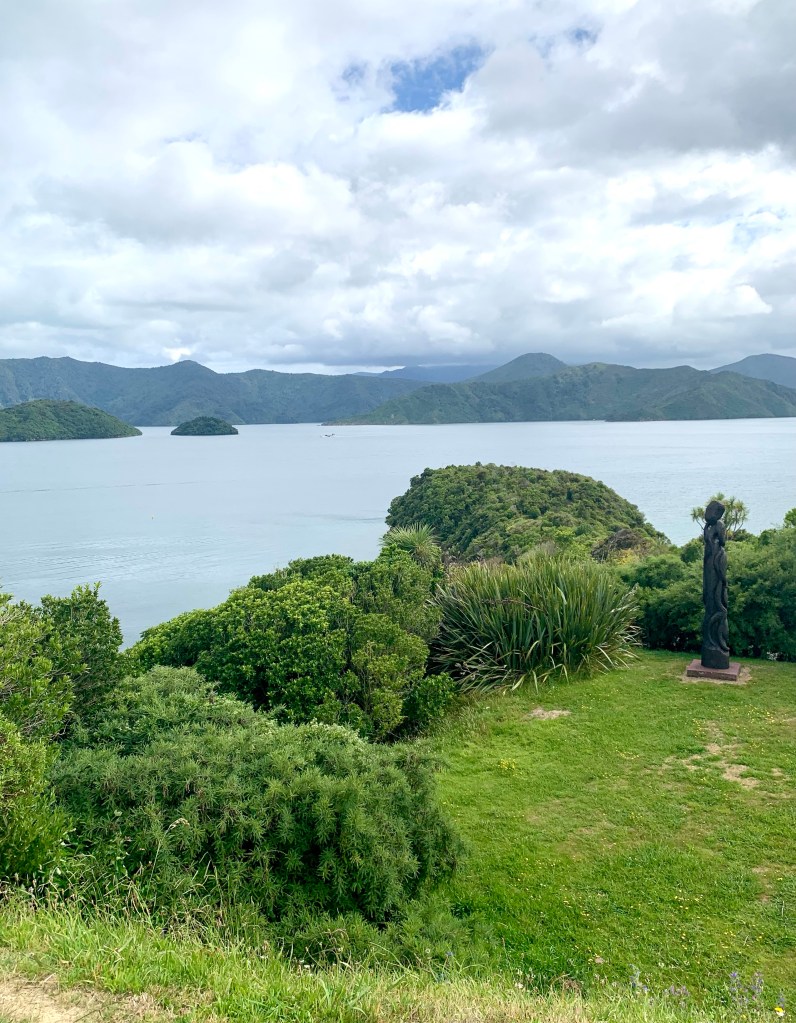
There is a commemorative statue and plaque to Tüteurutira and his family at the lookout point. He and his descendants were prominent figures in the history of the Māori peoples of the South Island.
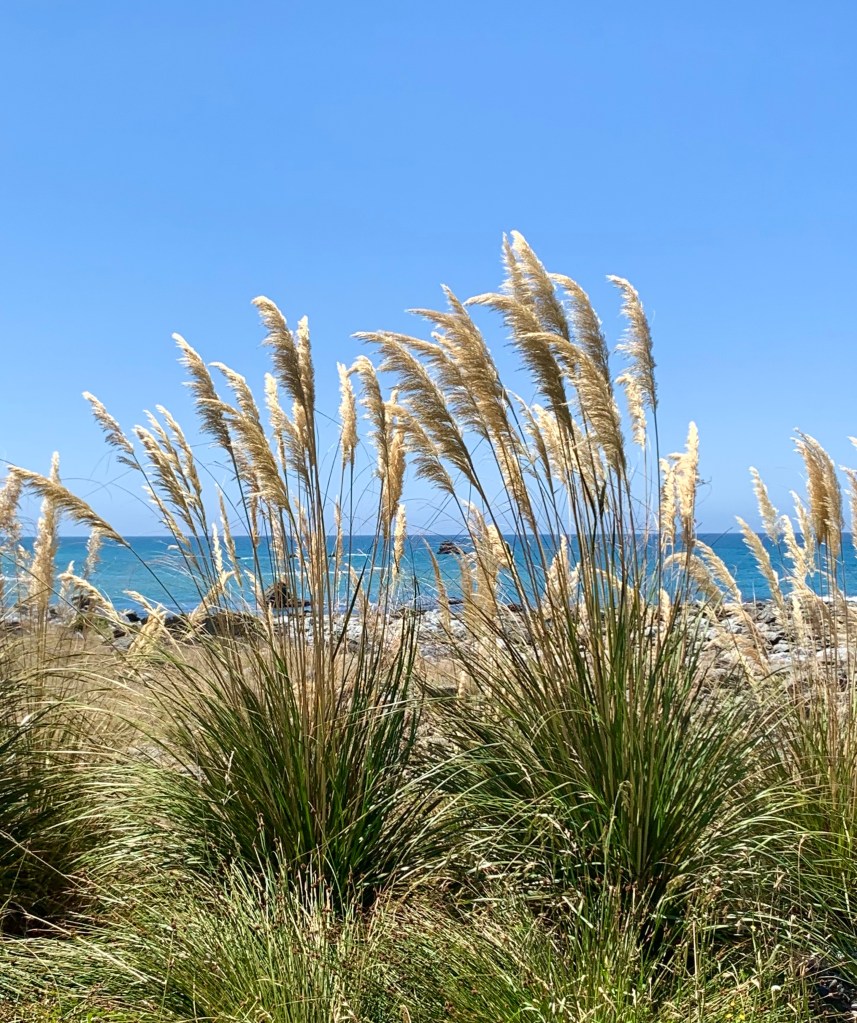
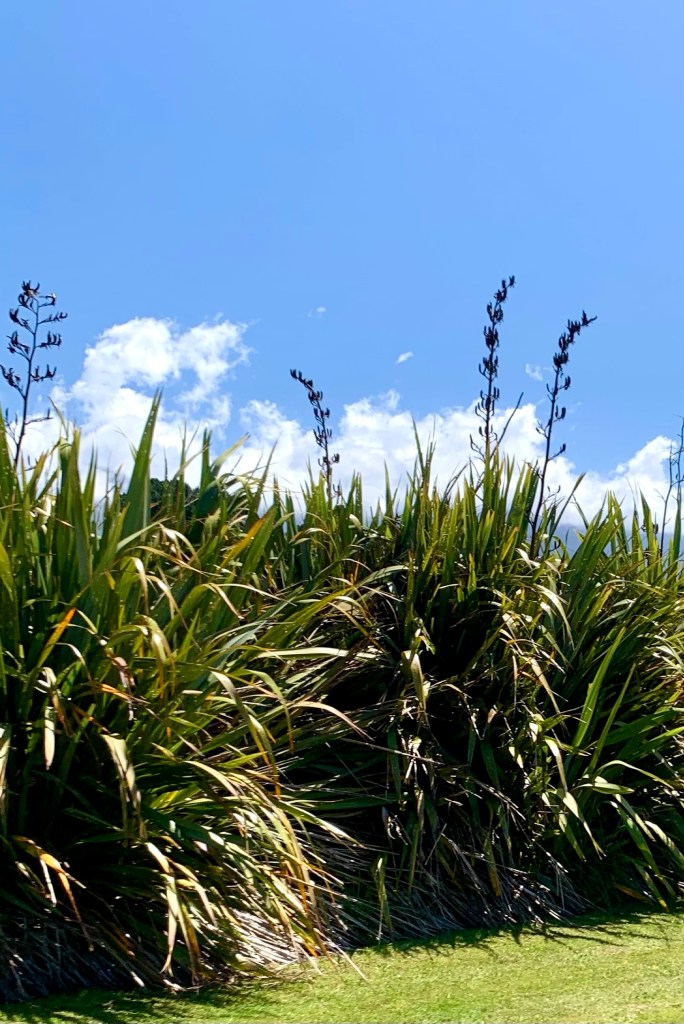
Around the base of the the lookout was a very attractive garden with lawn and two kinds plants that are found in abundance all over New Zealand.
Often confused with pampas grass, the toe toe (Austroderia richardi) is a species of flowering plant with feathery plumes in the Poaceae family. The New Zealand flax plant (Phormium tenax) is an evergreen perennial plant native to New Zealand and Norfolk Island. It grows as a clump of long, straplike leaves, up to two metres long, from which arises a much taller flowering shoot, with striking yellow or red flowers
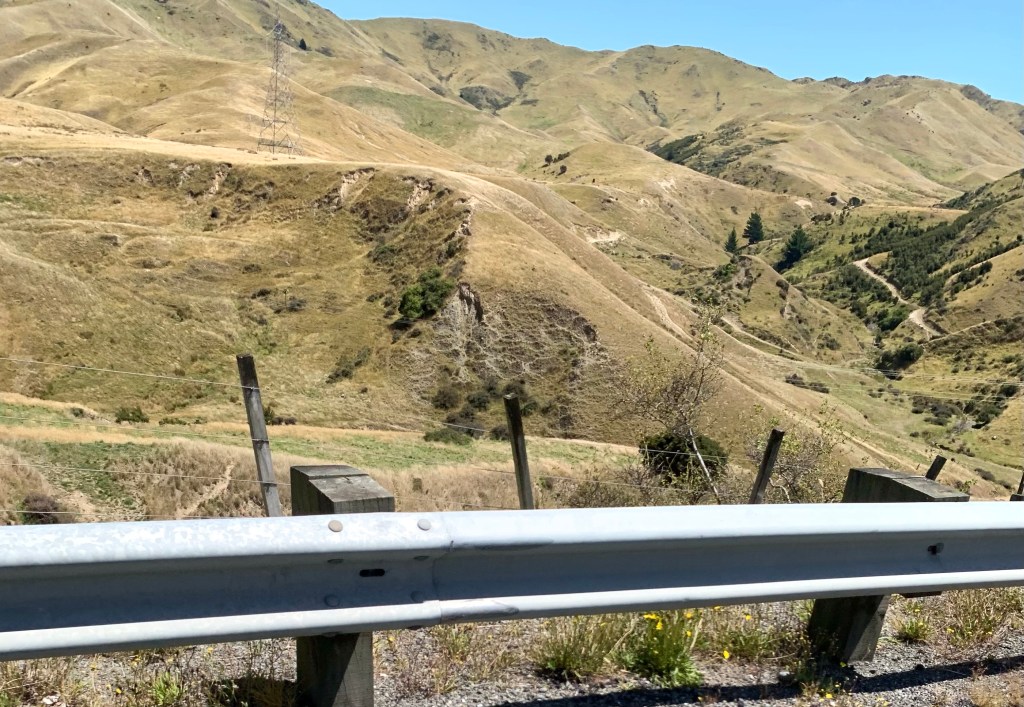
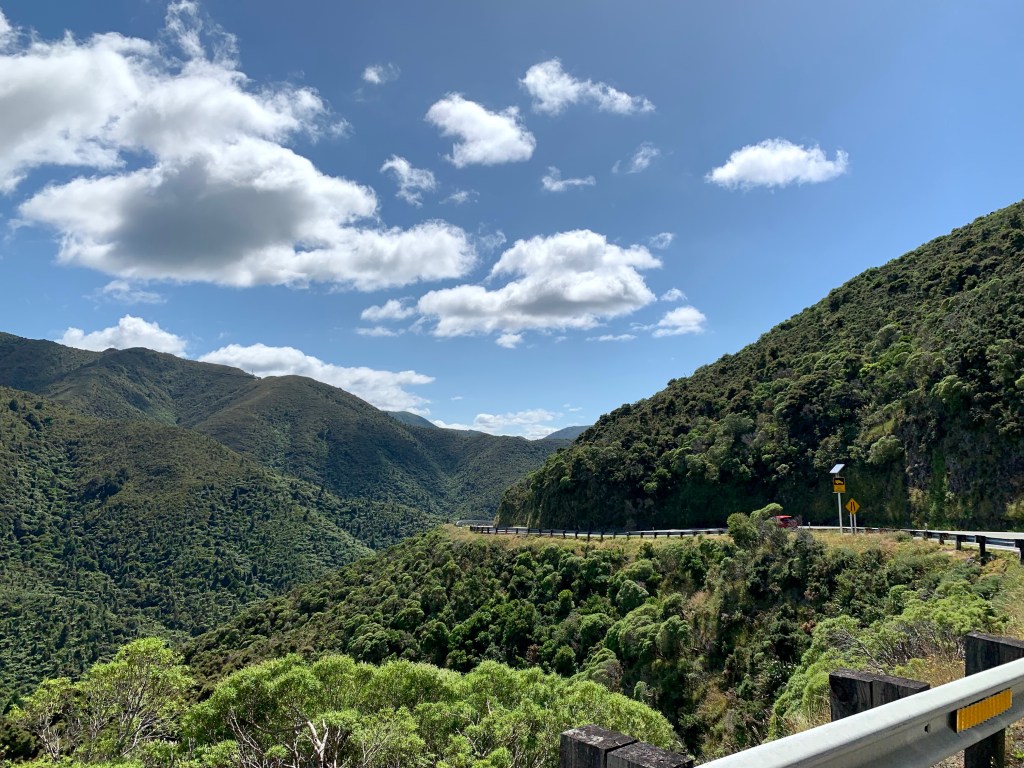
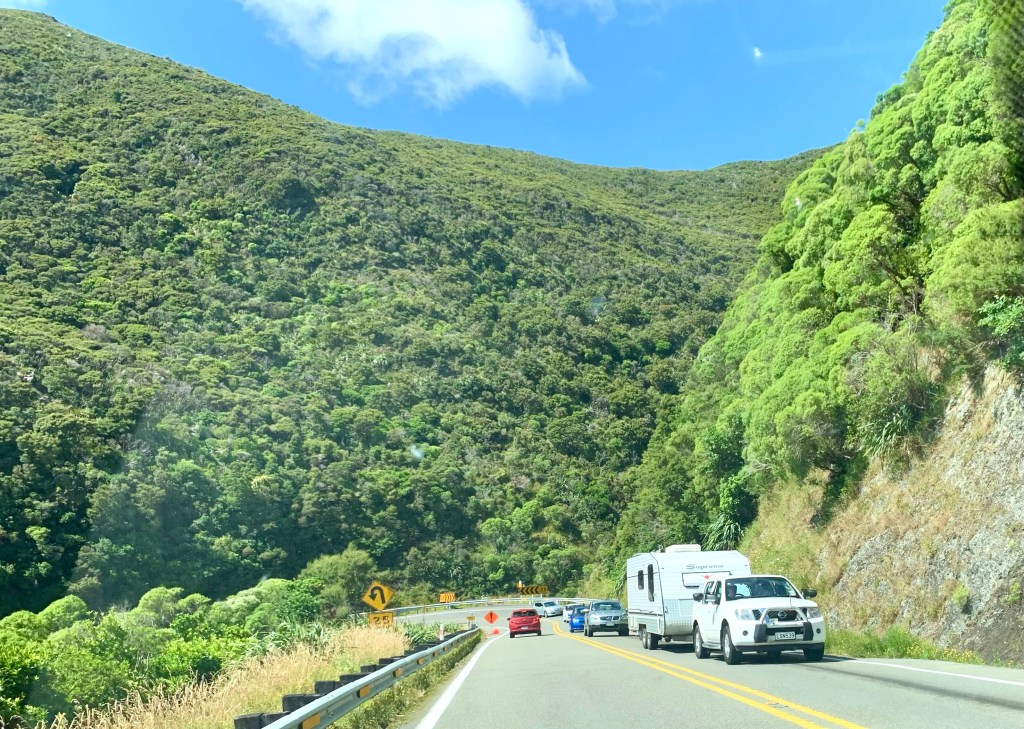
Not long after the lookout, the road moves inland again and twists and turns up and down through the mountains with very sharp, tight turns.
Then, all of a sudden we were back on level ground and shortly after that we found ourselves in Blenheim and wine country.
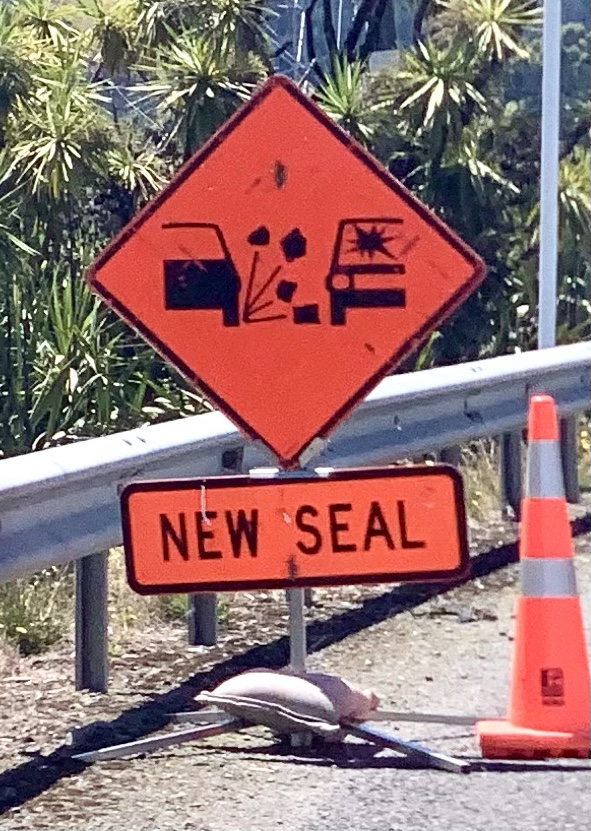
Blenheim is only 27 km from Piction but it took us 38 minutes to get there because of a short delay due to the ubiquitous road works.
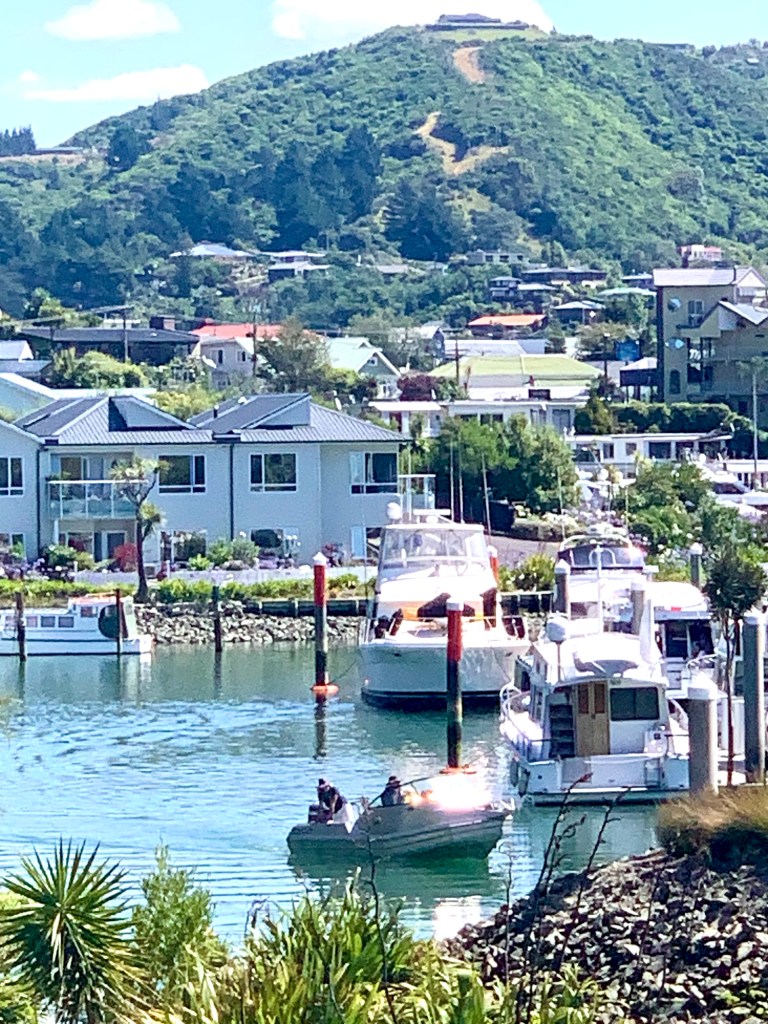
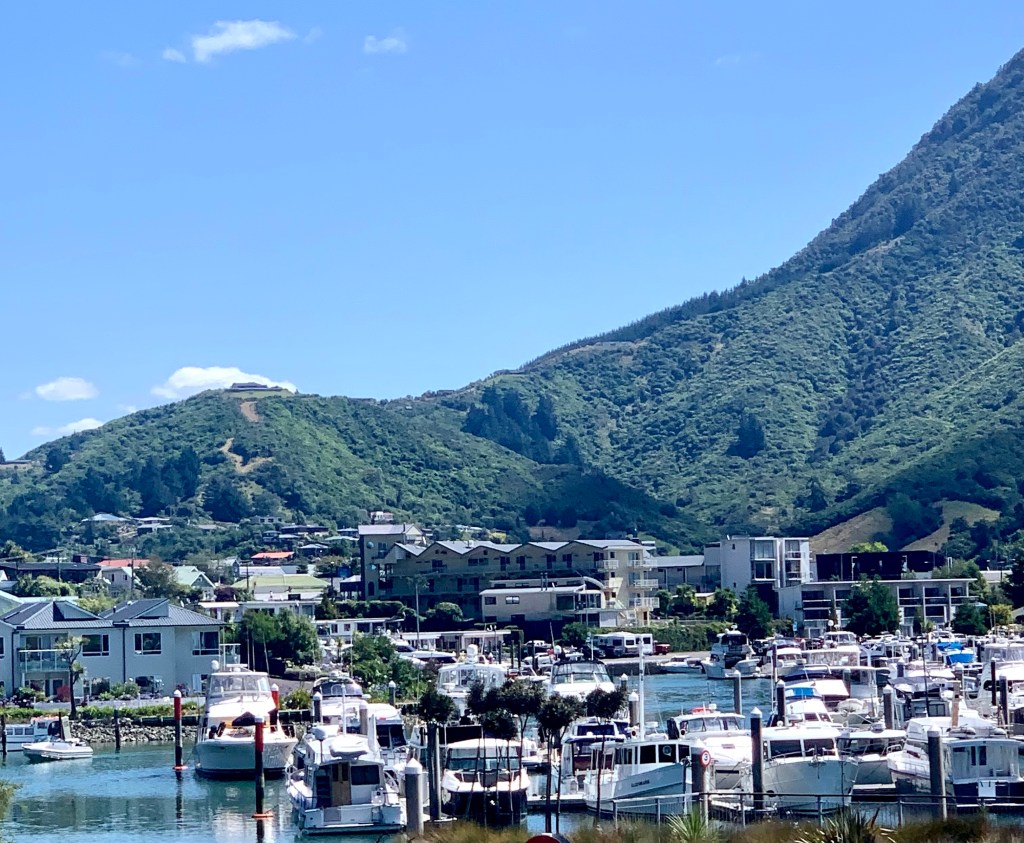
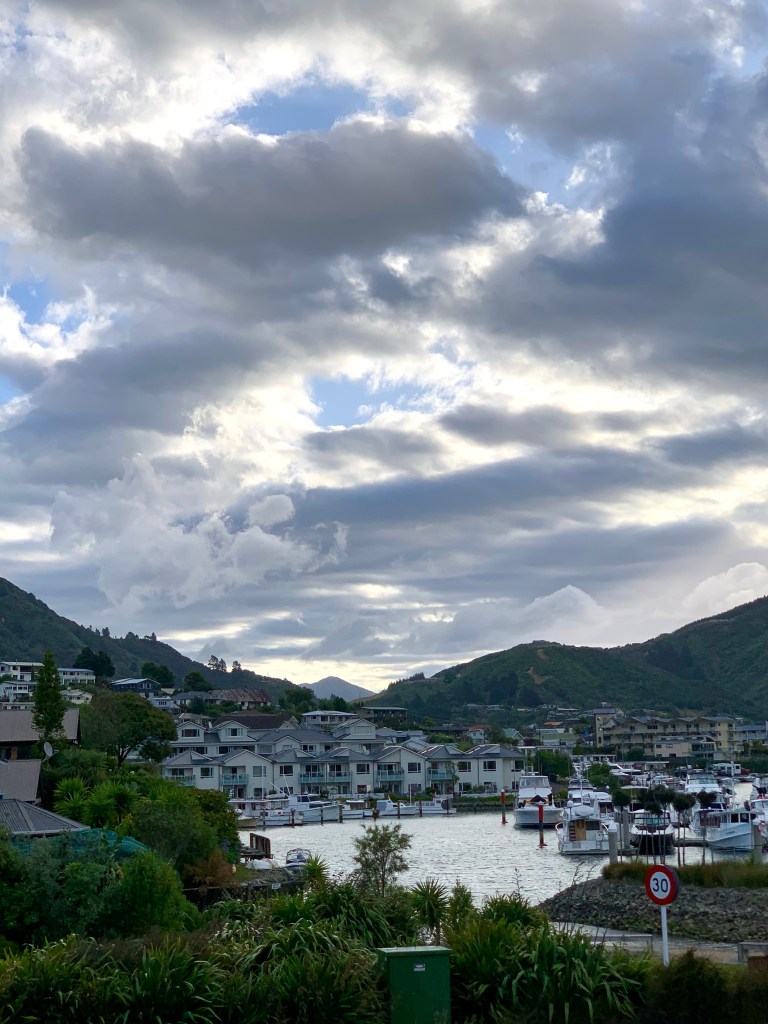
We finally arrived at Picton after a long day’s drive and checked into our AirBnB for the night, the Boat House Apartments. The apartment is on the first floor and has lovely views over a little marina in front of it.
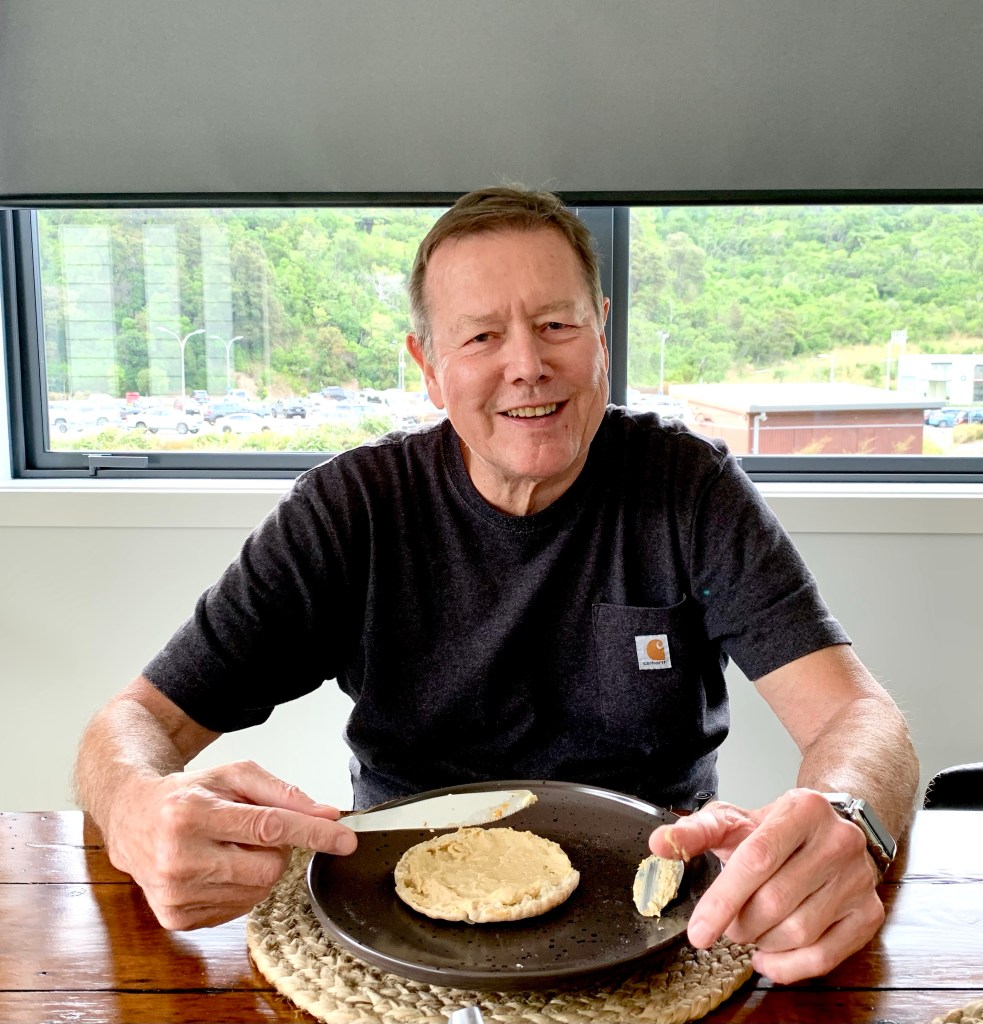
We decided just to go to a supermarket nearby to get pita breads and nice things to put on them for dinner and then to relax and rest.
A lovely tranquil ending to a very interesting road trip. Tomorrow afternoon we get on the ferry back to Wellington.
The sea! The sea! The open sea! The blue, the fresh, the ever free! – Bryan W. Procter 1837
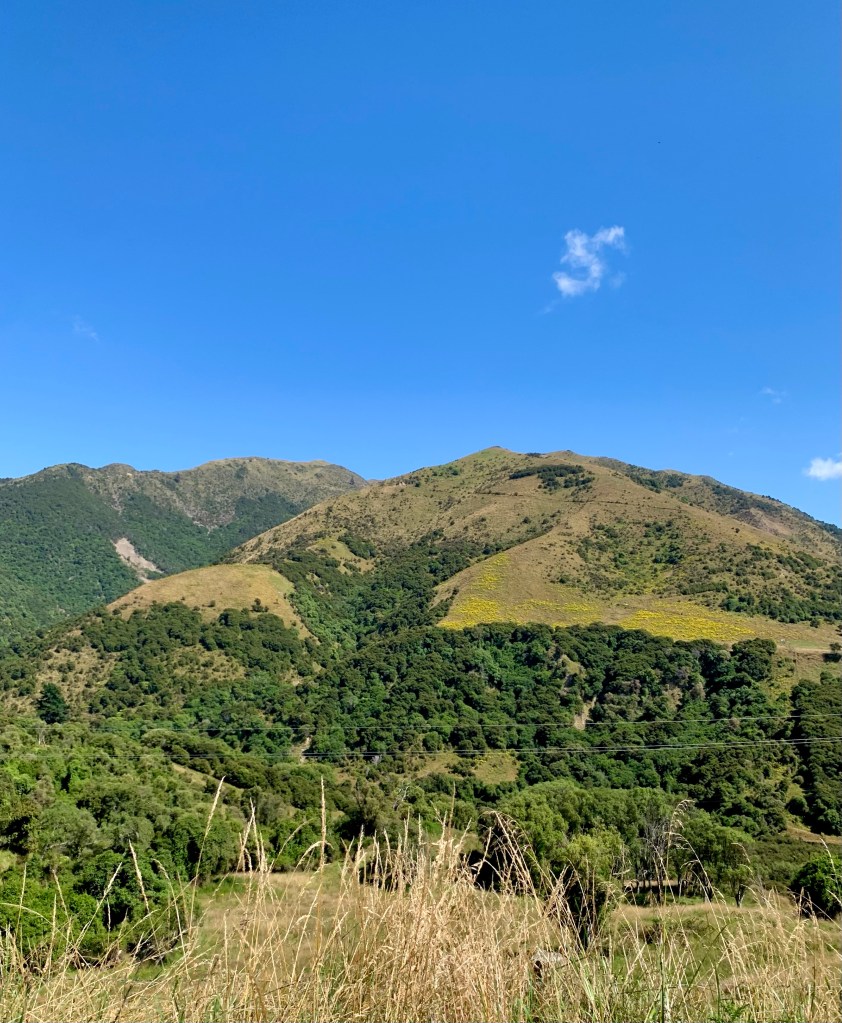
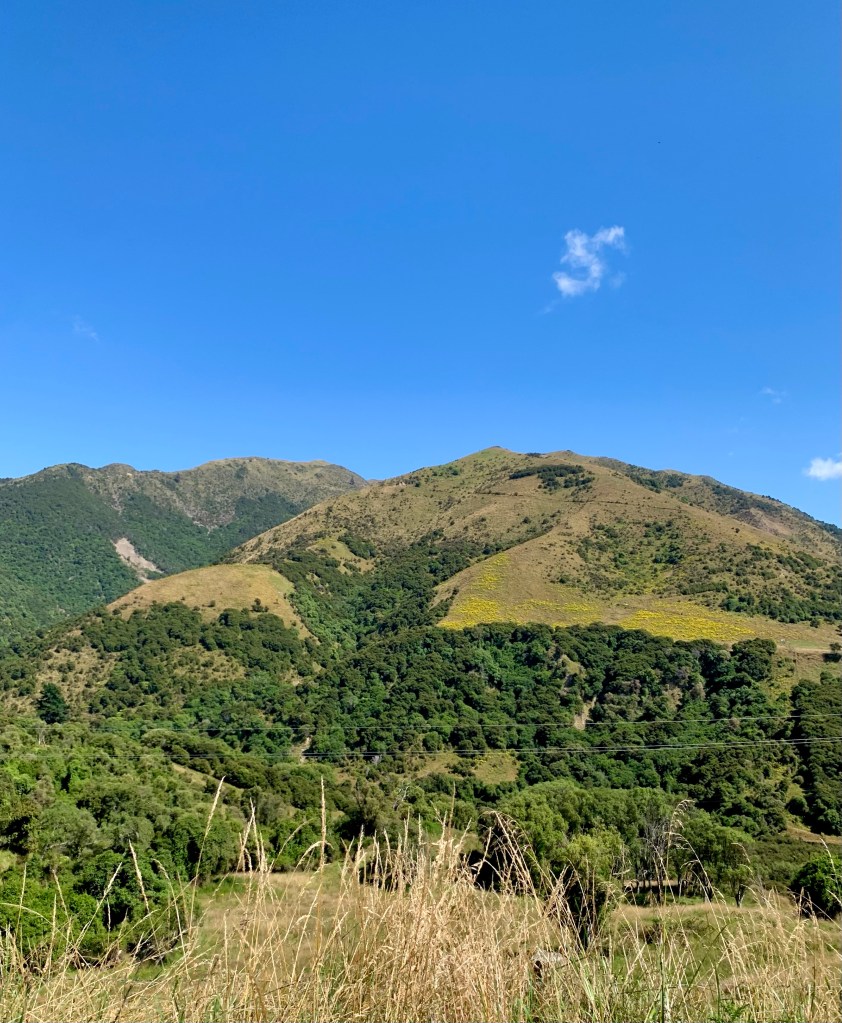
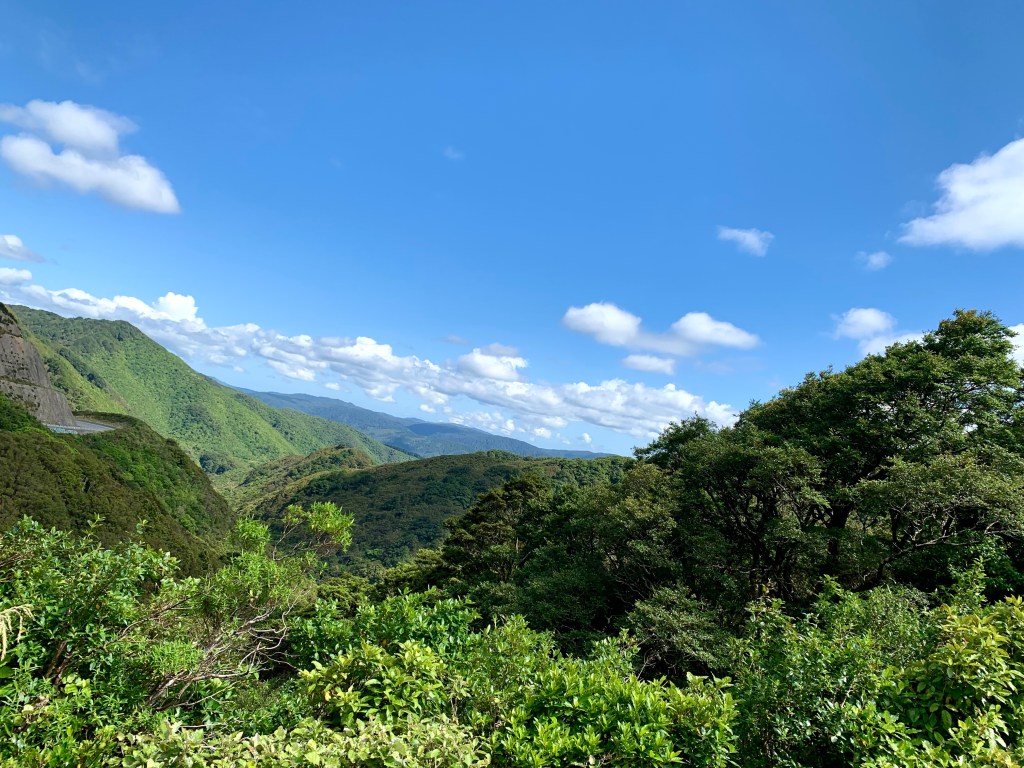
Between Cheviot and Kaikōura, the terrain becomes mountainous and, to our surprise, the scenery is almost as dramatic as parts of Arthur’s Pass.
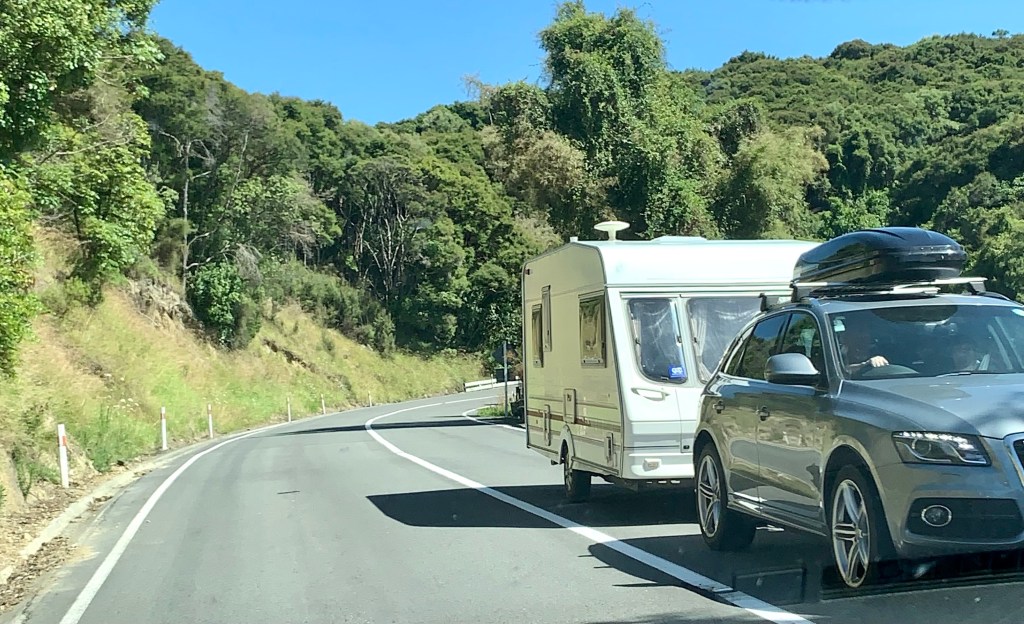
Caravanning is obviously a very popular national pastime – caravans of every shape, size and design are a very common sight on the roads here
Then we got our first glimpse of the sea, always an exciting moment! I think most people have experienced that moment of thrill at the first sighting of the sea. According to Peter J. Conradi in his biography of one of my favourite novelists, Iris Murdoch, the title of her Booker Prize-winning novel The Sea, The Sea comes from the Greeks’ cry during the Persian wars when they finally sight salt-water: Θάλαττα! θάλαττα! (Thálatta! thálatta!): the sea! The sea!
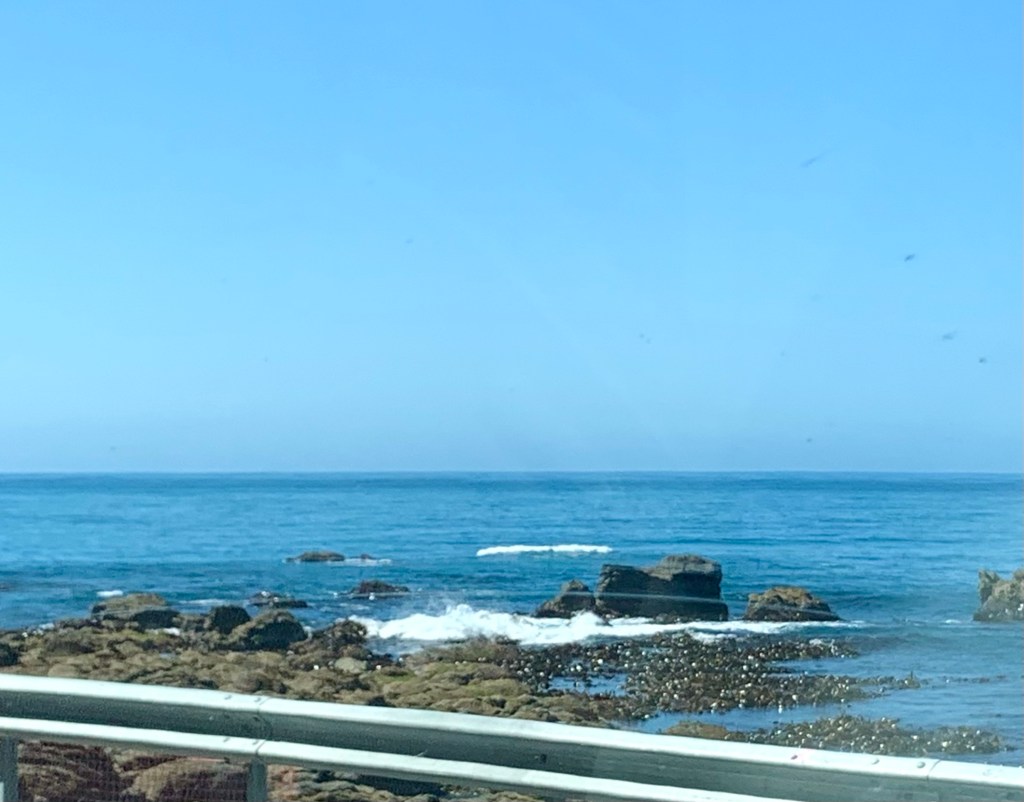
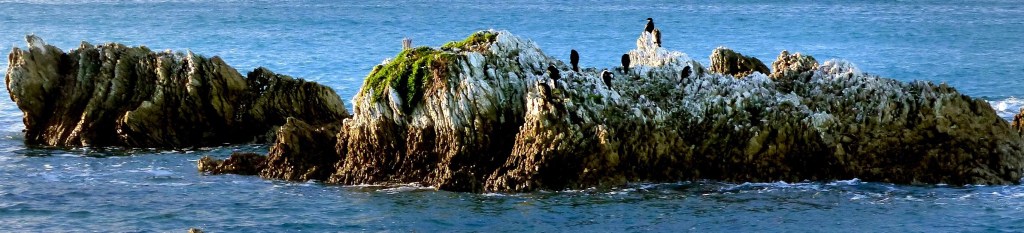
The coastline stretching roughly between the mouths of the Conway and the Clarence Rivers is called the Kaikōura coast. Along this section of SH1, there is a band of bright turquoise water near the shore and then a wider band of dark blue sea to the horizon. As you get closer to the town of Kaikōura, which is 180km north of Christchurch, the coastal plain narrows considerably and the mountains seem to rise up almost straight from the sea. The road is cut into the side of the mountains and the railway tracks running parallel to the road go through many tunnels. The rocks in the sea close to shore are extensive and many of them are sharply jagged. There is also prolific kelp growth. For the whole duration of the drive along that coastal strip the strong smell of kelp filled the car. The coastline is a protected sea reserve and there are lots of birds and seals who use the area. We spotted seals on the rocks in several places.
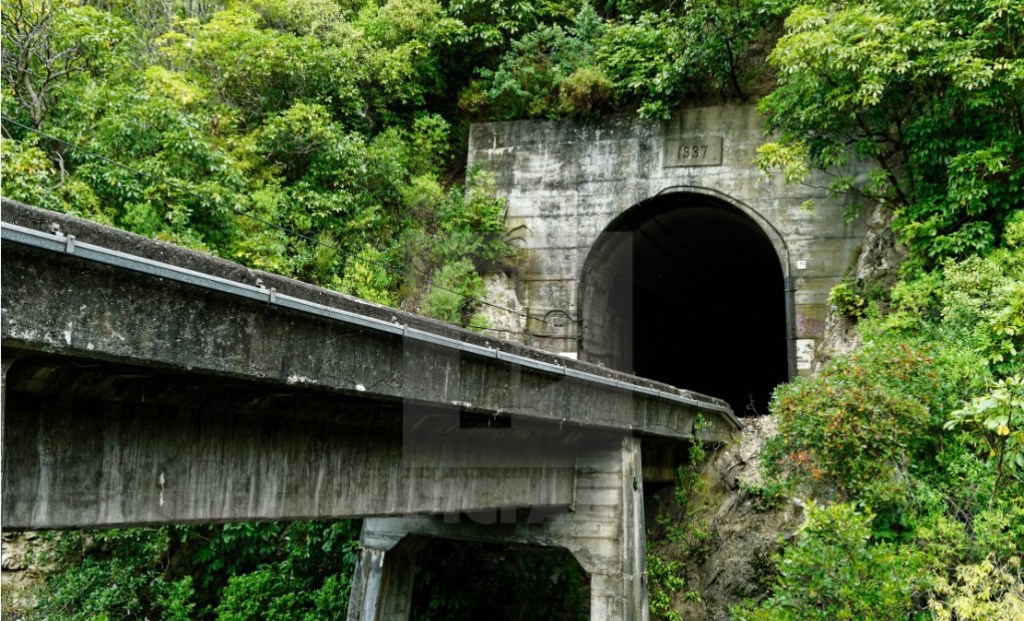
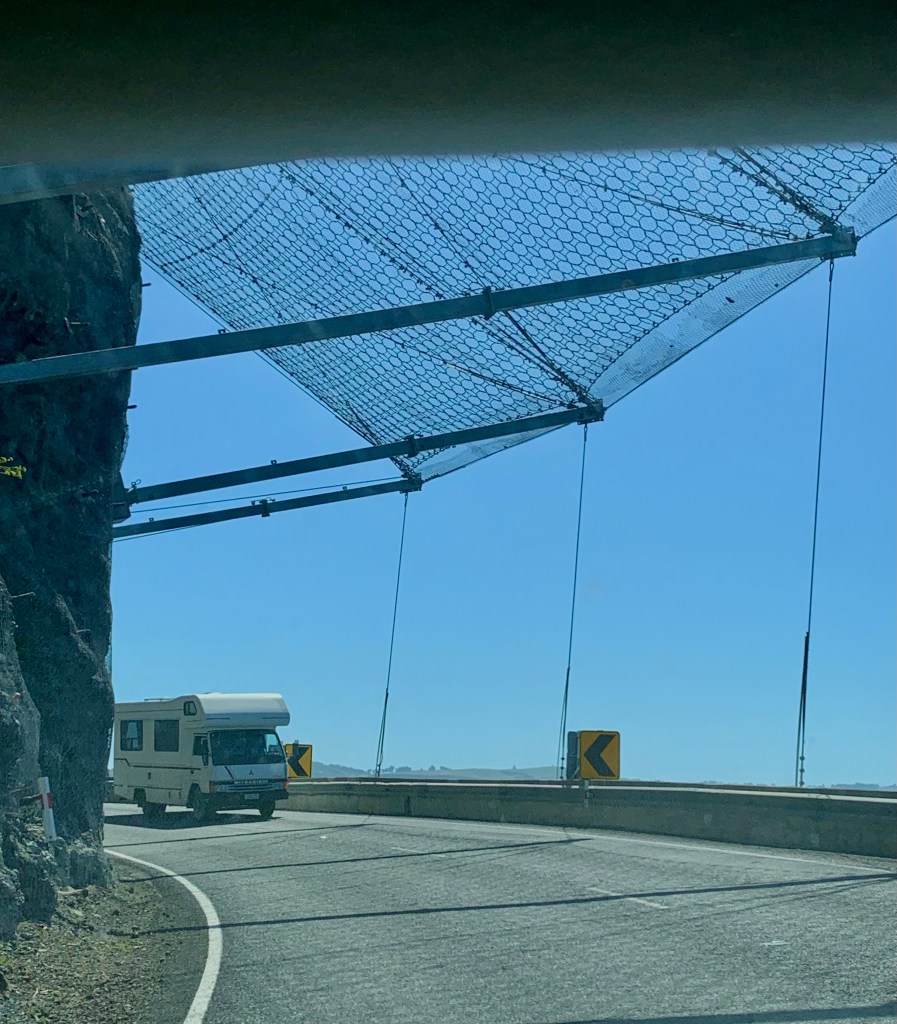
Railway tunnel built in 1937I’ve never seen anything quite like this – several stretches of the road are protected by huge overhanging steel nets to catch falling rocks and whole sections of the wall of rock cut-out next to the road are reinforced with steel mesh and cables to prevent rocks from falling into the road. Kaikōura
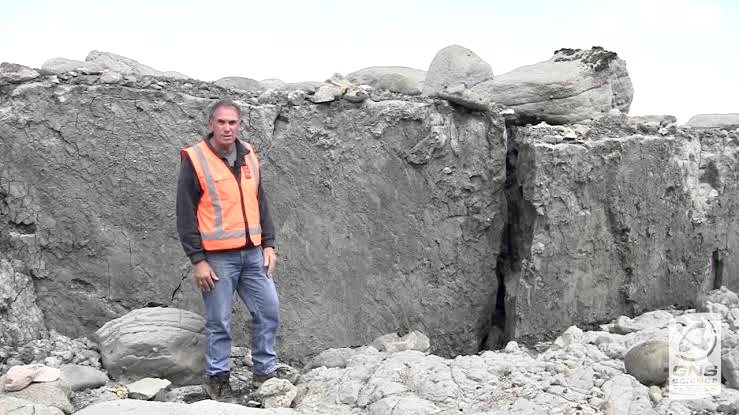
The 2016 Kaikōura earthquake was a 7.8 magnitude earthquake that occurred two minutes after midnight on 14 November 2016. A sequence of ruptures occurred on multiple faults and the earthquake has been described by seismologists as the “most complex earthquake ever studied.” Starting 70km south of Kaikōura, the quake ripped across several fault lines and ended 90km north of Kaikōura, only taking two minutes to travel its entire length. The earthquake ruptured along a record 21 fault lines, some of which were previously unknown. The quake was so powerful that parts of the South Island are now more than 5m closer to the North Island. Near the Papatea Fault, the ground was raised as much as 8m.
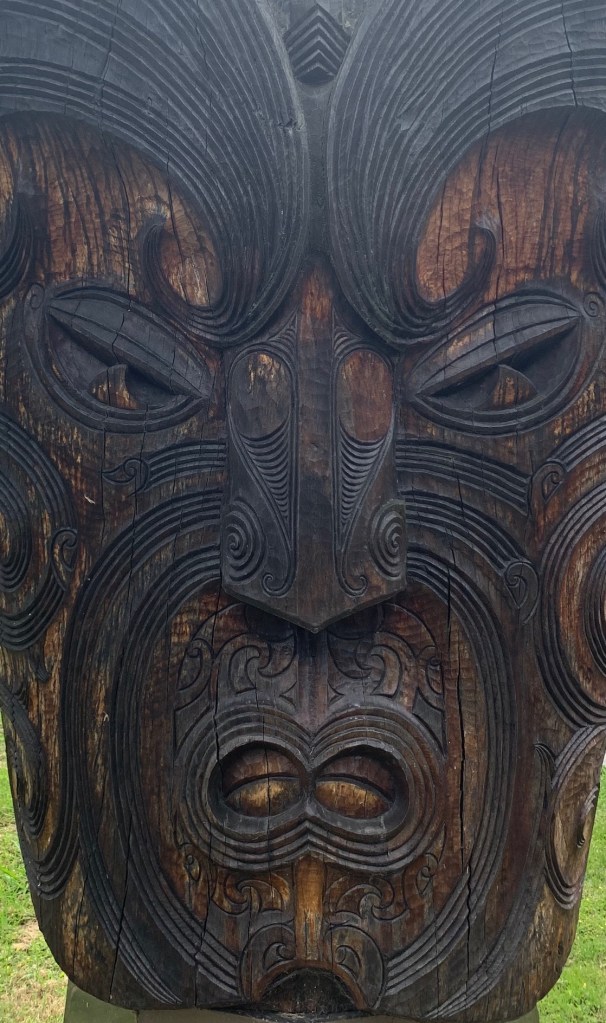
A carved statue of Rūaumoko near Taupō
The story of Rūaumoko
In the beginning there was darkness. Io, the supreme god, the creator, then spoke the Holy Word, “Night succeeding night! Should darkness remain oppressive and distressful? Let there be a great cause to end this darkness that light may stream forth!” In the ensuring period of tumultuous creation the primary parents of life, Ranginui (The Sky Father) and Papatuanuku (The Earth Mother) were separated. Their children who had previously been in darkness, locked in the embrace of their parents, were now free.
Io then gave each of the children mana and authority over the elements and dominium in equal proportions. This action delivered equilibrium and balance which in turn gave order to the world. ‘Tawhirimatea’s domain was the winds and storms, Tane Mahuta’s domain was the forest and birds and ” Tangaroa’s domain was the oceans, river and lakes.
And then there was the unborn child. He stayed in his mother’s womb to comfort her and to keep her warm with volcanic fire. Today he remains there, sometimes moving and turning inside Papatuaanuku, which causes the earth to shake and at times his Volcanic fire to spill over into the world of light. His domain became the earth’s core, the initiator of earthquakes, volcanic eruptions and geothermal energy, his name Ruaumoko.
Scientist Kelvin Berryman showing where the earth was uplifted about 1.5m on one side of the fault line. There were some areas that were uplifted by as much as 6m.
Two people died in the 2016 Kaikōura earthquake and many major roads were closed in the South Island, including the SH1 towards Picton. For three days Kaikōura remained cut off by road due to rockfalls, damaged bridges and infrastructure, road damage and the risk of falling debris. Many tourists were stranded and numerous locals were made homeless because of the extensive damage to buildings and property. The water and power supply were disrupted and there were many instances of subsidence and landslides. It took many, many months to fully restore the transport network and many support services. There was a lot of damage done to sea life too and to the many nesting birds along that coastline. It also had a significant and lasting impact on the coastal ecosystem.
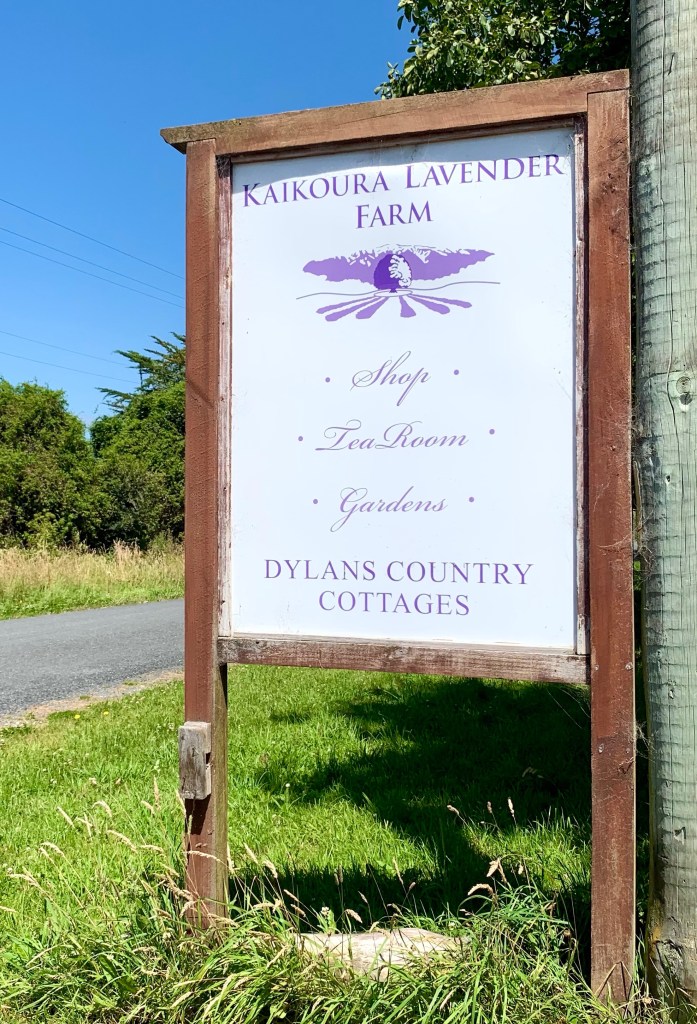
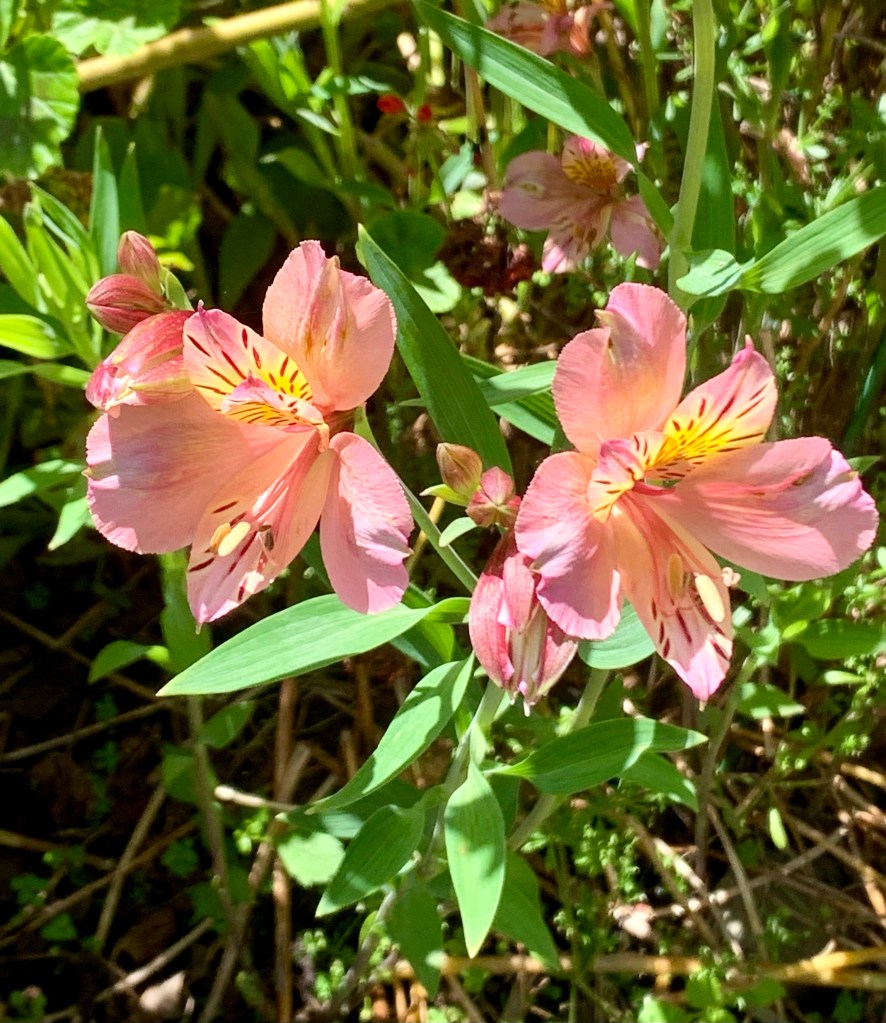
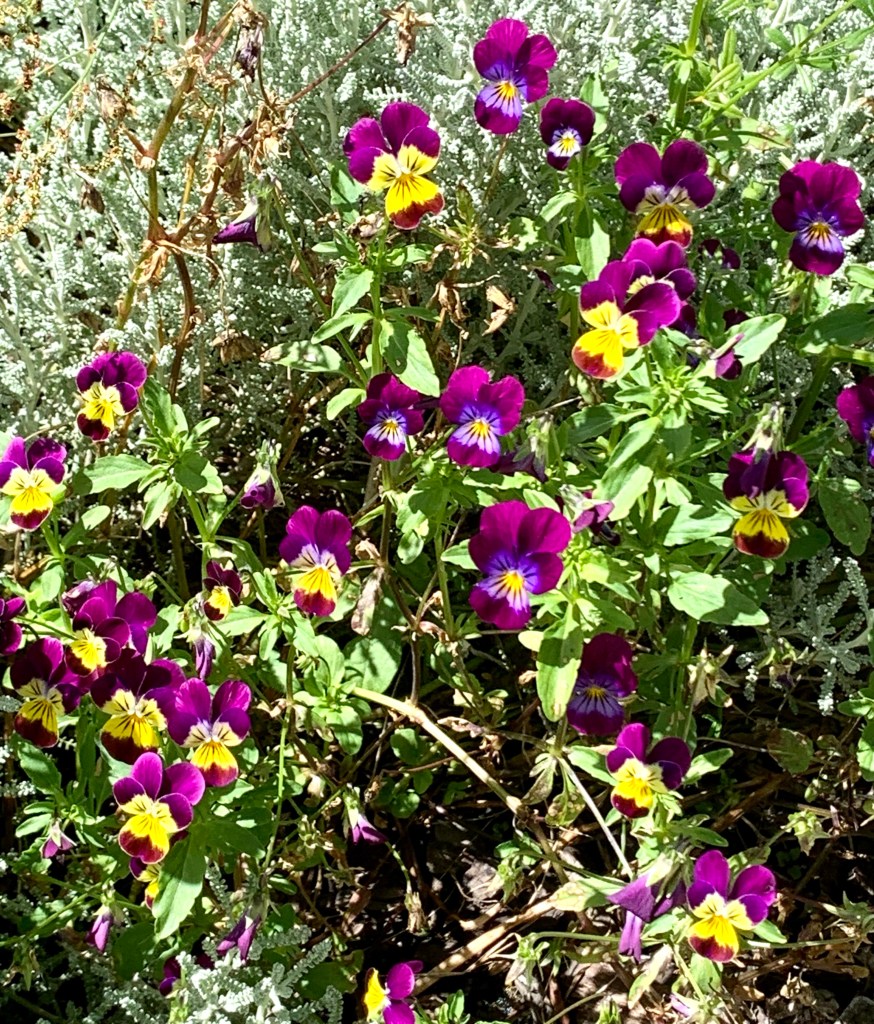
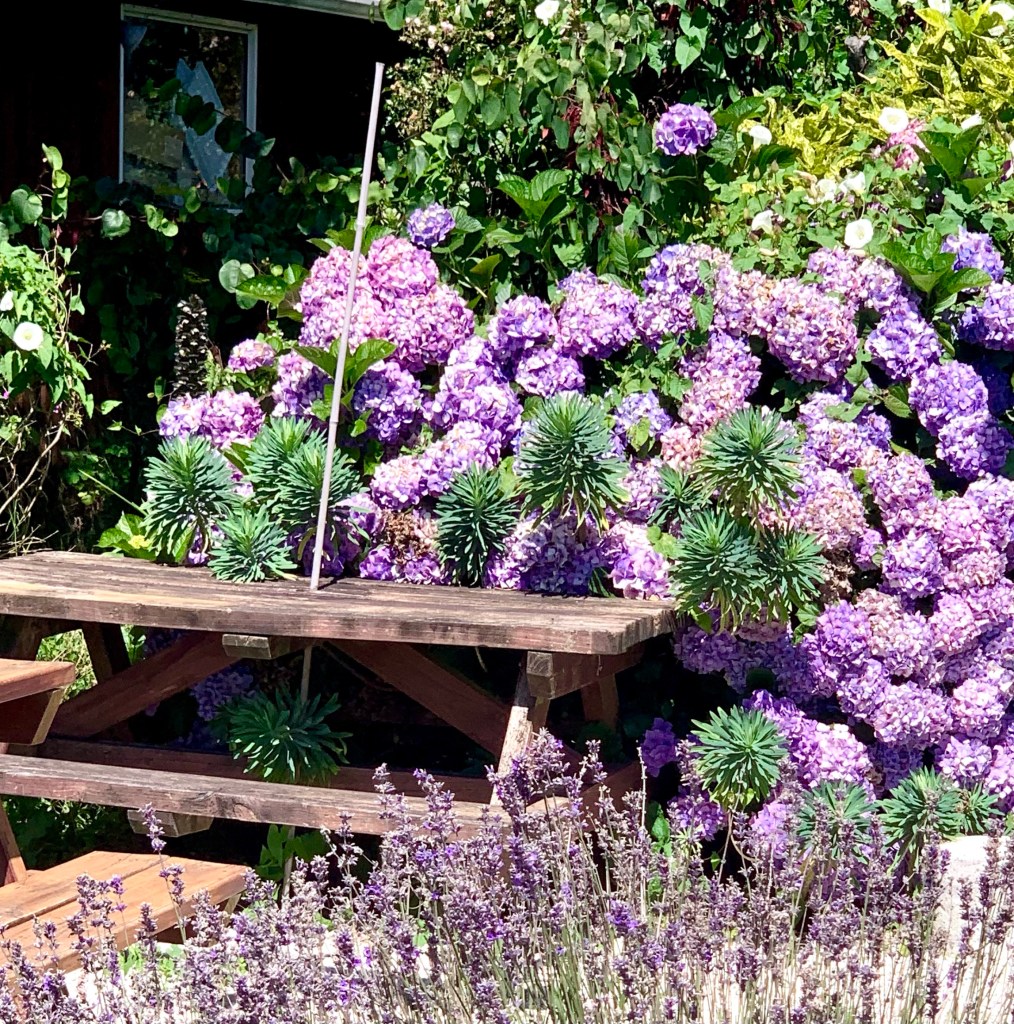
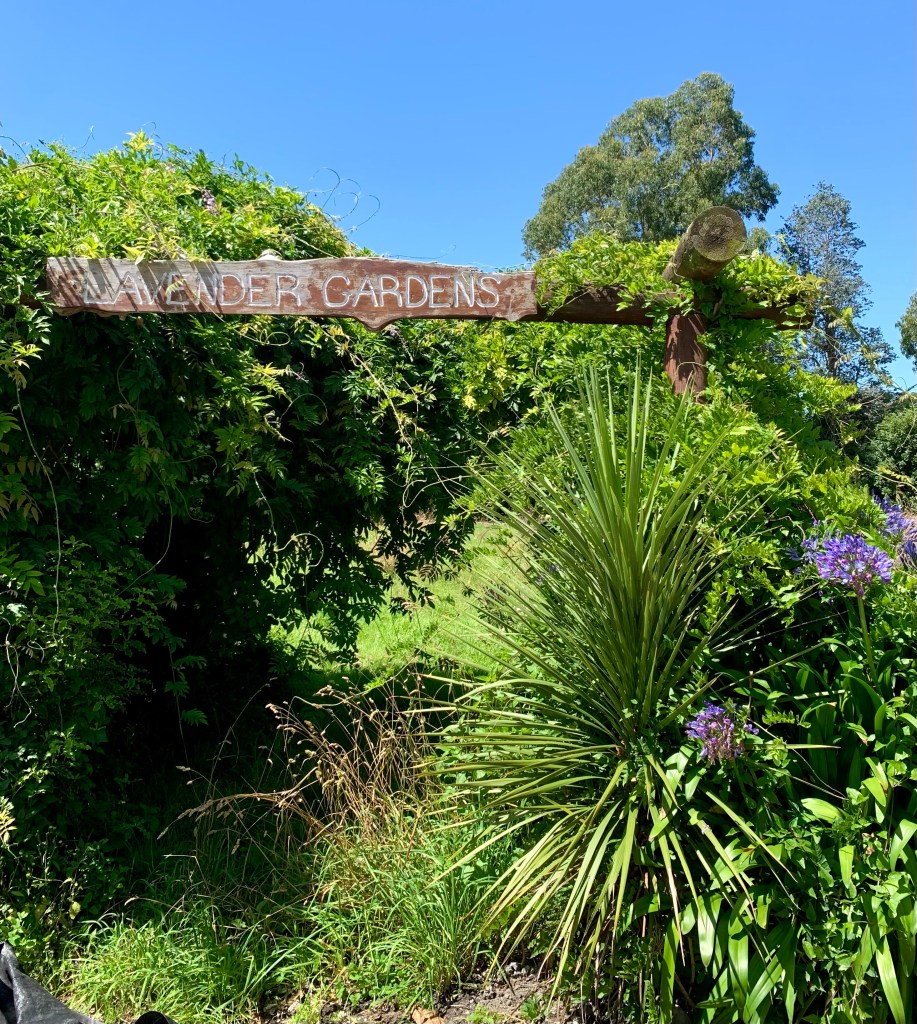
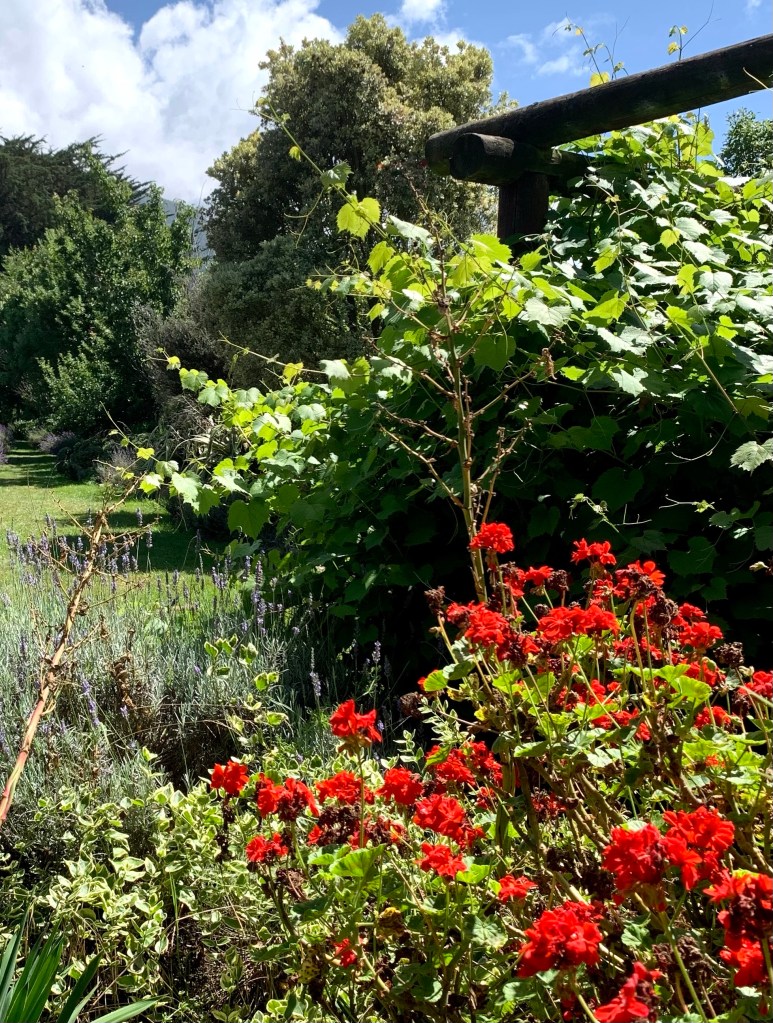
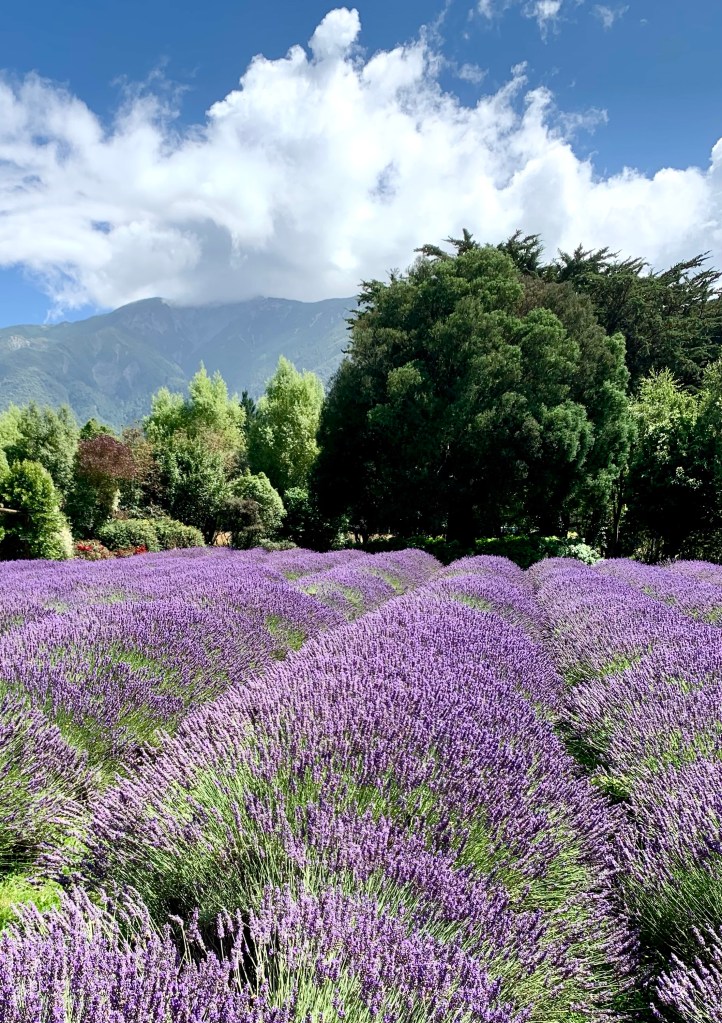
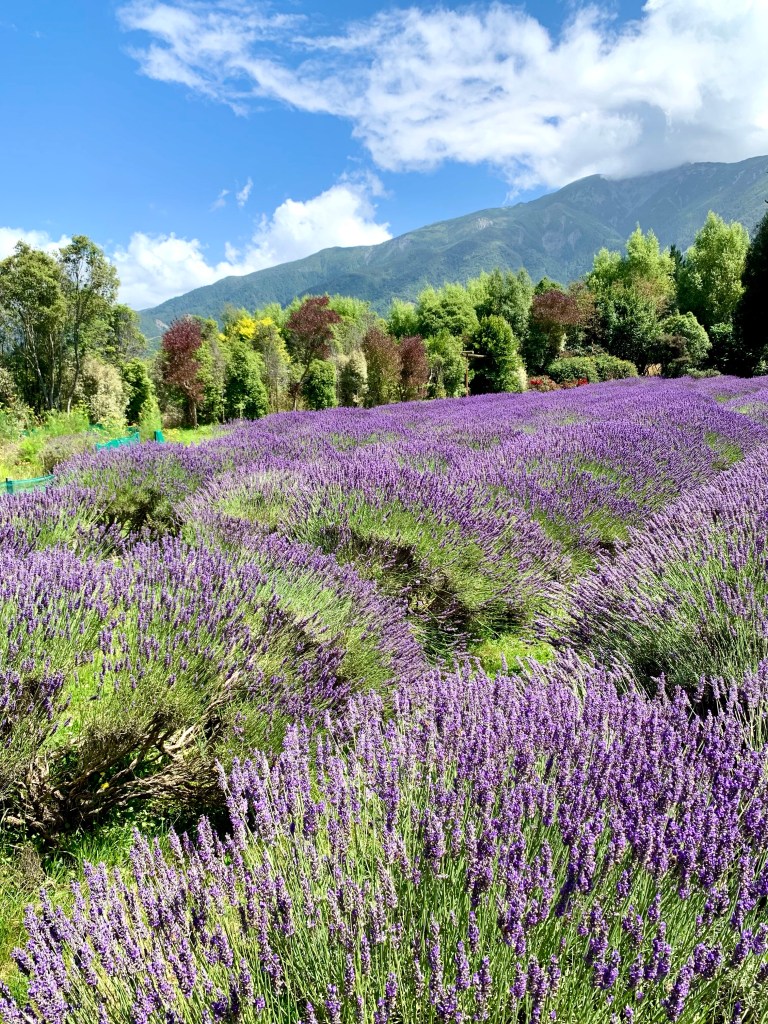
We took a slight detour inland from Kaikōura to visit a lavender farm and it was very well worth the extra drive. Around the car park and the tearoom is a luxuriant garden, full of shrubs of other kinds of flowers than lavender.
If you have a garden and a library, you have everything you need. – Cicero
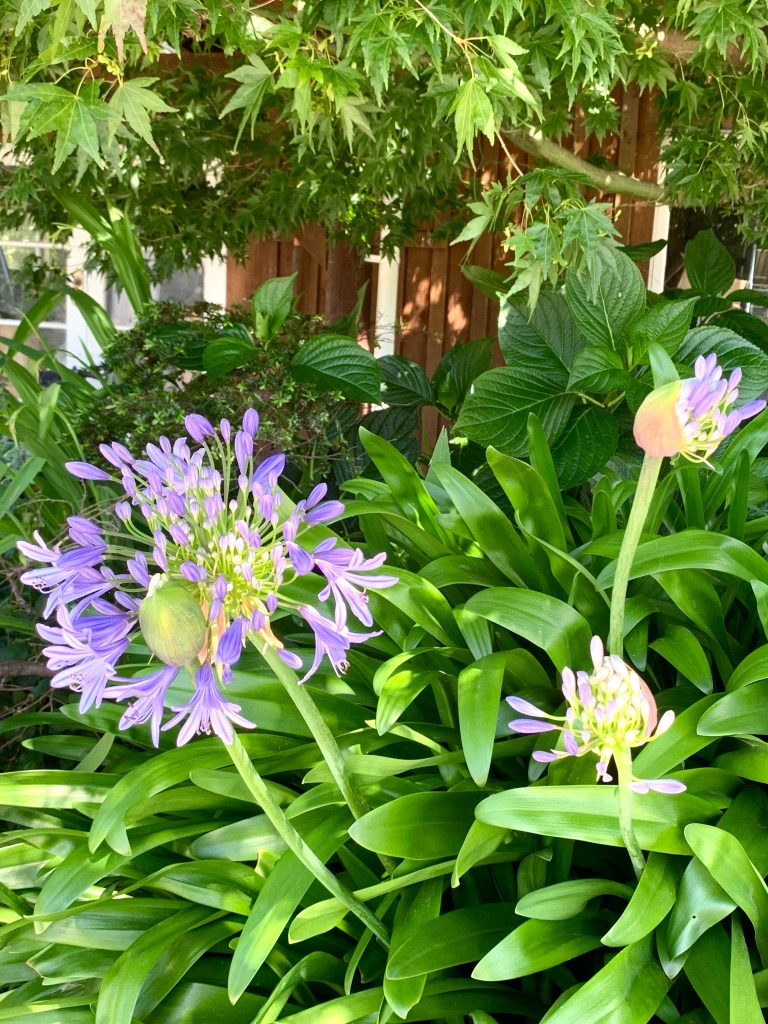
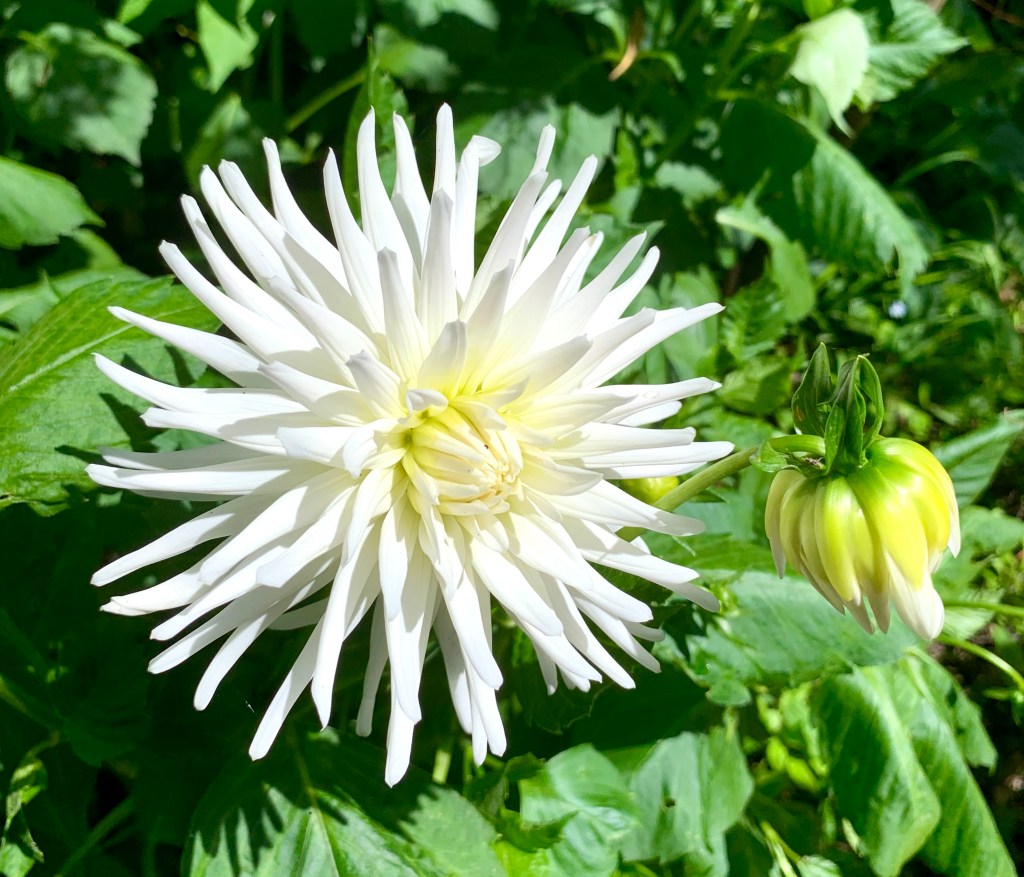
Agapanthus africanus, or the African Lily Dahlia Alstroemeria, also known as the Lily of the Incas Pansies Hydrangea
There is always something so exhilarating, heart-gladdening and uplifting about a intensely purple field of lavender. Absolutely glorious in the bright sunshine! We could hear the birds chirping and a very loud buzzing sound before we even saw the lavender fields because there were thousands of bees diligently harvesting nectar and pollen.
The hum of bees is the voice of the garden. -Elizabeth Lawrence 1937
After a thoroughly delightful hour at the lavender farm, we drove back to Kaikōura’s town centre through neat, well-kept farms. My cousin, Carol, commented to me that she had, likewise, been struck by the preponderance of cattle and the dearth of sheep on a similar trip she made through the South Island. Certainly I now know where New Zealand butter and cheese comes from.
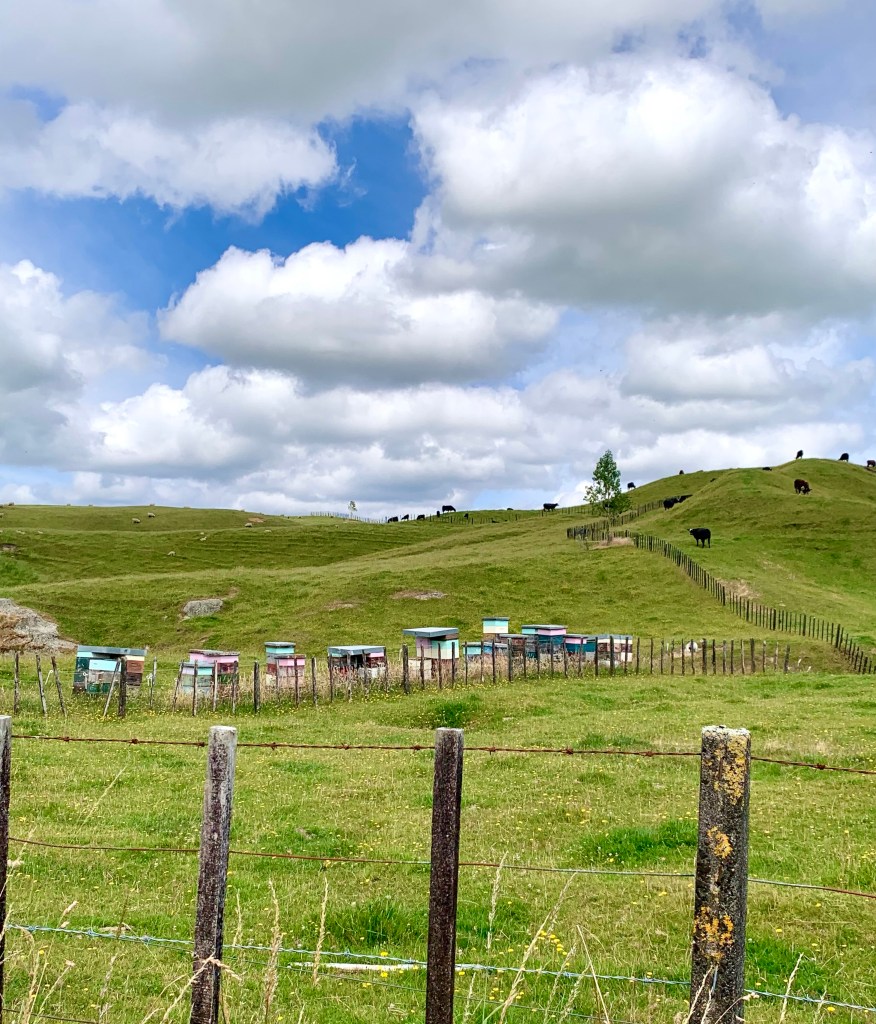
We’ve observed lots of bee hives on our drive today i
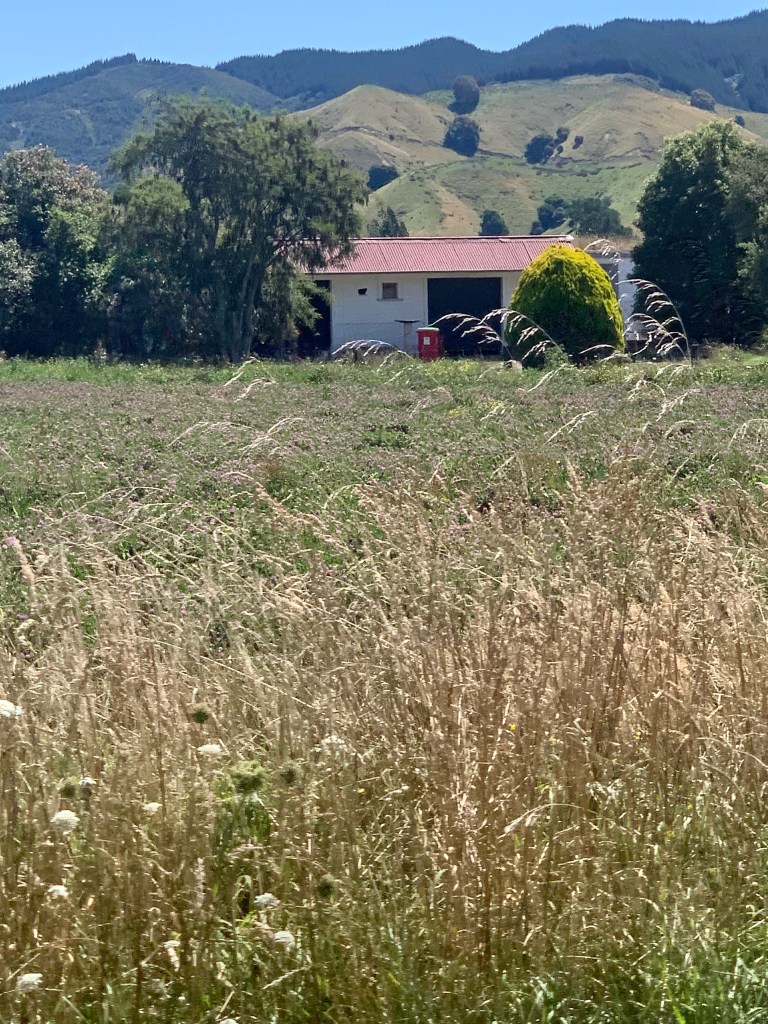
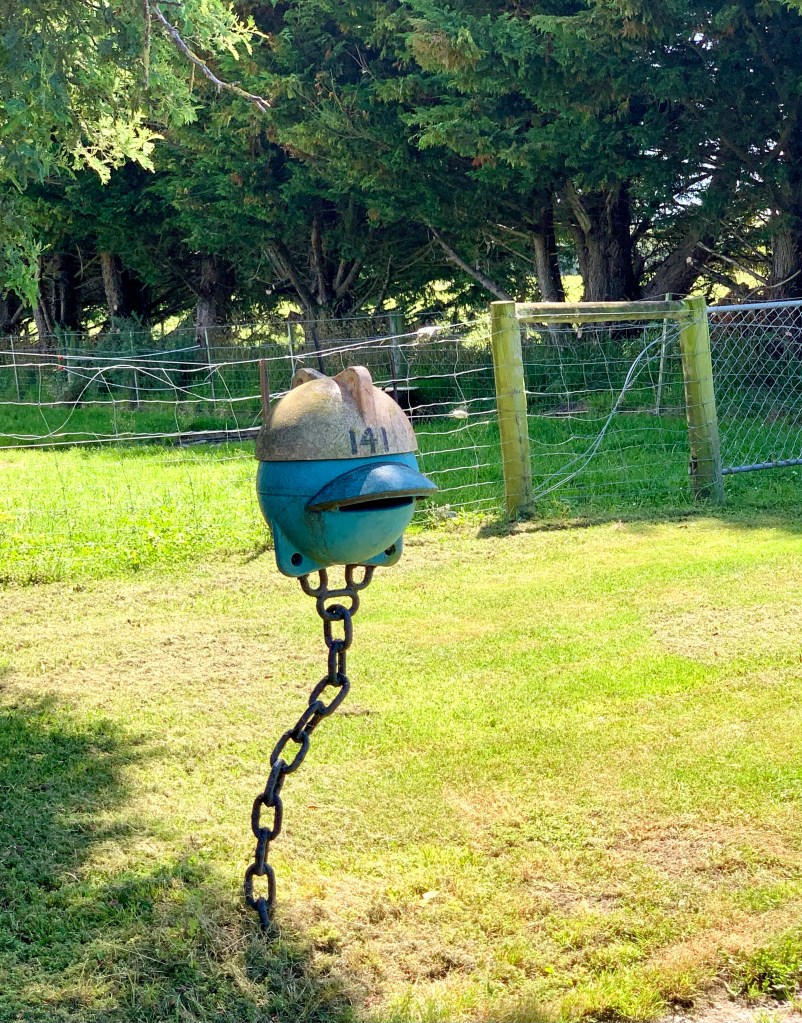
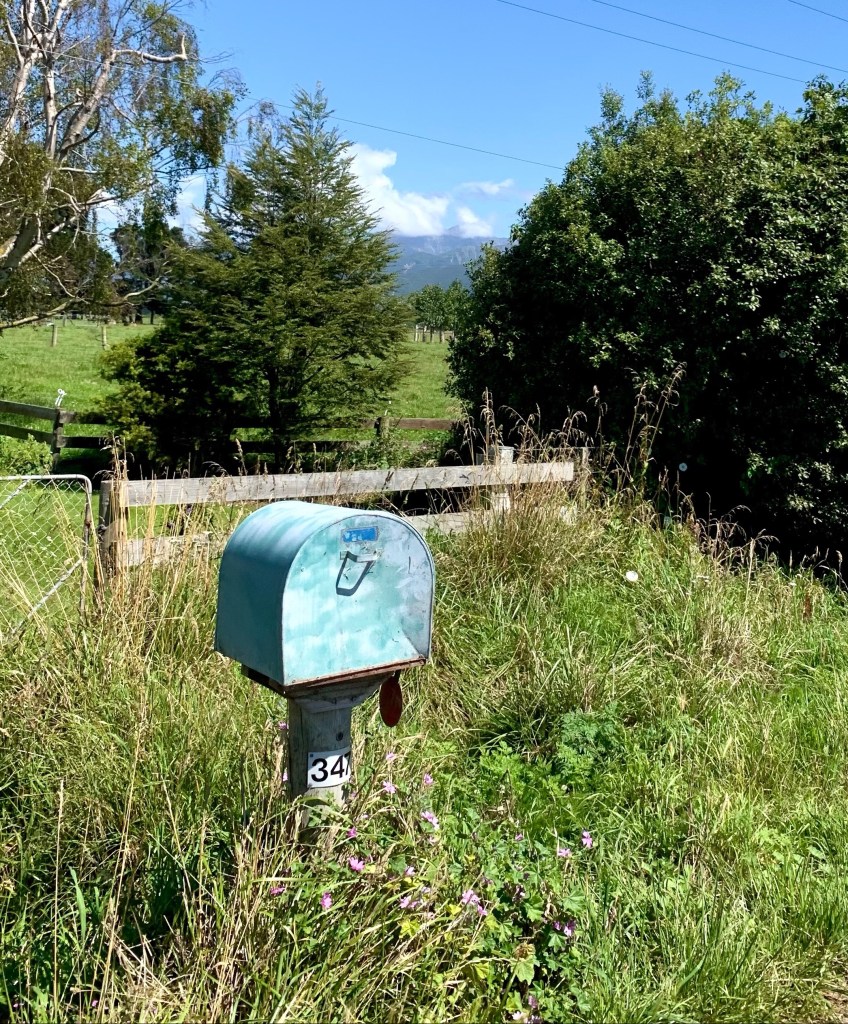
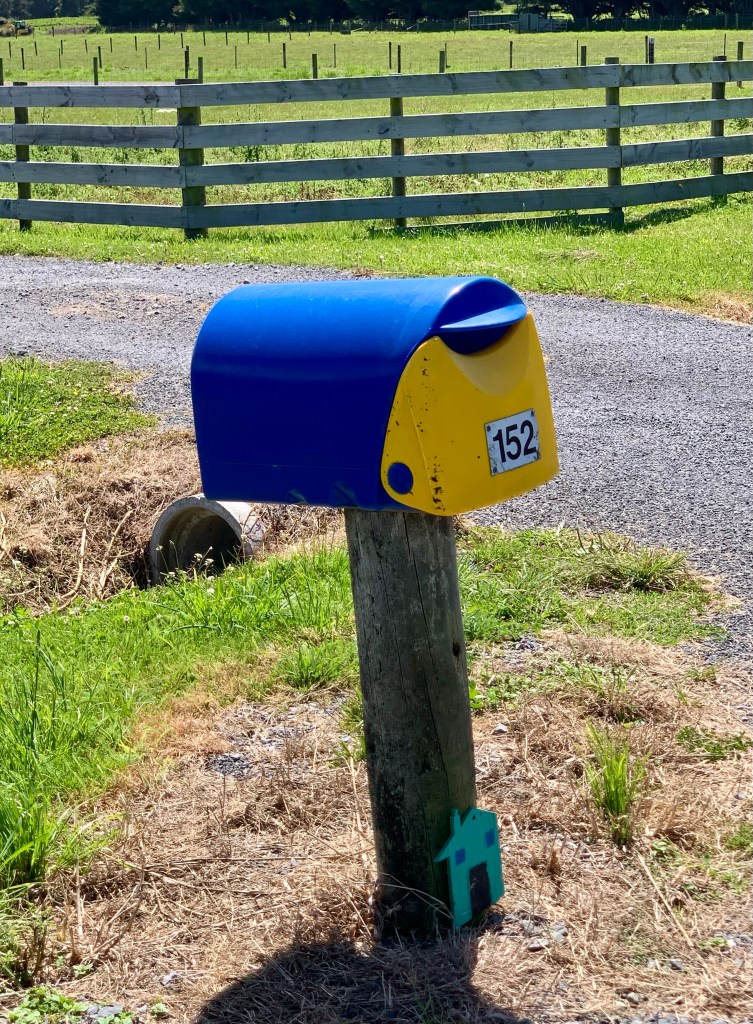
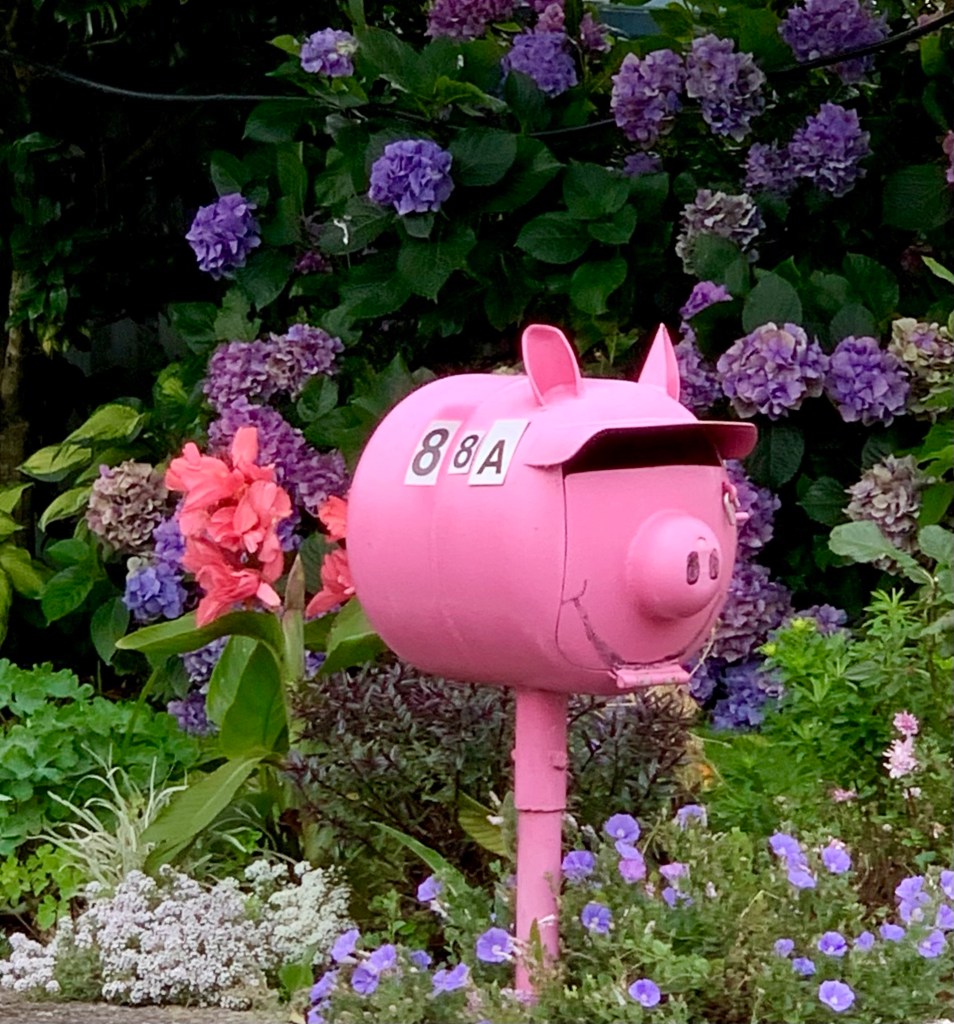
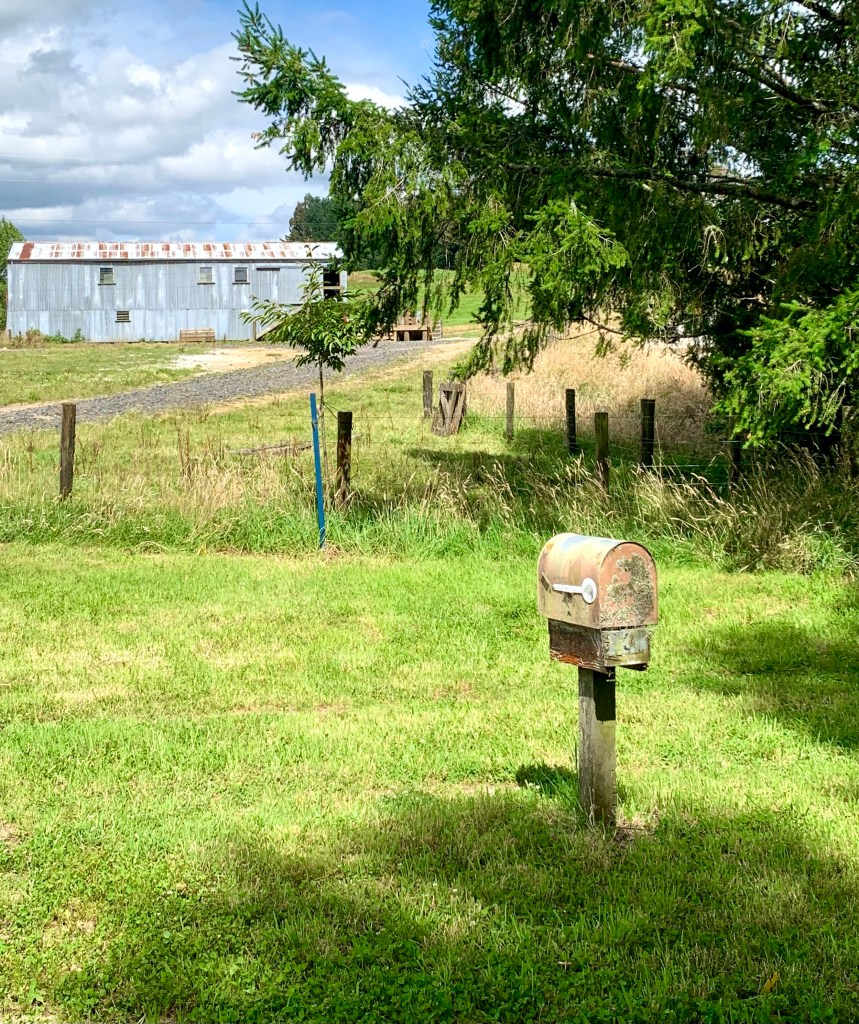
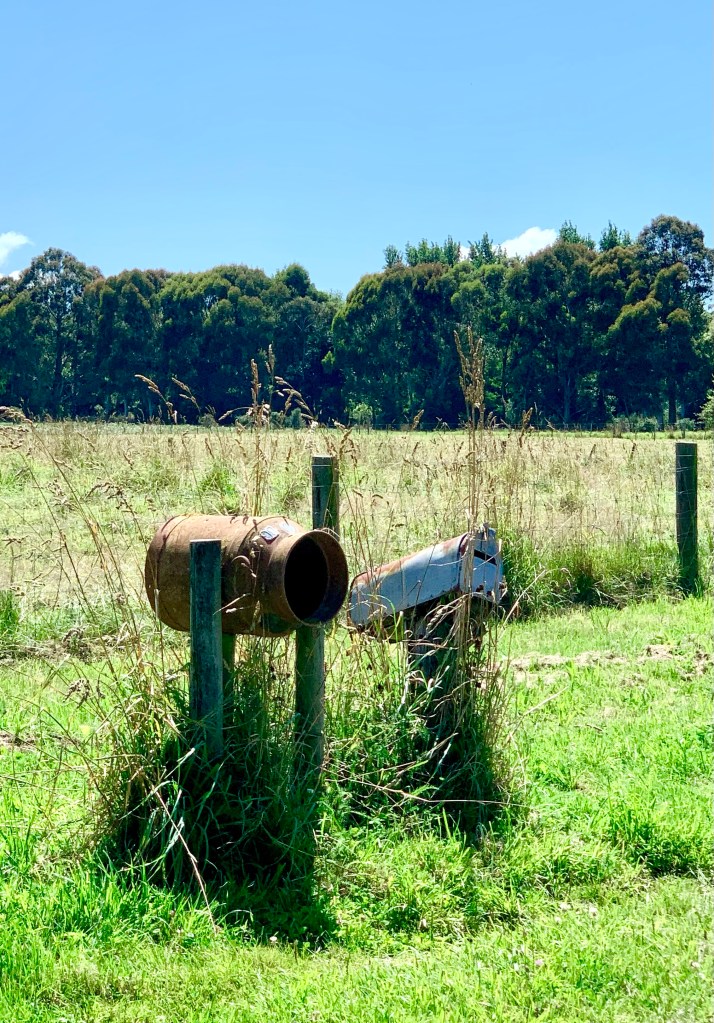
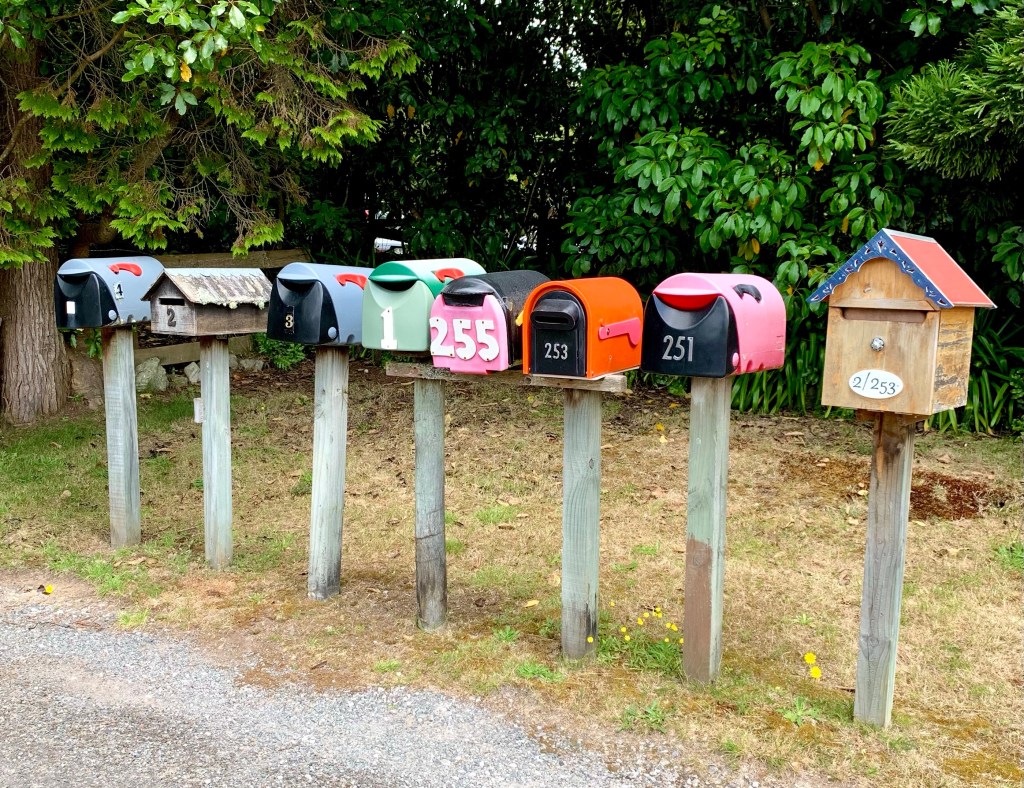
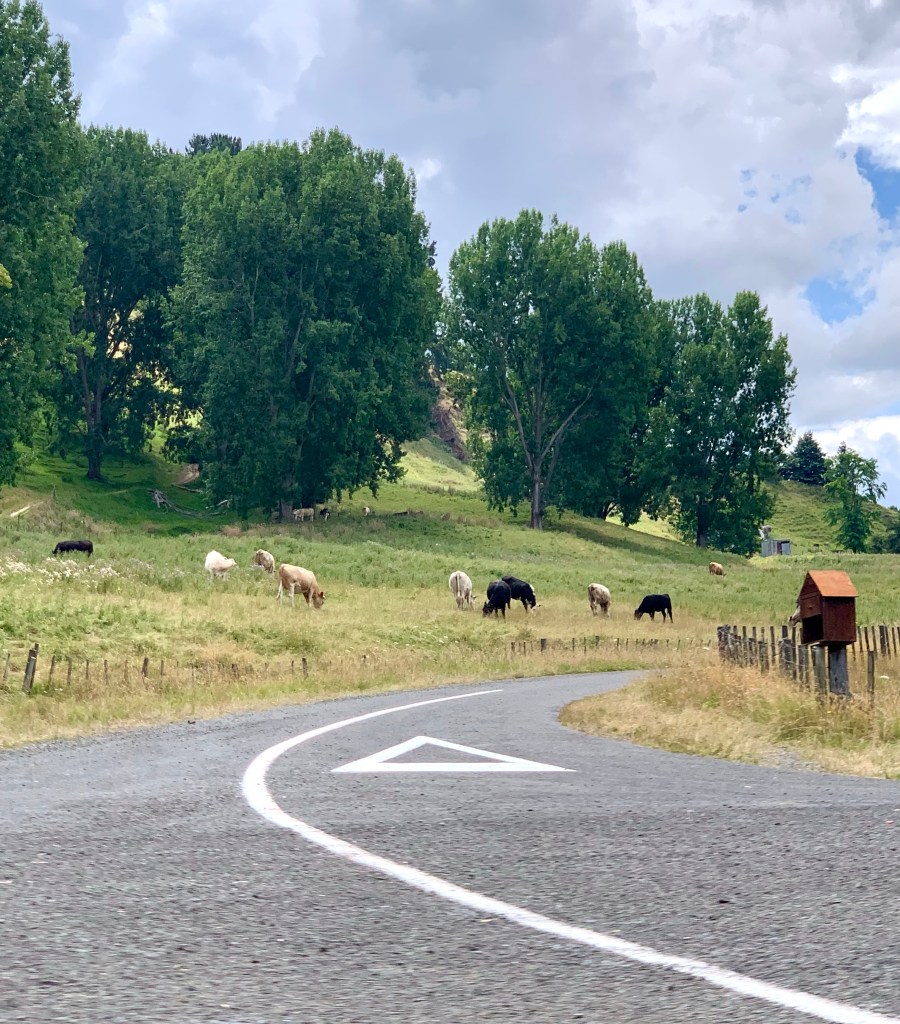
You can’t help noticing the postboxes dotted along the road as you drive through the farmland. They come in all sorts of shapes, colours and sizes and sometimes in multiples. It got me thinking about whether – and how soon – the postal delivery service will become obsolete, like the telegraph and telephone exchanges. My guess is that it will be a long time before that happens because, even though most mail is transacted electronically now, there is an even greater volume of package delivery as retail goes increasingly online. Rural homesteads must be even more dependent on those deliveries than town dwellers are.
We headed back to the town but didn’t linger there, setting off once again, headed north on SH1 for Picton which is 156km away. There is a lot to do and see in the area around Kaikōura, like whale watching, but unfortunately we don’t have time for it this time round. I would really like to come back and spend several months on the South Island and do much more leisurely exploring.
The lofty mountains and the seas, Being mountains, being seas, Both exist and are real. But frail as flowers are the lives of men, Passing phantoms of this world.
– Reiko Chiba Hiroshige’s Tokaido in Prints and Poetry
7th February 2023
We woke up this morning to a warm but overcast day with some dark grey clouds skulking around the edges of the sky. We had a leisurely breakfast and prepared to leave the apartment by 10.00am. It was a lovely apartment and it would be a great place to spend several days but our schedule doesn’t permit that this trip. We are booked on the 2.15pm ferry back to Wellington so, regrettably, no time to tarry.
Checking out of the Boat House Apartments
We had some time to kill before joining the queue to get on the ferry so we drove north east out of Picton along the bay, through Waikawa to Karaka Point and then back to Picton. The drive took about an hour and we saw some beautiful views of the mountains and the seas from the road.
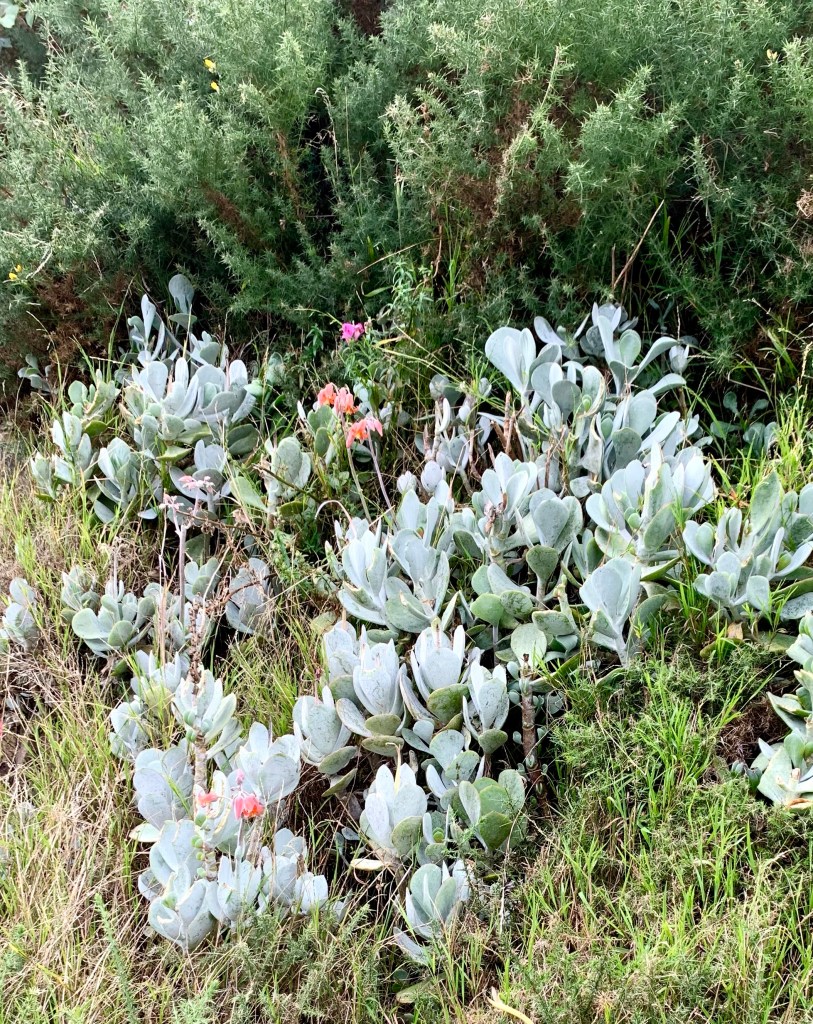
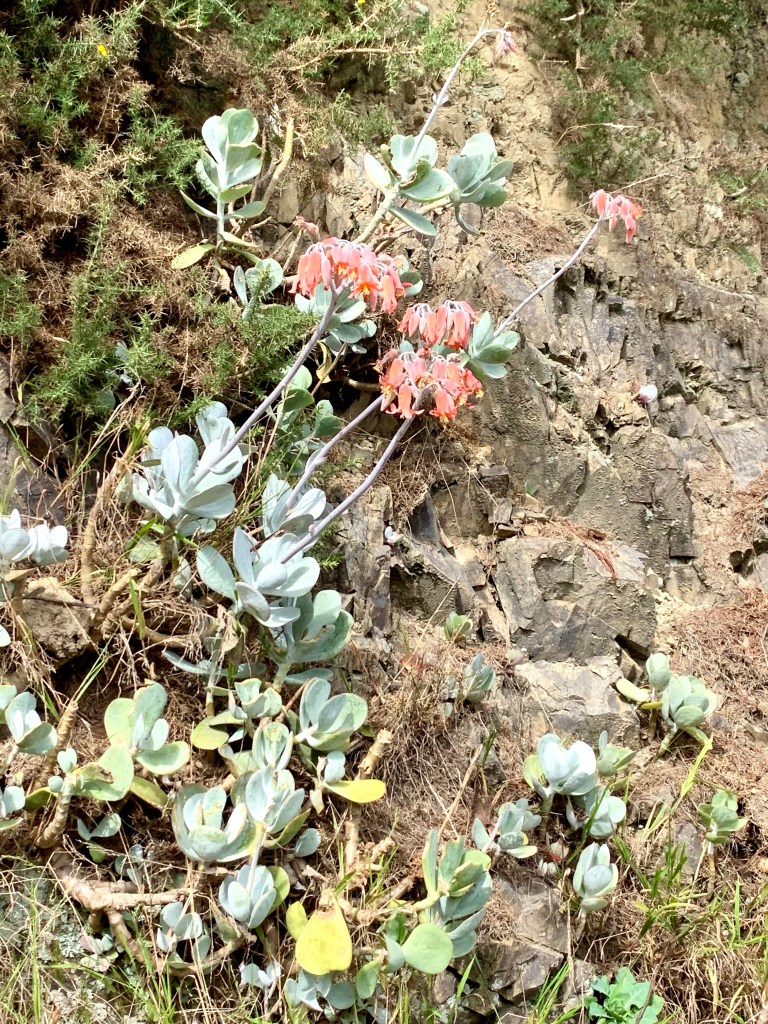
There is an interesting succulent growing profusely along the steep rocky banks next to the road. Pig’s Ear (Cotyledon orbiculata) is a fast growing plant with silvery green foliage that produces clusters of orange bell-shaped flowers in the summer months. The plant is native to Africa and is now classified as an invasive species in New Zealand.
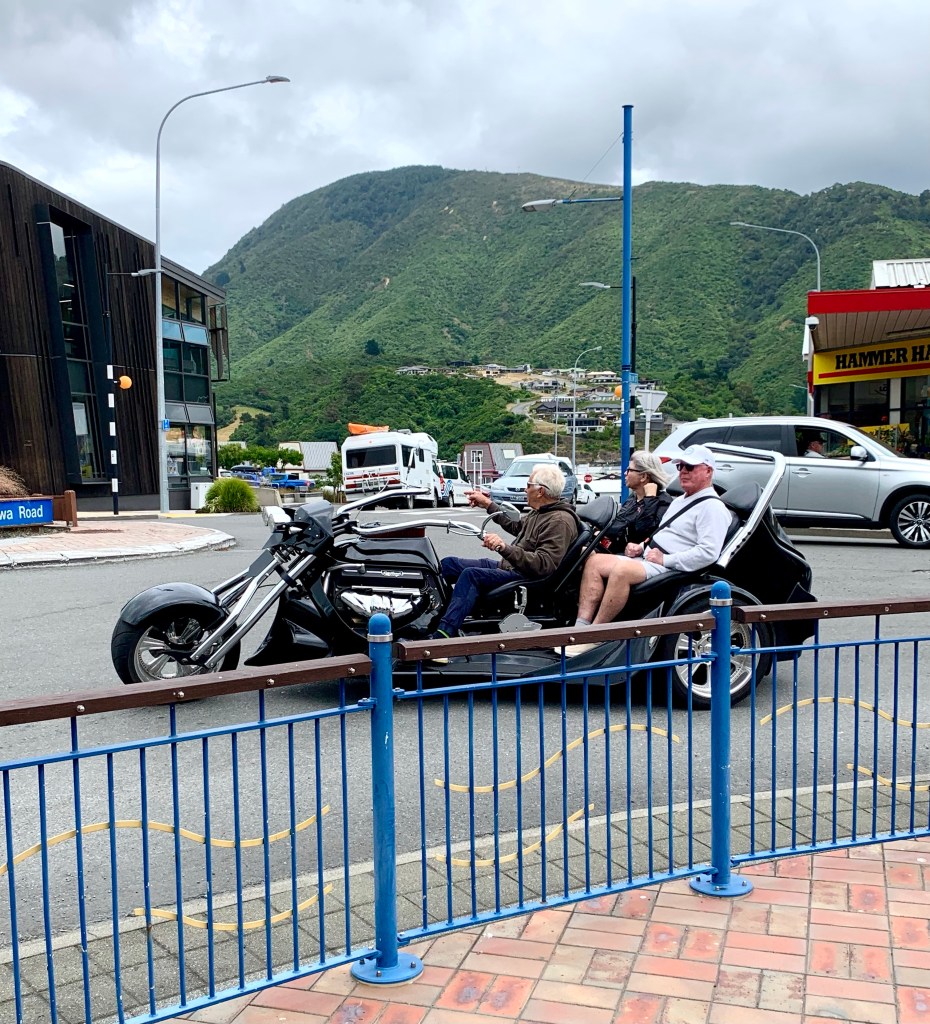
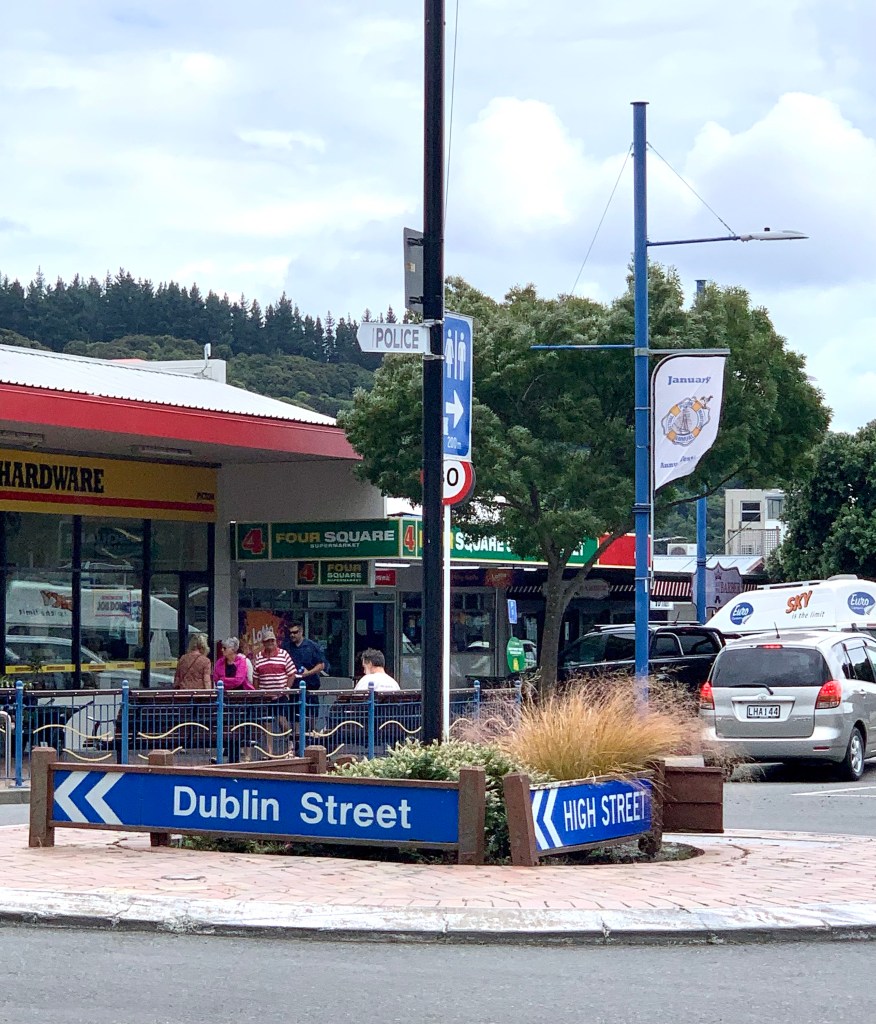
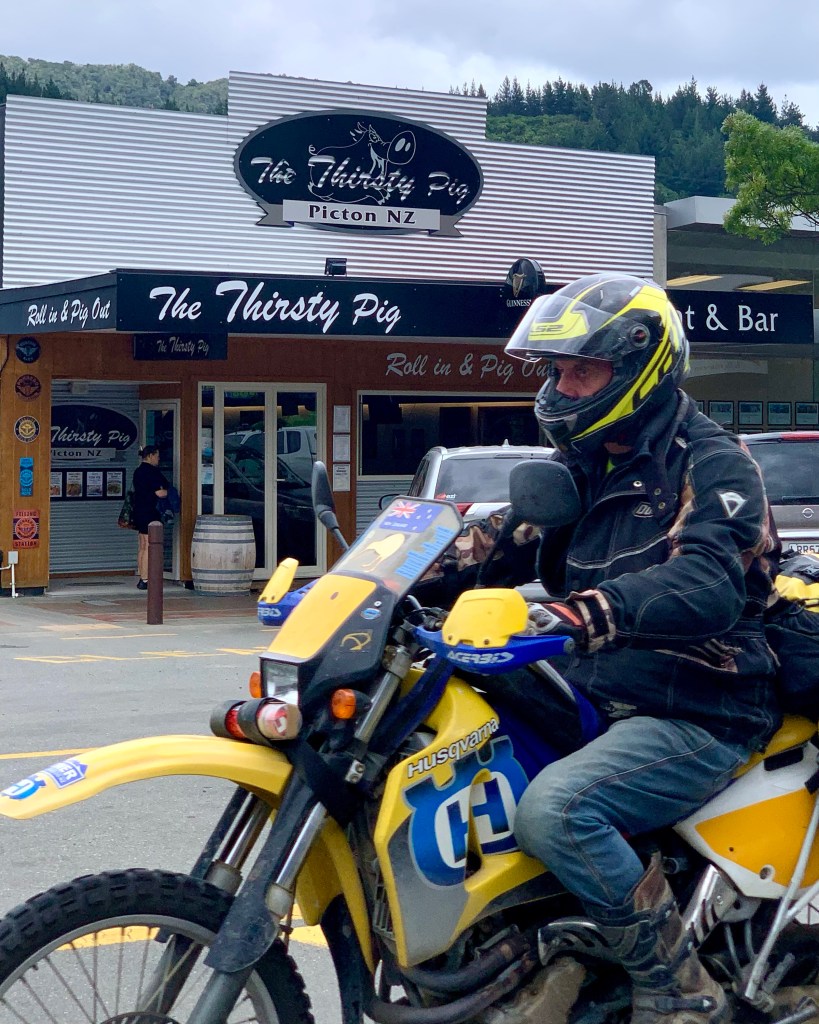
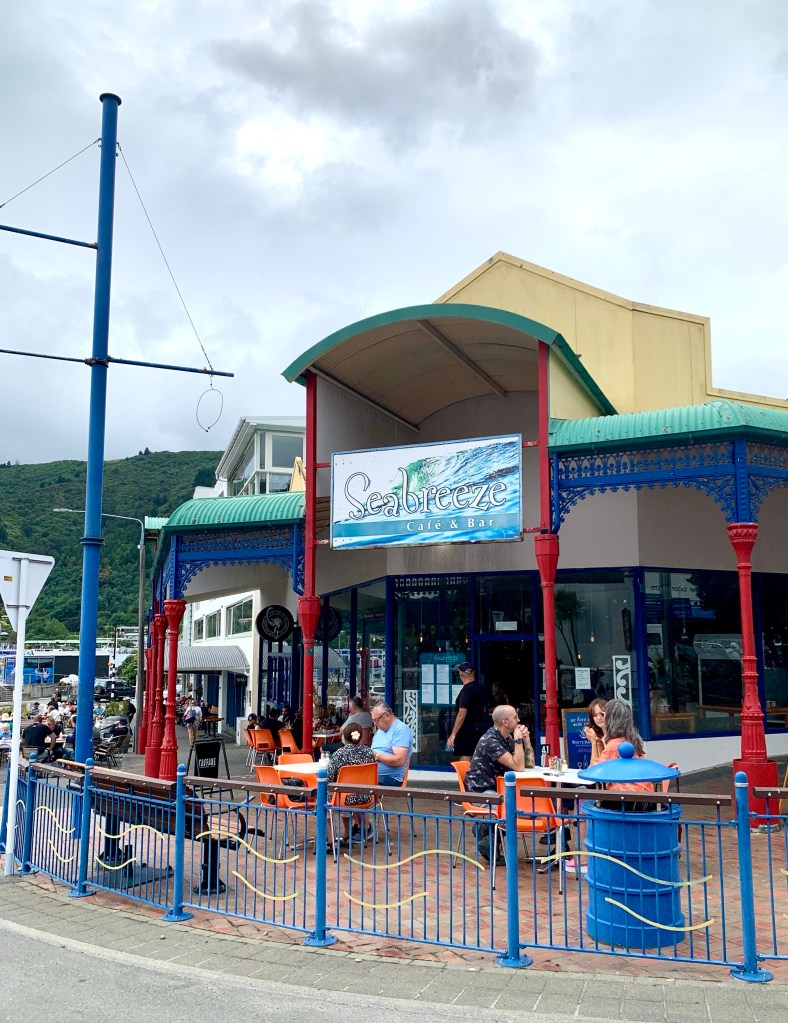
We still had some time to look around town and get a coffee once we got back to Picton. It is a quirky little town with beautiful views of the docks, marinas and the sea. There is obviously a lively tourist trade going through the town because there are lots of coffee shops, restaurants and bars and some interesting shops.
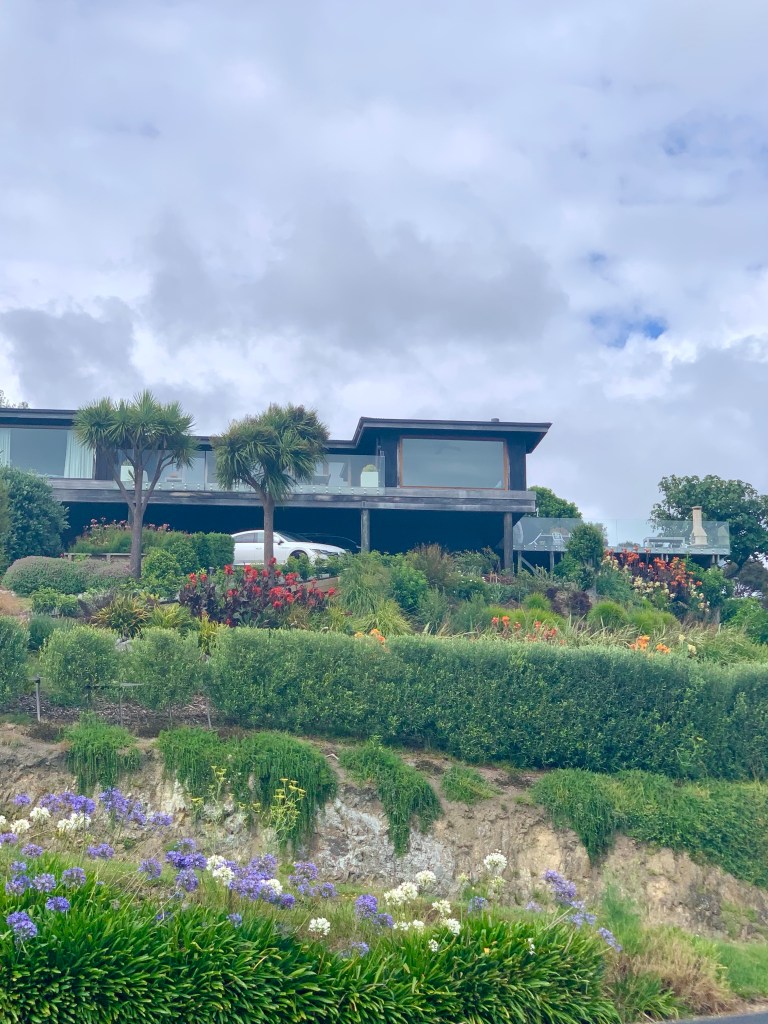
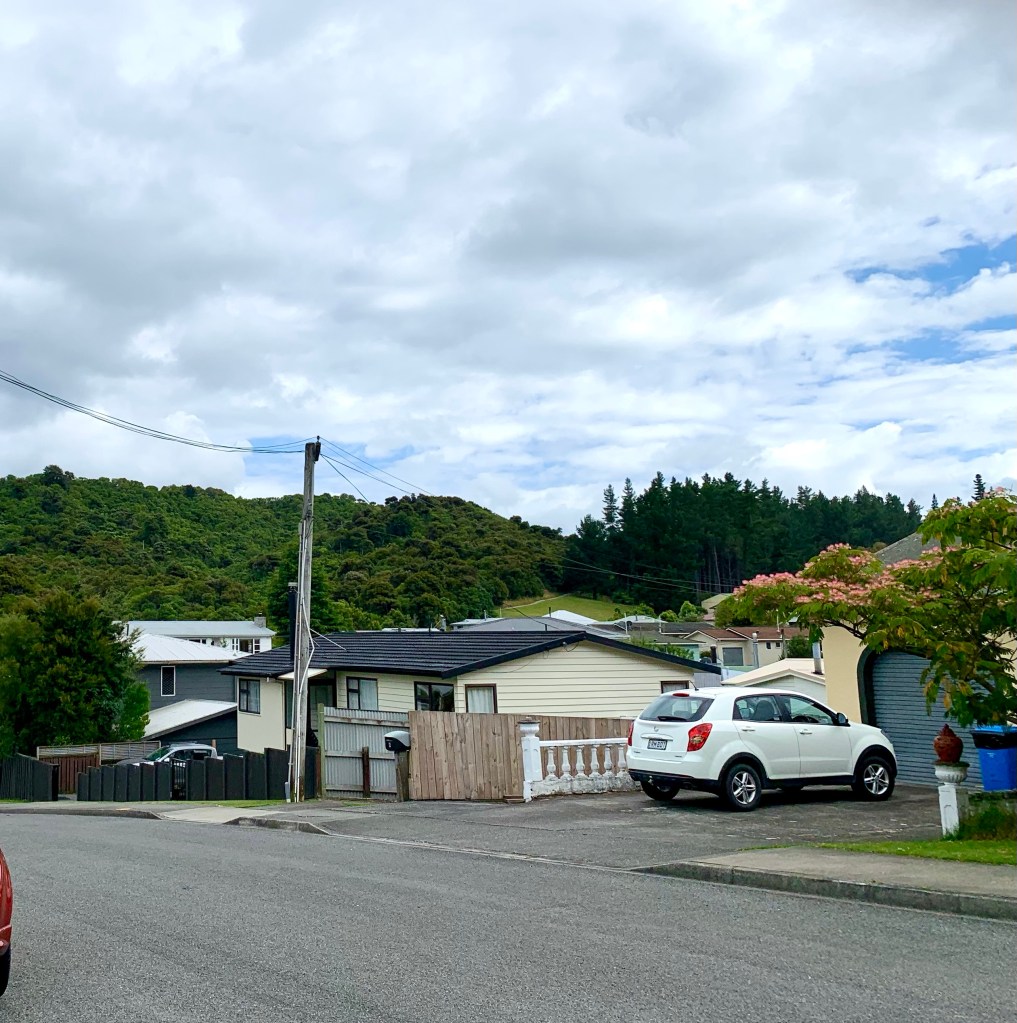
It is notable how many real estate agencies there are in the town. Talking about real estate seems to be a national pastime in New Zealand and I’ve been told that is true of Australia too. There are, of course, houses across the whole spectrum in Picton, from very modest homes to high-end luxury houses. Some of the houses on elevated plots that you can catch a few glimpses of along the roads in and around Picton must have wonderful views of the sea and the surrounding countryside. Most of those kind of houses whose photographs are displayed in the estate agents’ windows are listed as Price by negotiation or Price available on enquiry but there are a few whose prices are listed which does give you a rough idea of their sale value and some of them cost multiple millions of NZ dollars to buy.
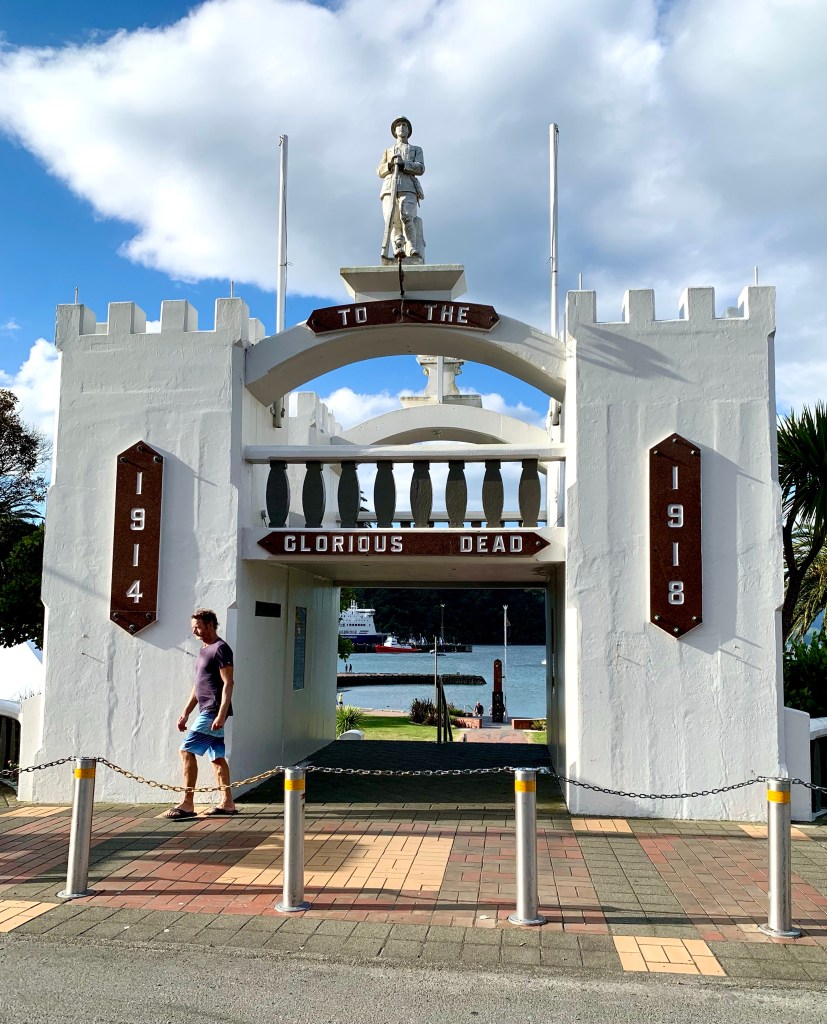
Right at the centre of the waterfront area in town is the Picton War Memorial that was built in 1925 to honor the 31 local residents of Picton and Queen Charlotte Sound who sacrificed their lives in the First World War. Nearly 10% of the country’s population – 100,000 men and women – served in that war from 1914 until 1918. By the end of that terrible war, 16,697 NZ soldiers had died and another 41,317 were wounded.
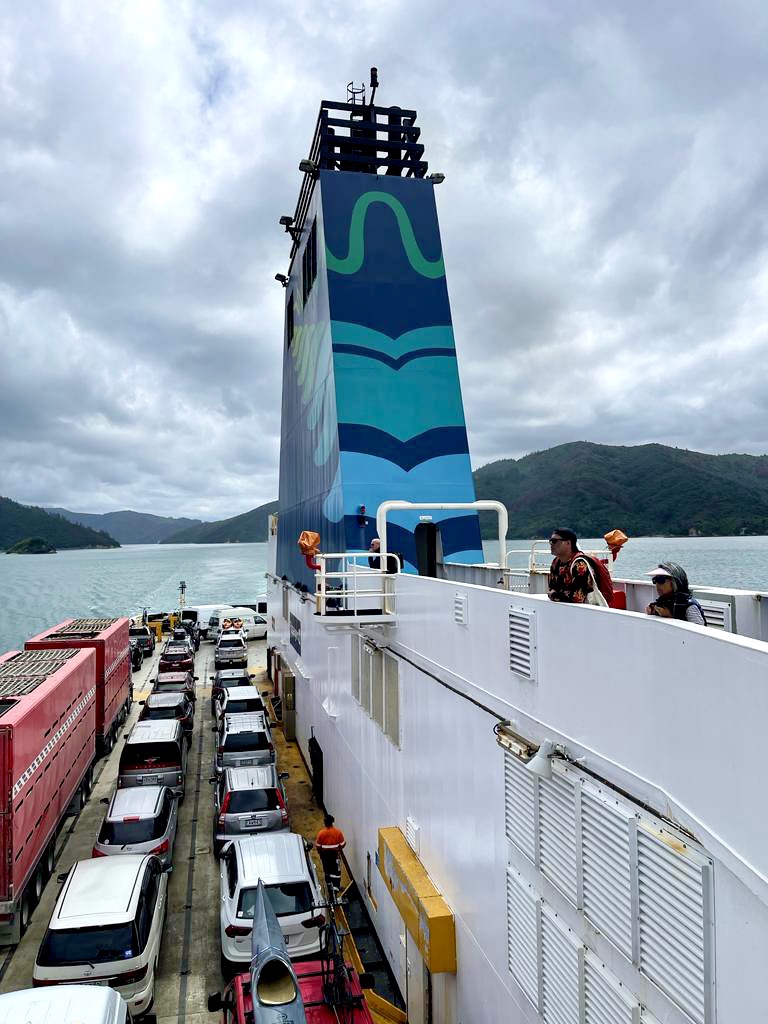
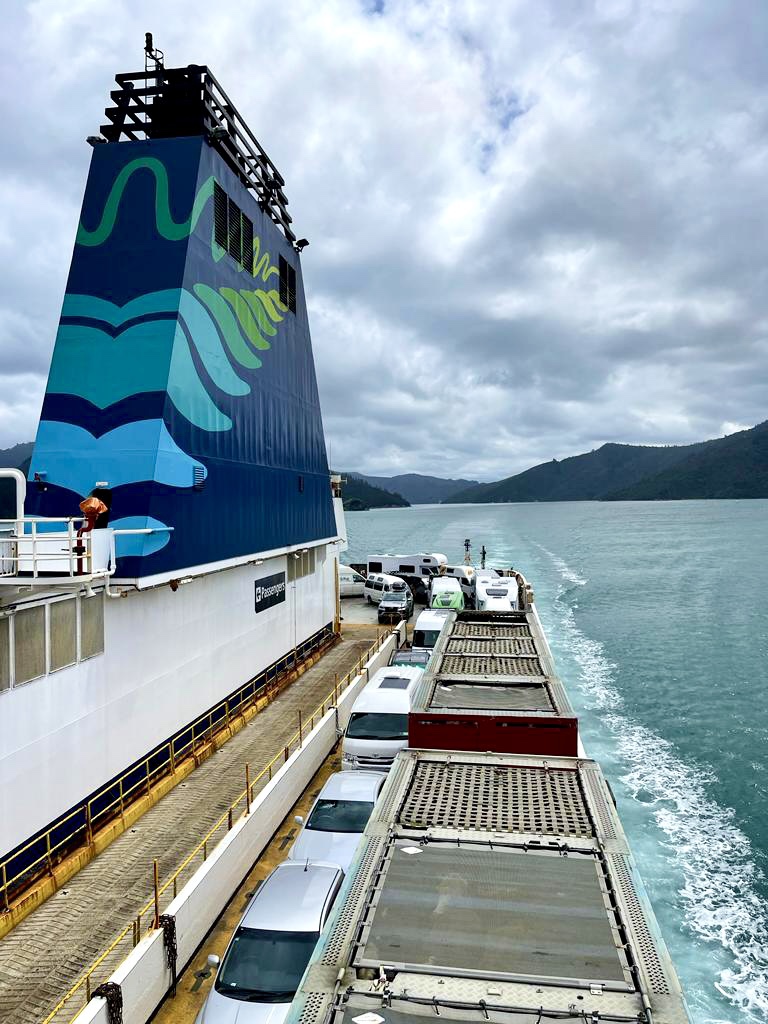
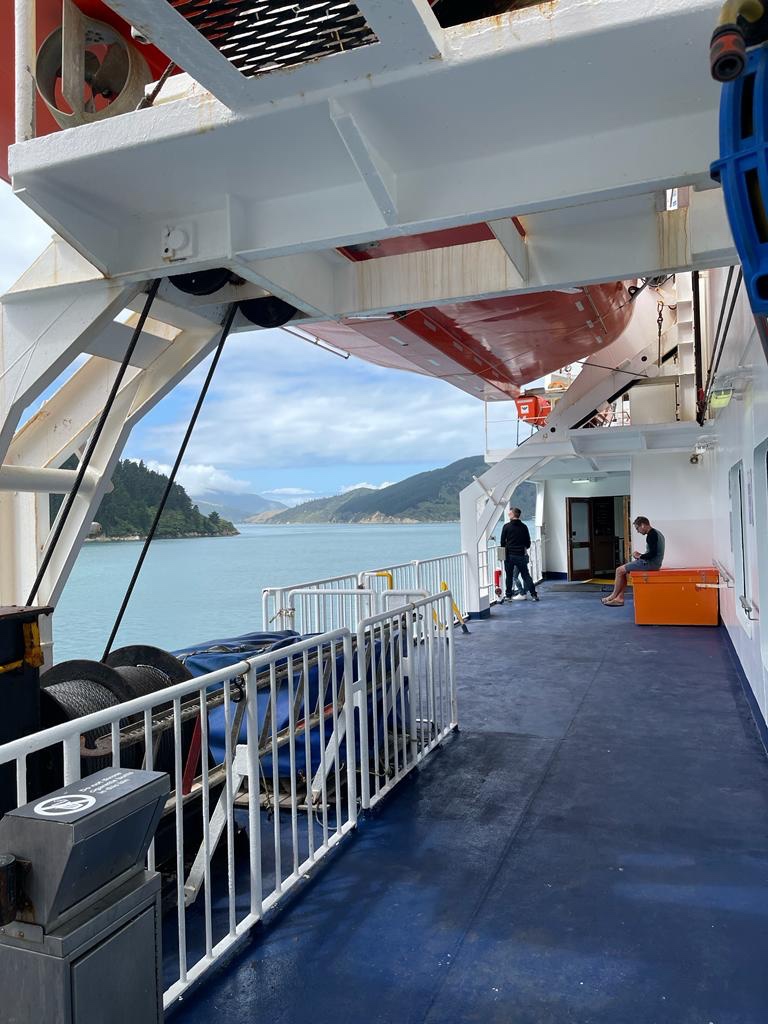
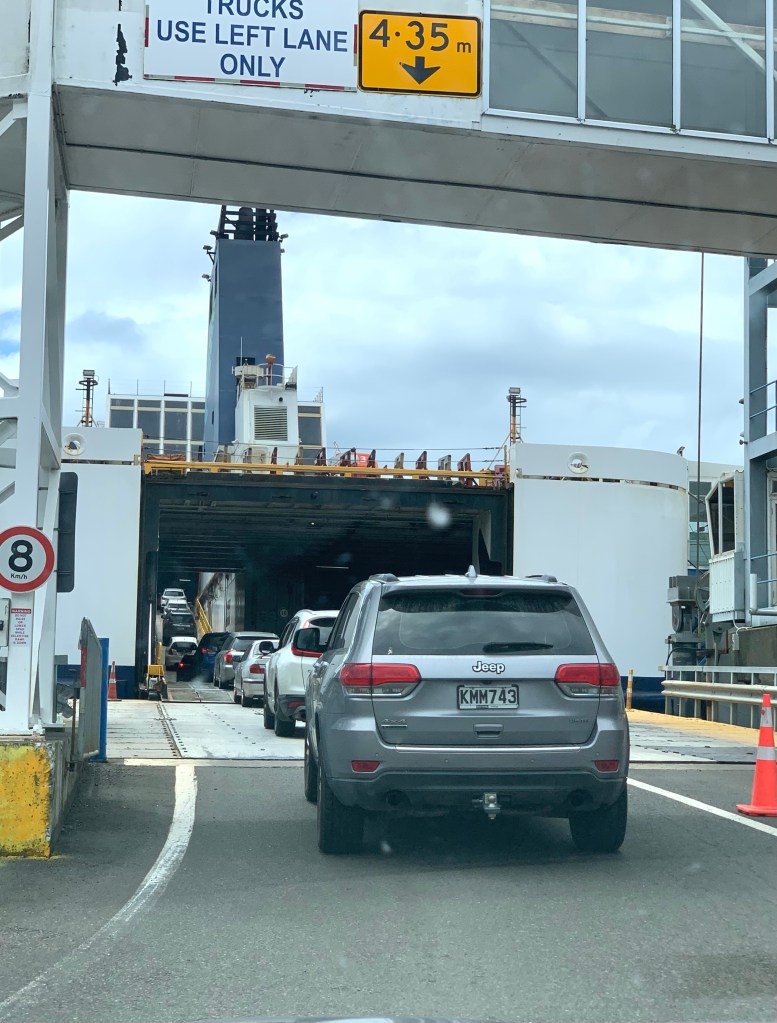
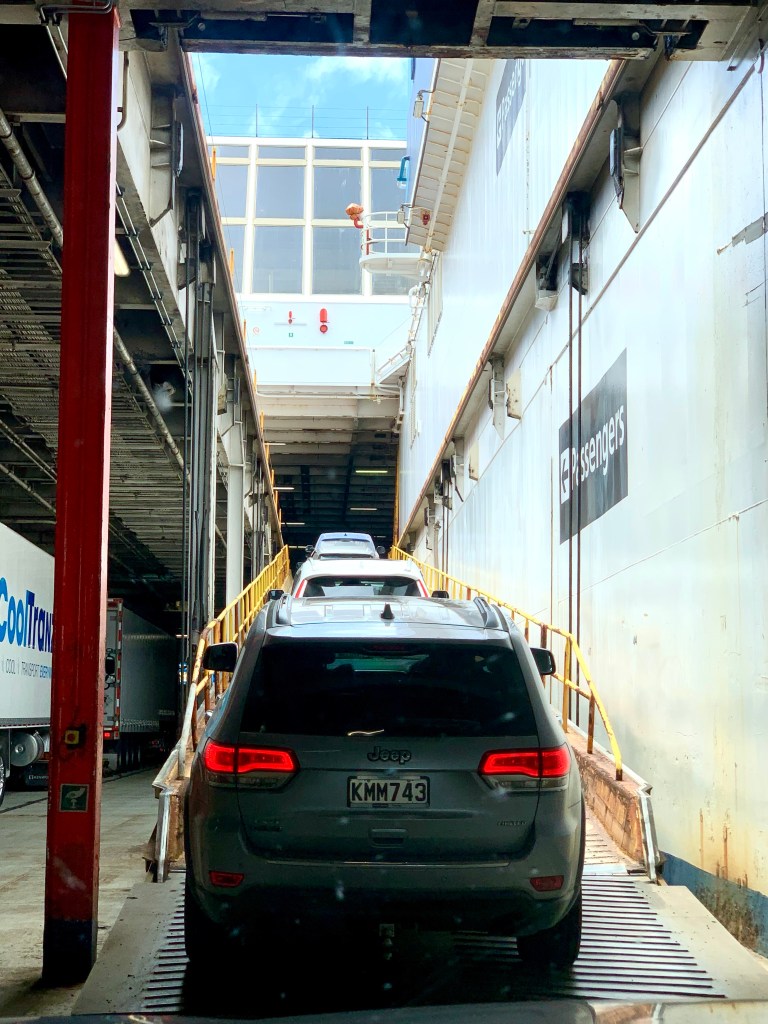
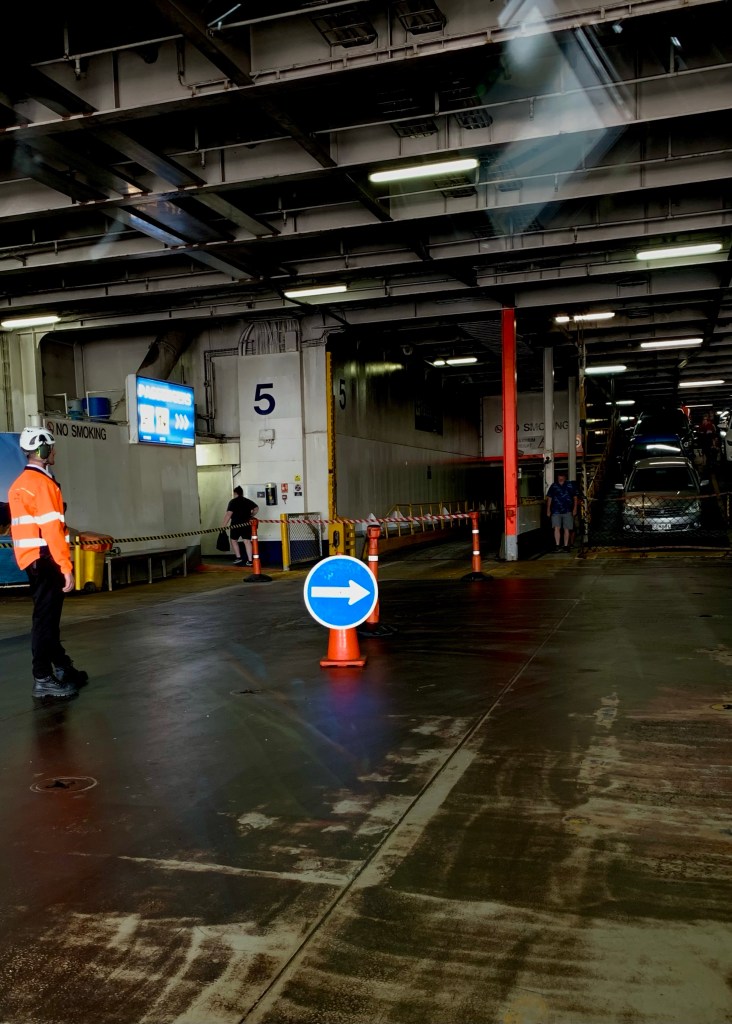
It was very soon time to check into the ferry boarding area and drive to the assigned line to await the ferry boarding. We went back on the Kaitaki which is the same ferry we came over to the South Island five days ago. What a lot we have seen in those five days!
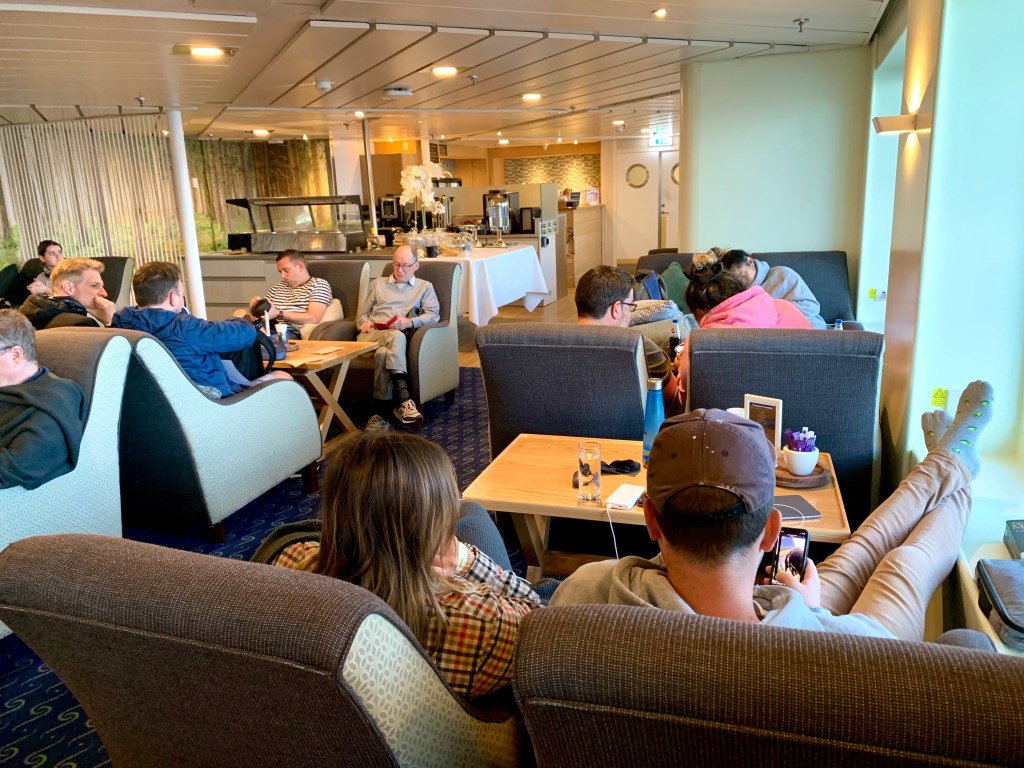
The Premium Lounge on Level 7 of the ferry is very comfortable and serves a very nice buffet lunch with excellent vegetarian choices.
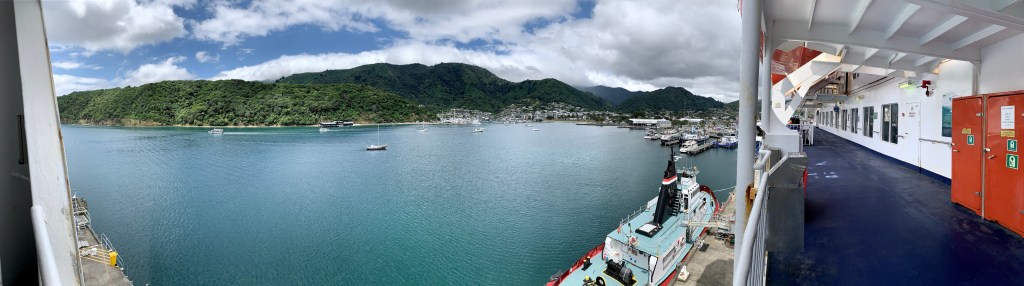
Tap for a panoramic view
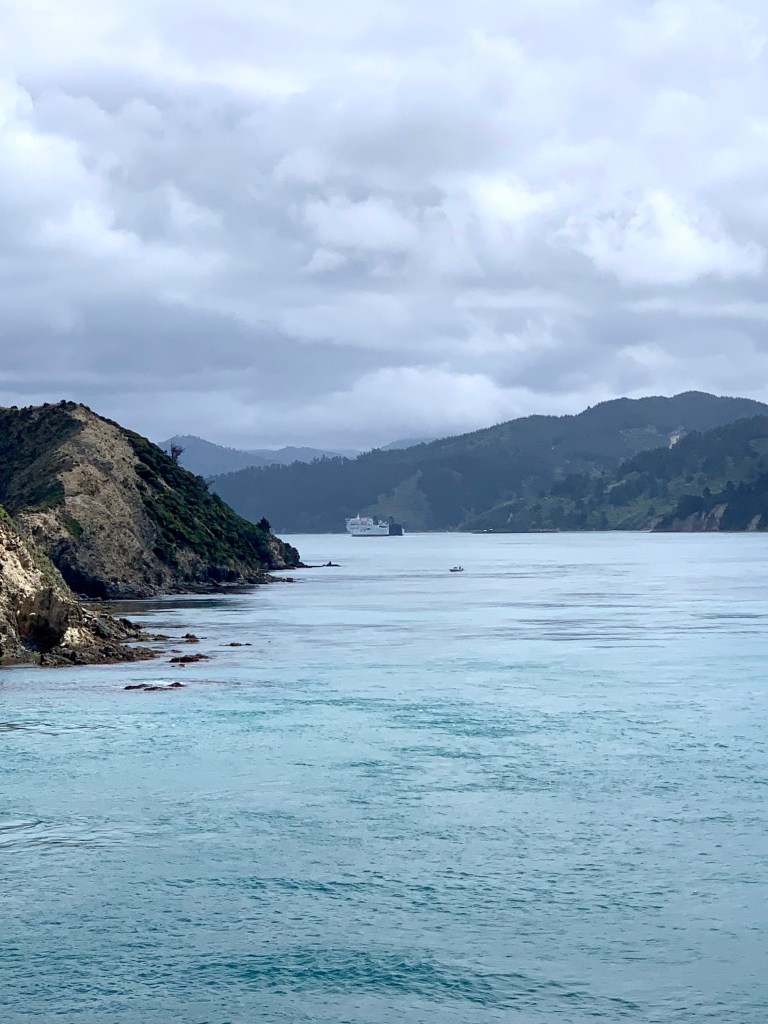
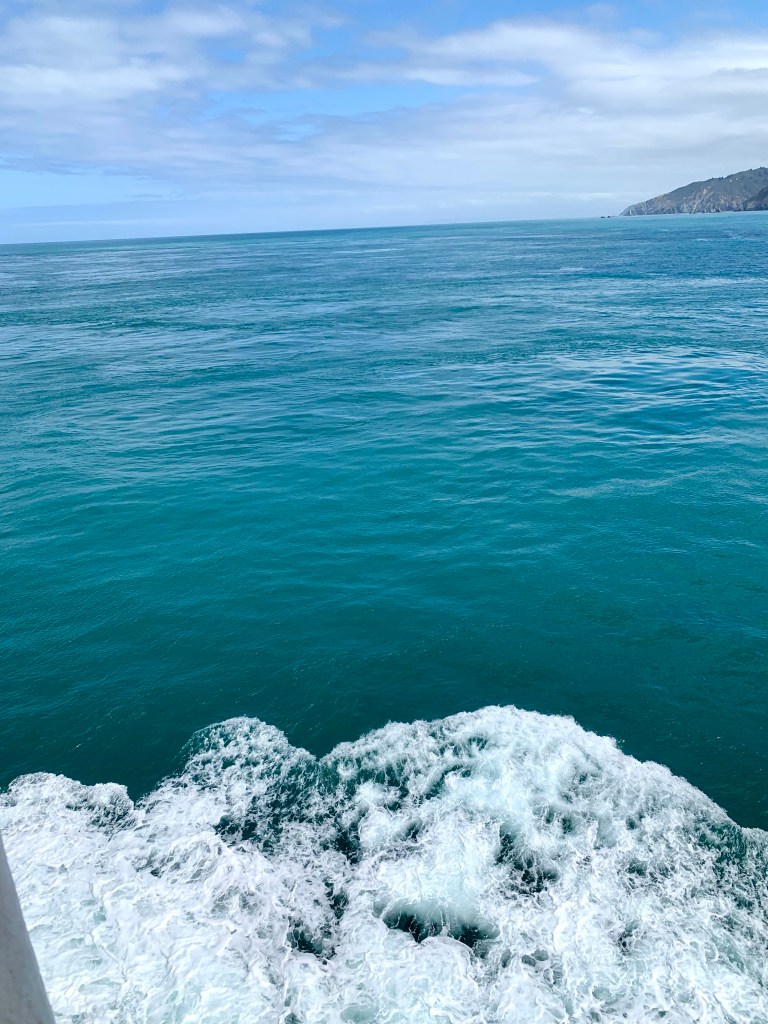
The weather cleared and we had some glorious views of the retreating land and the sea on the way back to Wellington.
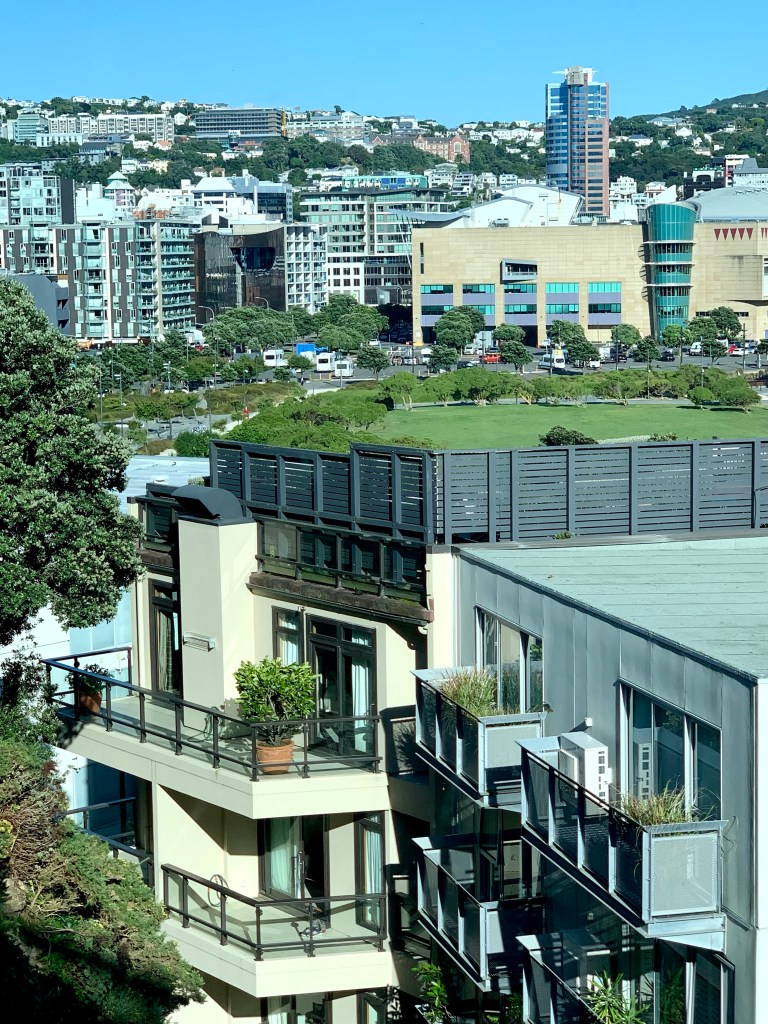
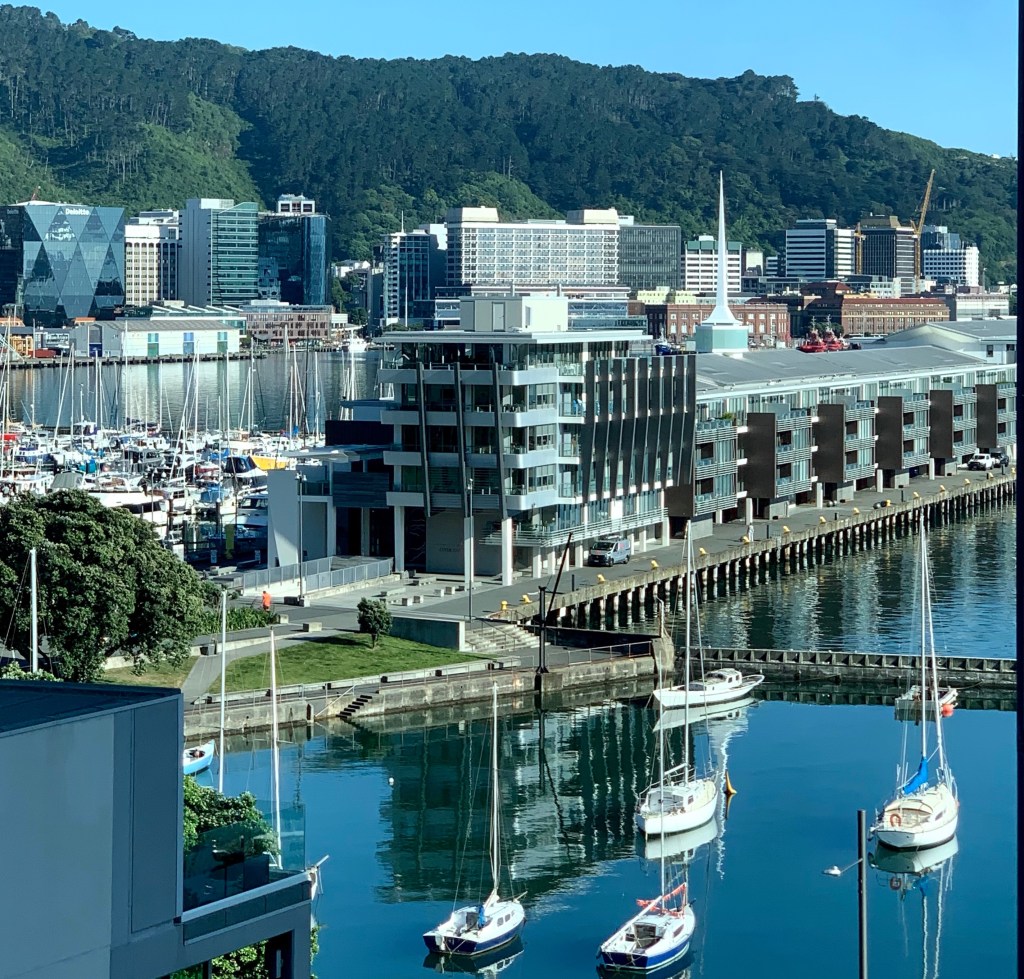
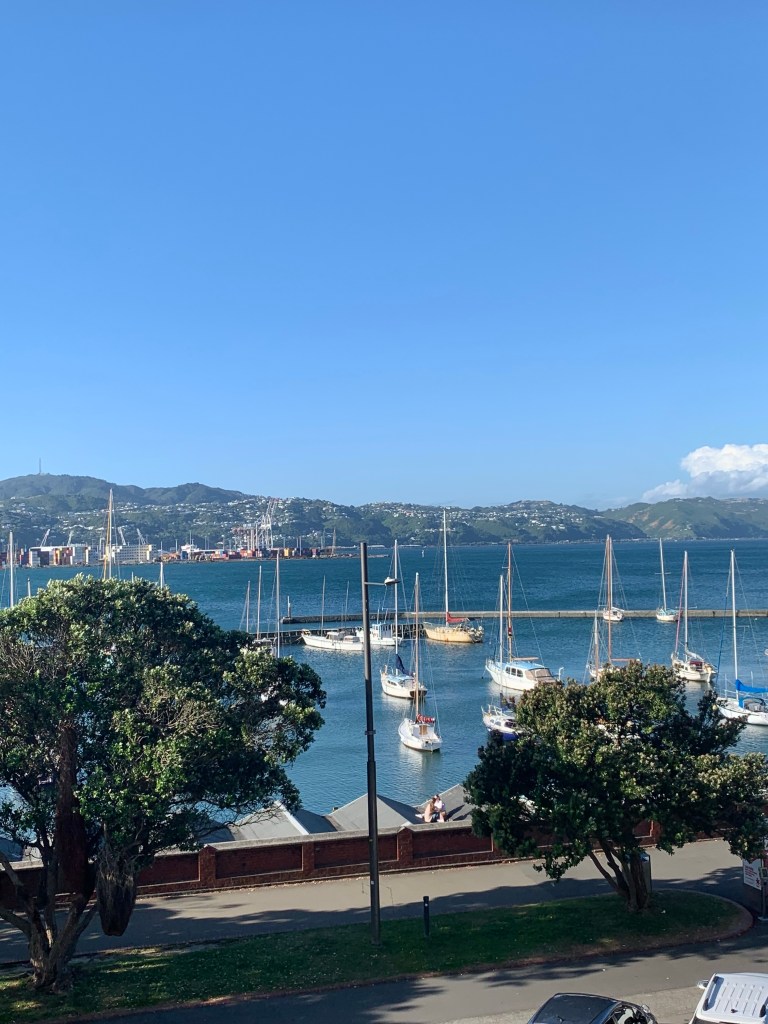
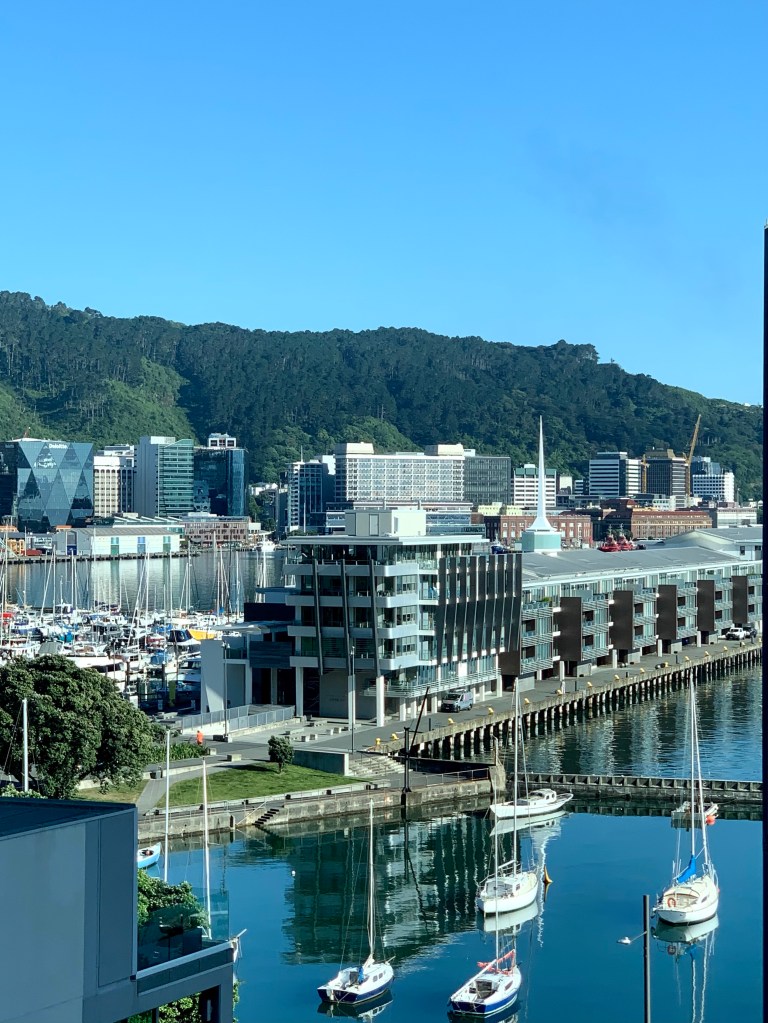
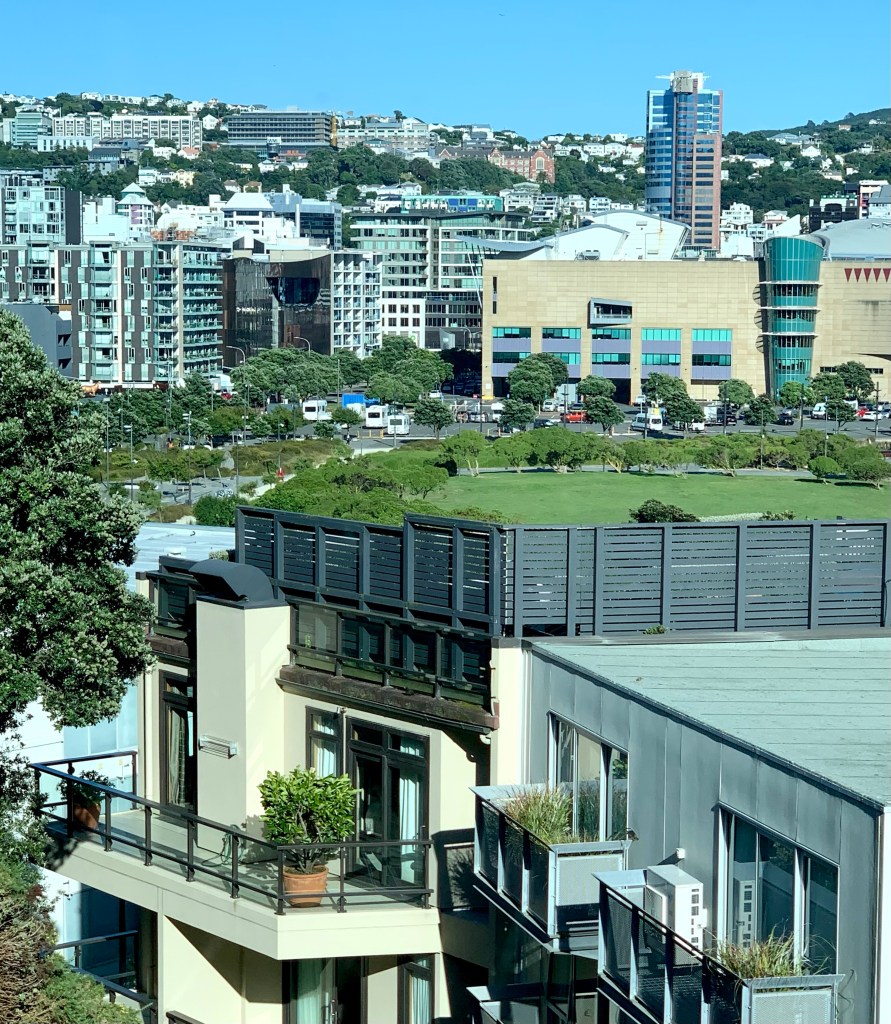
The lovely ferry journey was over all too soon and in no time we were back at the Copthorne Hotel in Wellington, overlooking part of the city from one side of the hotel and a marina from the front. We will drive back up to Taupō tomorrow morning.
I was surprised to learn that Wellington is considered to be the world’s windiest city, by average wind speed, because we didn’t experience any wind there on either of the two afternoons, nights and mornings we were there. We’ve been told that is unusual because very windy weather is the norm in the city. Wellington,or Windy Welly to locals, is the southernmost national capital city in the world, with a latitude of about 41°S which places it right in the zone of the roaring forties, found between the latitudes of 40°S and 50°S. The city is also exposed to the high winds that blow through the Cook Strait.
We didn’t get to see much of Wellington because, to use a metaphor apt to New Zealand’s capital city, we just breezed through the city on the way to and back from the South Island. We spent a night in the Copthorne Hotel in Oriental Bay on the harbour front before catching the ferry to Picton and again when we returned 6 days’ later.
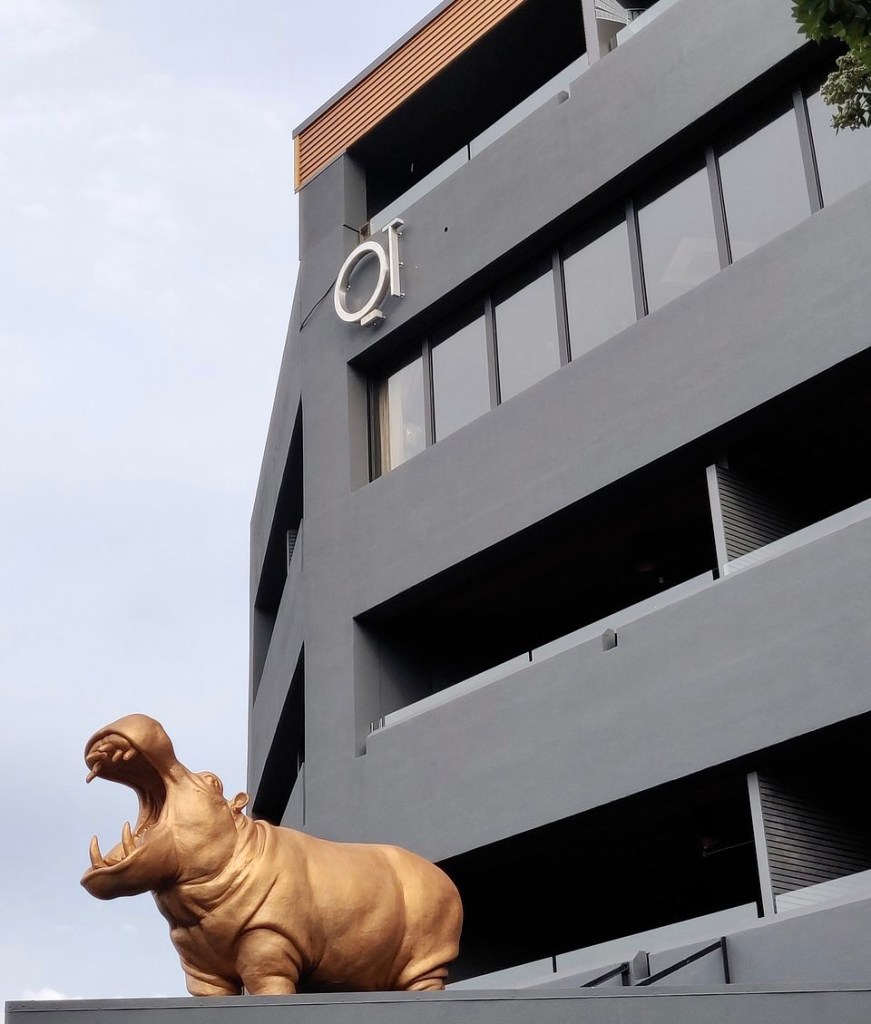
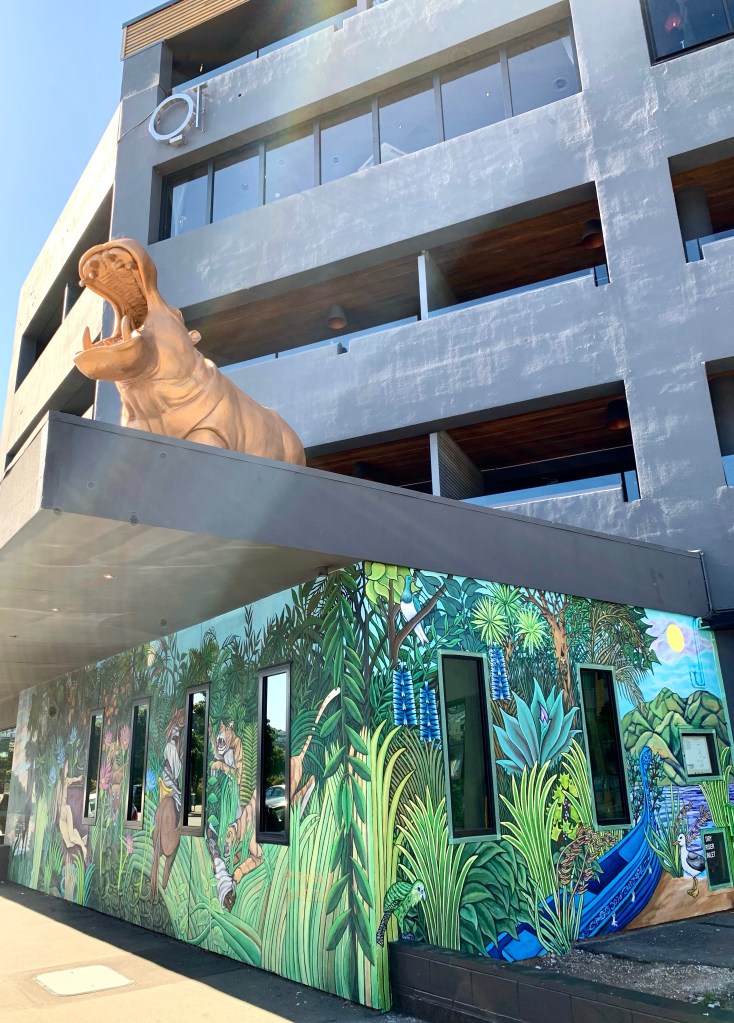
The QT Hotel, Cable Street Wellington
When we first got into the city on our way south, we saw some strange things going to our hotel that clearly warranted further investigation.
As well as being New Zealand’s political capital, the city is also hailed as New Zealand’s cultural and creative capital – the capital of cool – and, despite its relatively small population of less than half a million, it is a very active centre for the arts, restaurants, coffee shops and entertainment. Renowned filmmakers, Sir Peter Jackson and Sir Richard Taylor and others have established a world class film-making, post-production and special effects centre in Miramar, a district in the east of the city, hence its nickname, Wellywood. The Lord of the Rings Trilogy and Avatar are just two of the internationally acclaimed films shot partly or wholly in Wellington. There is also a very lively music, theatre and opera scene.
There are lots of sculptures in public places in the city and the Wellington City Walk takes you past 17 sculptures within a 3km area around the Museum of New Zealand Te Papa Tongarewa.
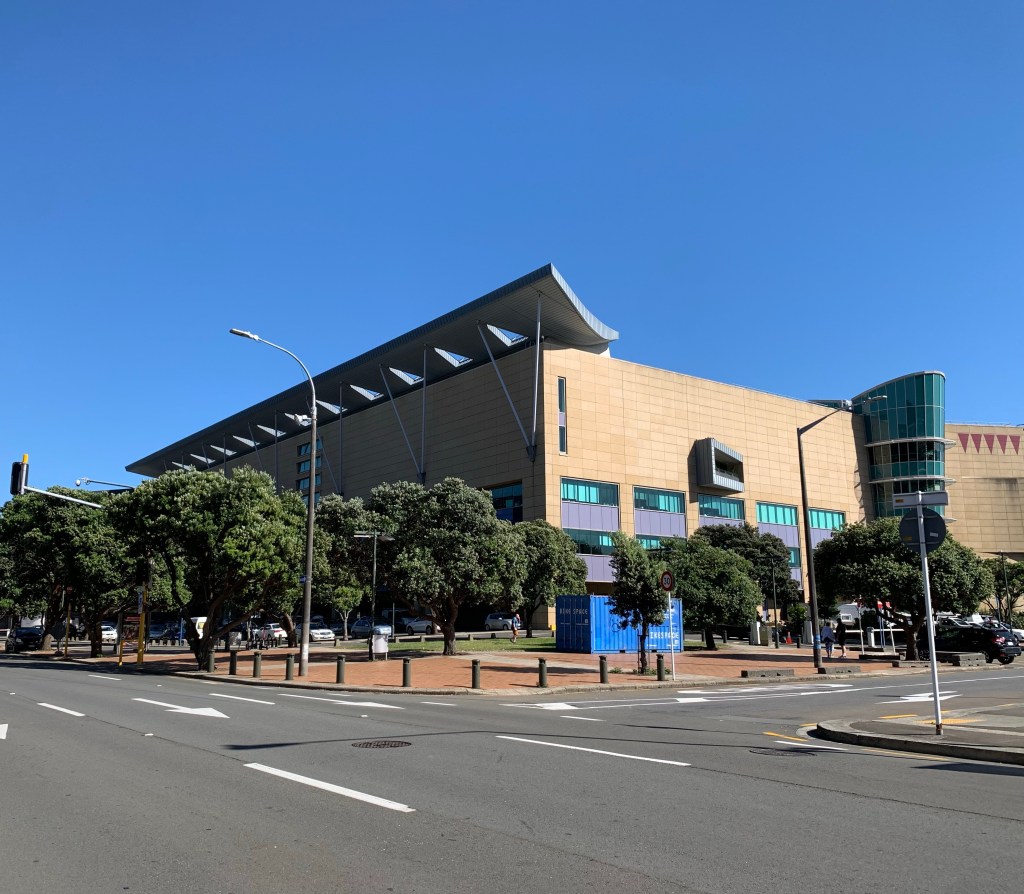
Te Pape or the Museum of New Zealand Te Papa Tongarewa
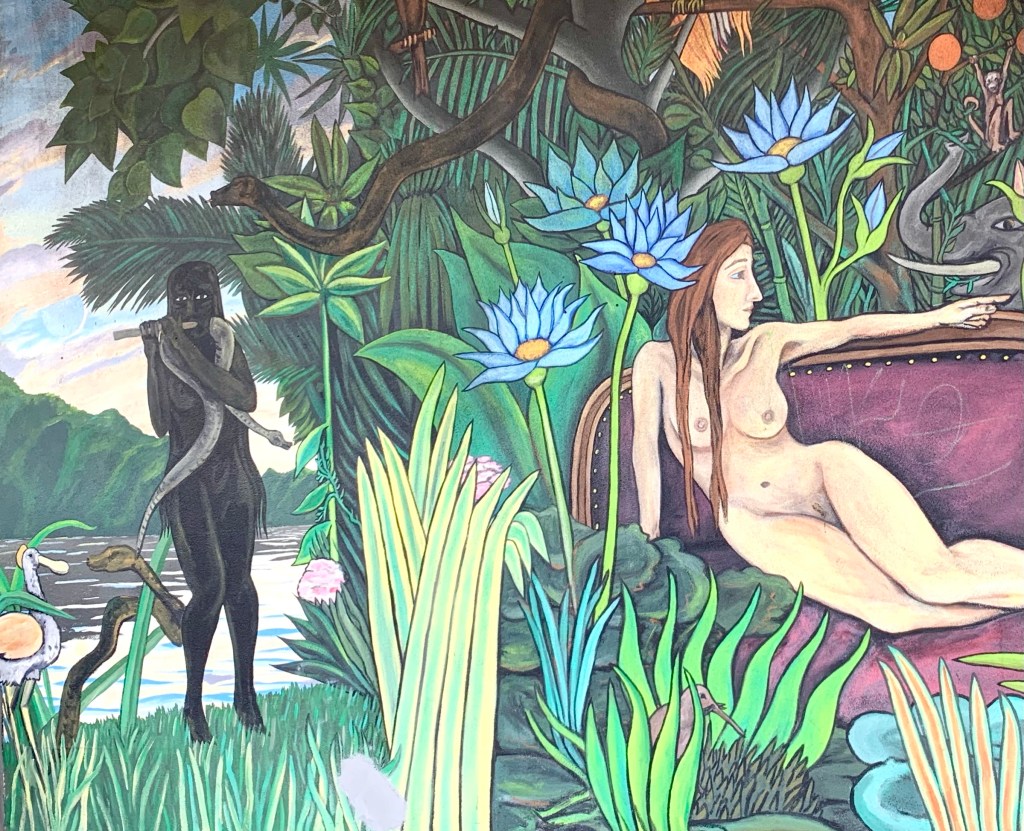
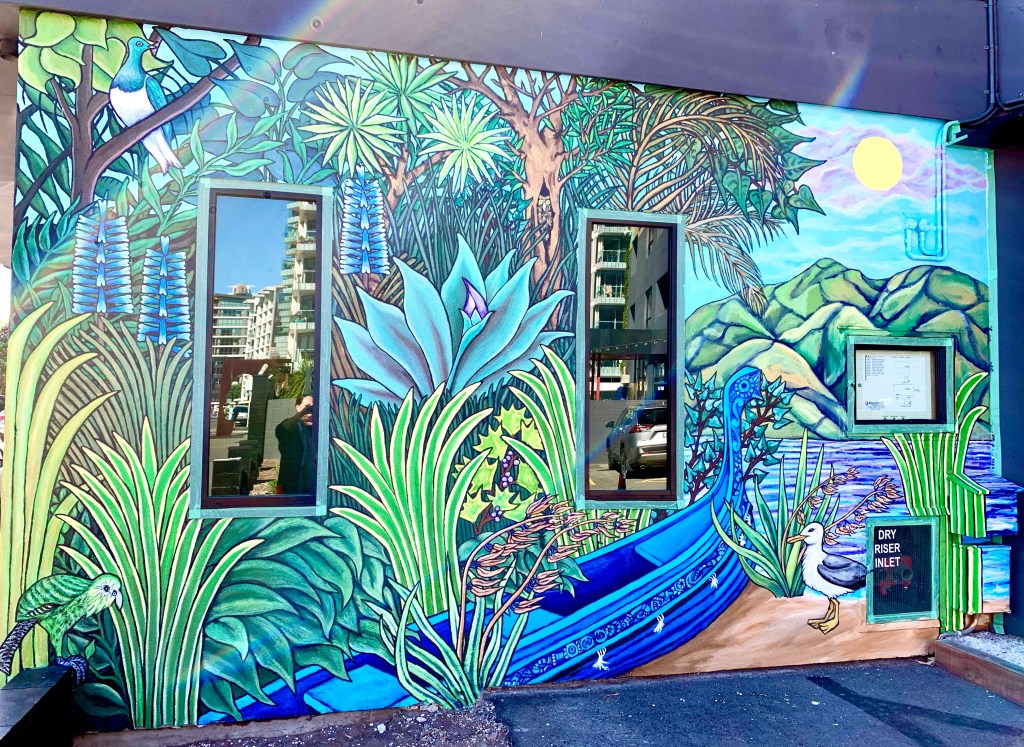
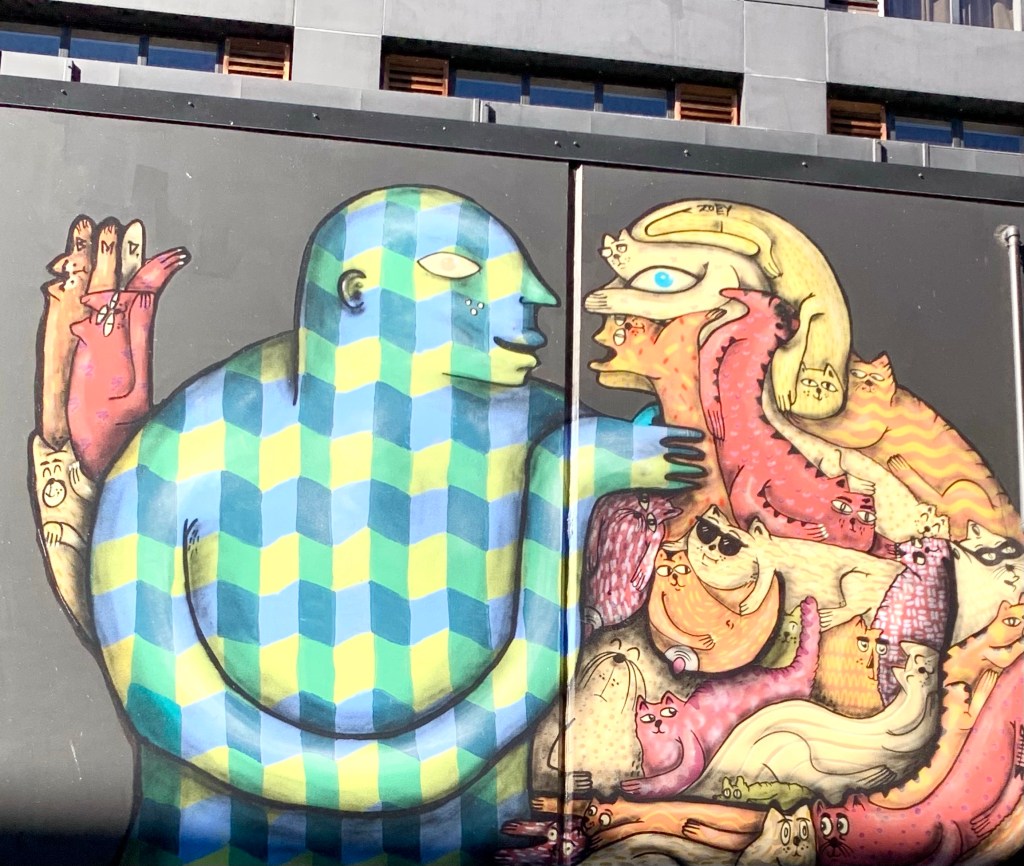
On the way to the South Island we noticed two artist working on a Henri Rousseau inspired mural on the walls of the QT Hotel, which is diagonally opposite the road from Te Pape and just a few blocks from our hotel. The front wall facing the road was already completed and they were about halfway through painting the wall around the side. By the time we had checked into our hotel and got back there the artists had already packed up and gone for the day. So I was curious to see whether they had finished their work when we got back from the South Island.
And I am very glad to say that they had finished it and it was beautifully done!
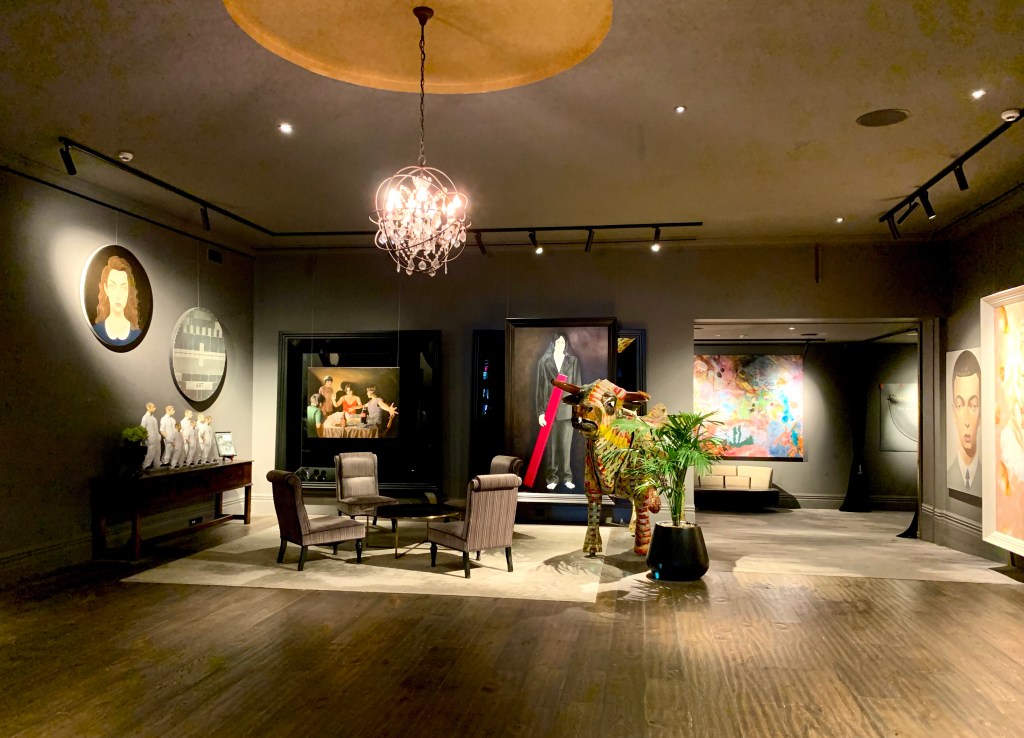
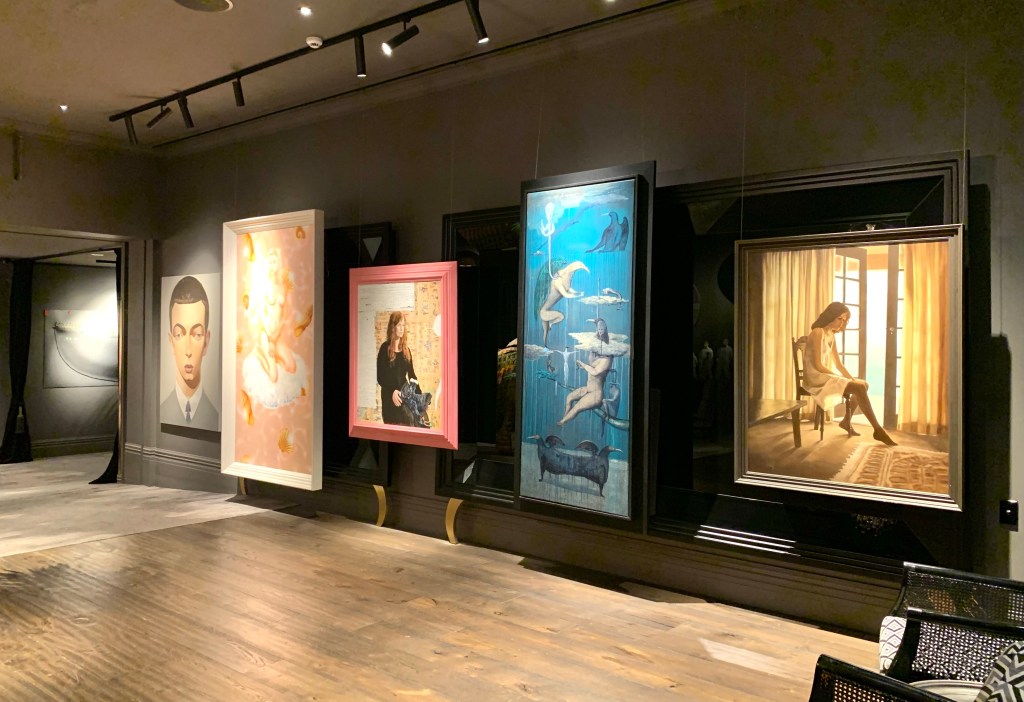
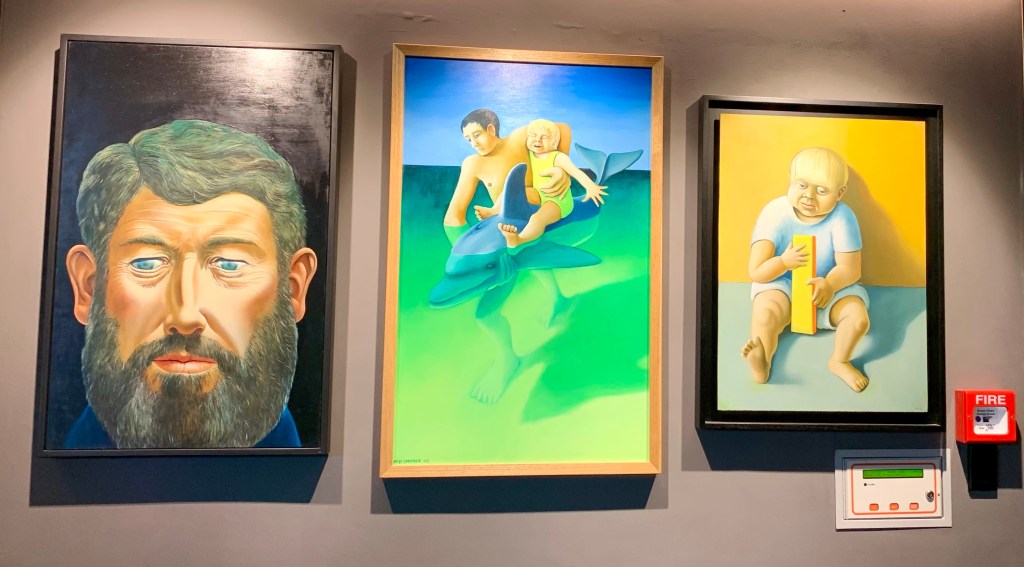
The QT Hotel’s website describes itself thus: Surprise yourself at QT Wellington, a significant fusion of expressive and luxurious art, technology and indulgence. Loosely based in the new creative capital of the South, QT Wellington is a warm invitation to explore and define one of New Zealand’s most eclectic collections of art and character. This is the ideal hub for cultural connoisseurs from around the world, framed in designer opulence and showcased at a gallery opening that never closed. We’re eager to see what you will bring.
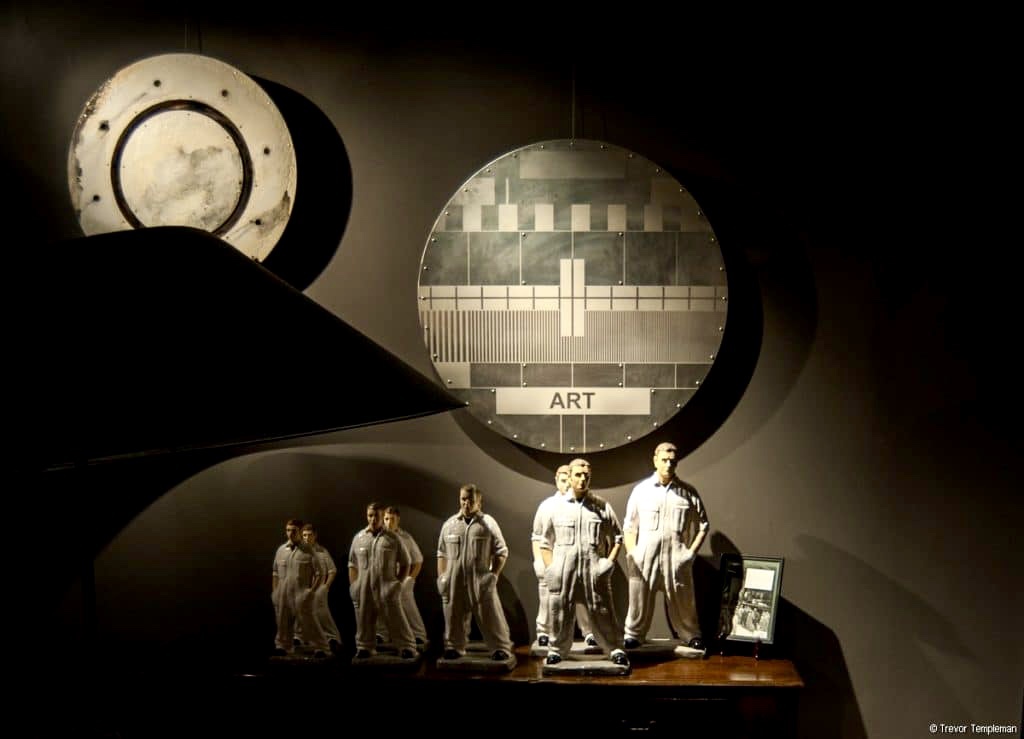
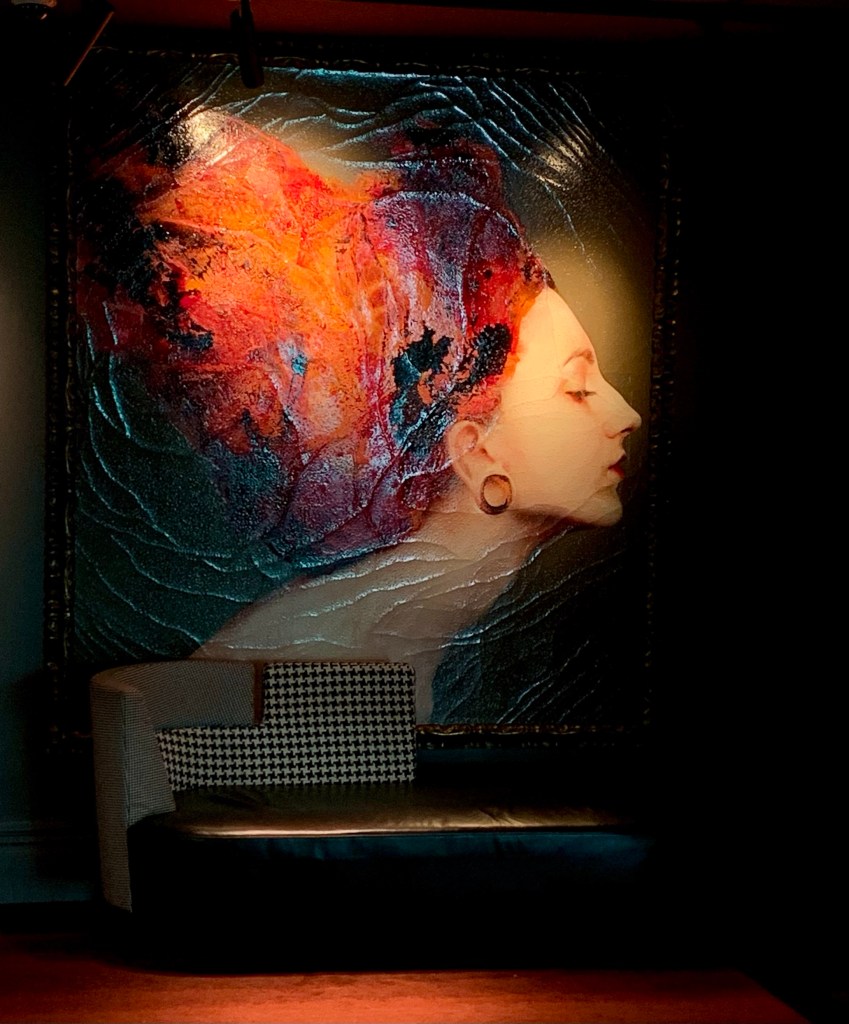
The precise meaning of some of that deliciously purple prose is not clear but, naturally it made me want to go and see it for myself, and, yes, the hotel is certainly opulent and it displays a lot of art work.
Large scale mural in the hotel car park The lobby Hippopotamus Restaurant & Cocktail Bar
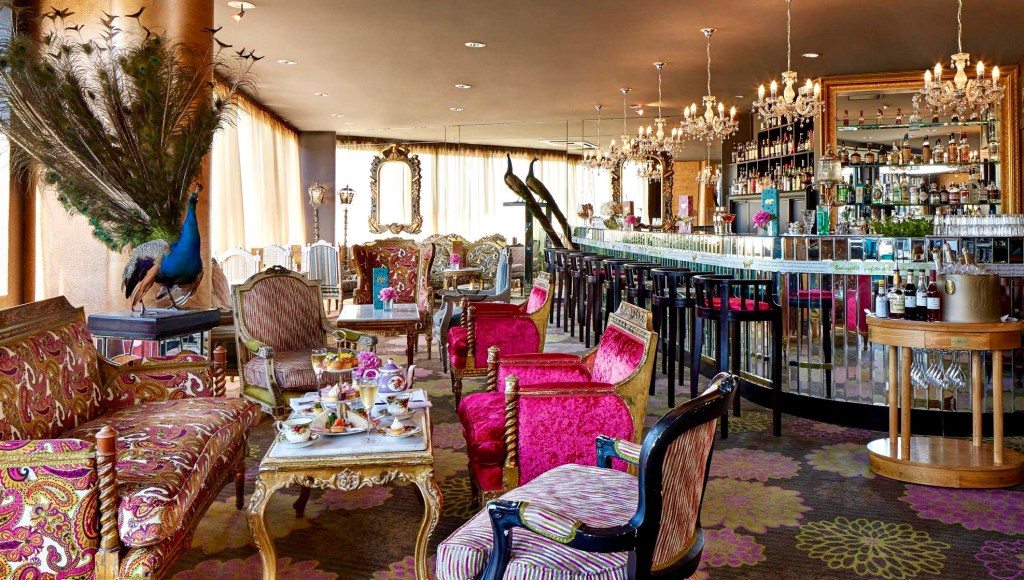
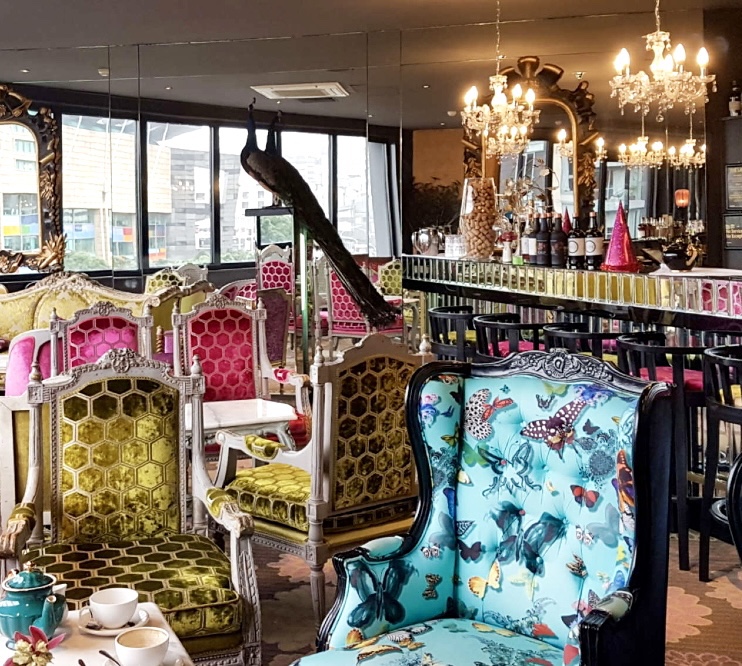
The hotel website describes their très chic restaurant, Hippopotamus, thus:
Strut in as proud as a peacock to be served flamboyant Parisian chic. Enter the eclectic world of a fabby French grandma who knows how to drink. Pops of colour on plush textures and a bevy of bedazzled chandeliers. Cuisine that’s made to match the ooh la la theme, we say santé! Come raise a glass where the refined get comfy. Hippopotamus is where we elevate you in Wellington dining elegance.
Named after the world’s giant aquatic ballet dancer, Hippo has a real taste of the majestic. Decadent degustation executed with finesse. French flavours pirouette with locally grown produce.
Sip in Harbour-view sparkle with wine to match the delicacies. We’re pouring green fairy-inspired cocktails for a night of liberté and vogue. By day, indulge in the strawberry shortcake and be treated to the exquisitely sweet. Golden hour breakfasts and high tea worthy of glamour royalty.
Curiouser and curiouser!” Cried Alice (she was so much surprised, that for the moment she quite forgot how to speak good English). – Lewis Carroll, Alice’s Adventures in Wonderland/ Through the Looking Glass
We’ve had lots of tantalizing glimpses of intriguing and sometimes bizarre things on our brief sojourns in this city and we’d like to return to explore Wellington in depth some time in the not-too-distant future.
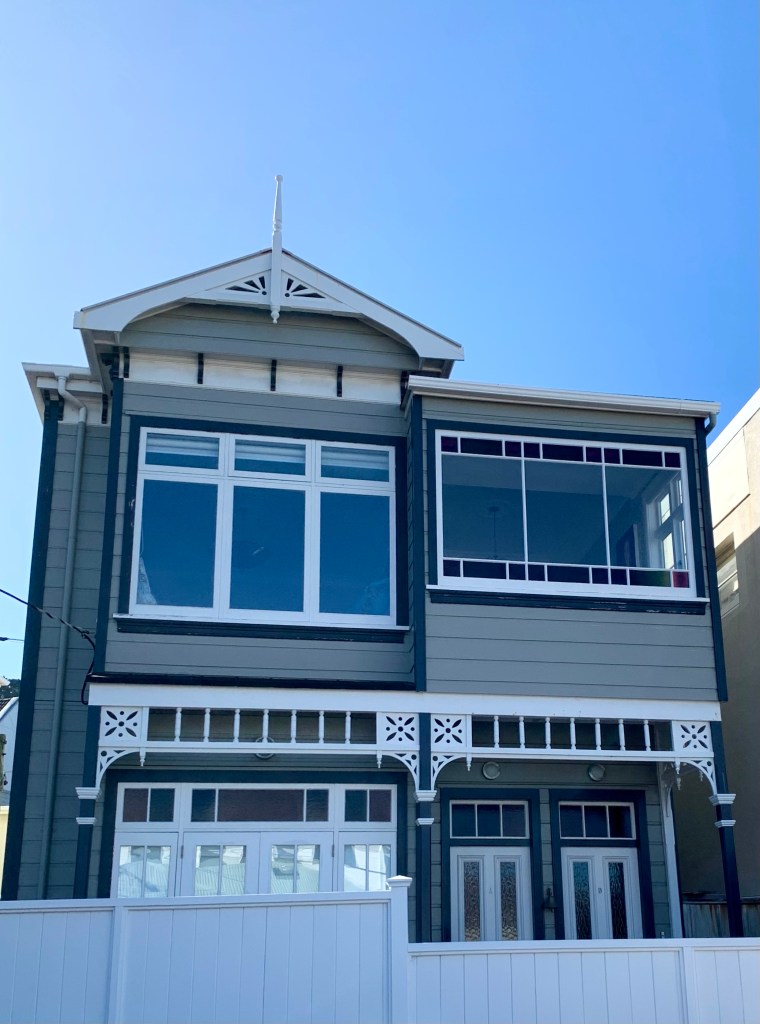
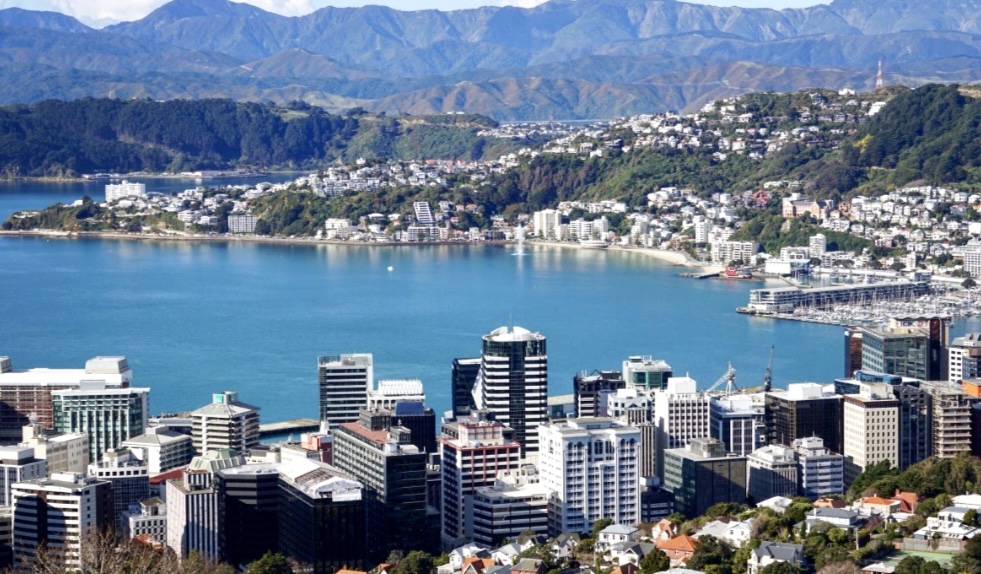
Wellington is located at the south-western tip of the North Island on Cook Strait, the passage that separates the North and South Islands. The city sprawls along several bays dotted along this southern coast and is relatively densely populated because of the narrow strip of building space available between the sea and the surrounding hills, There are also lots of houses built in the dense native bush on those hills.
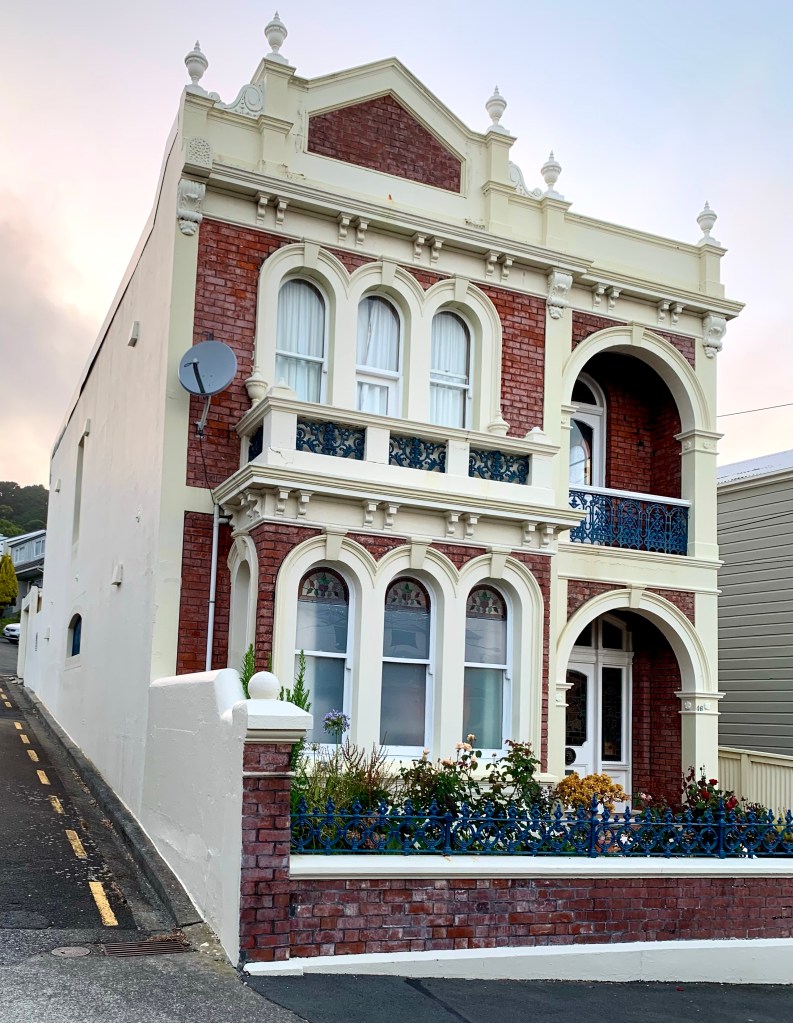
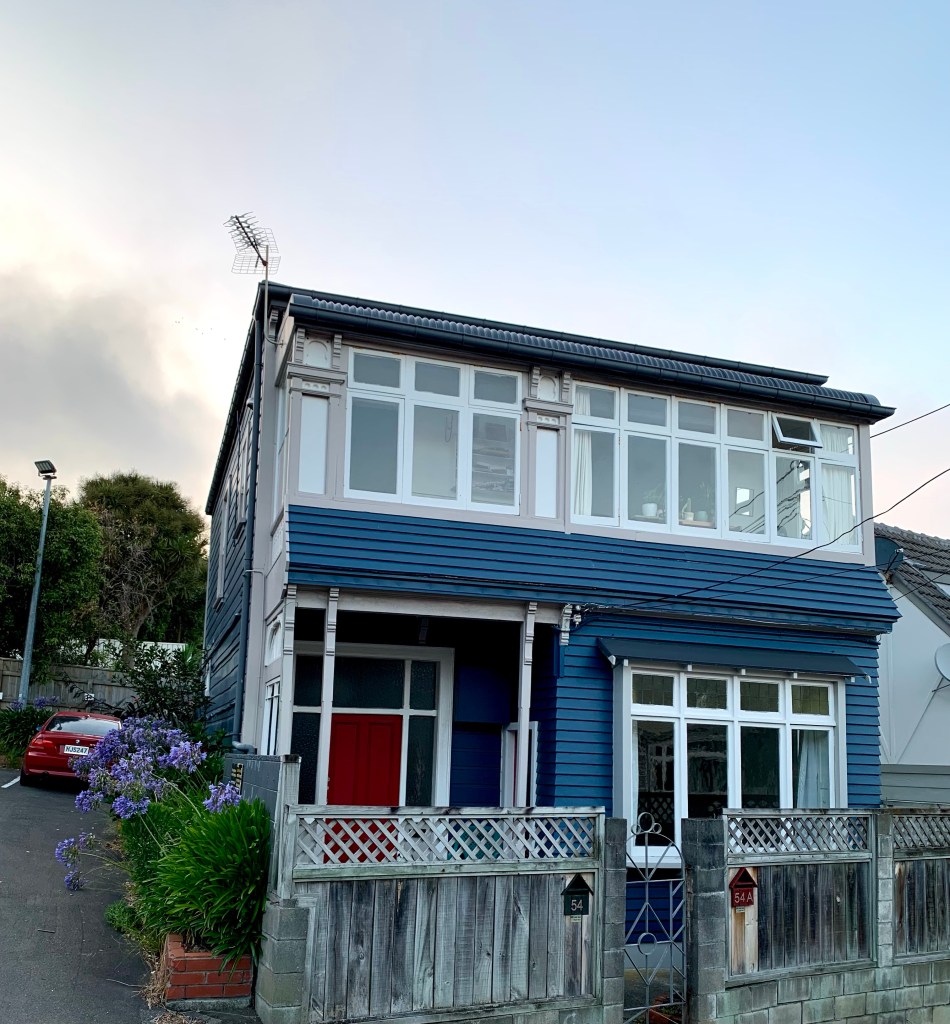
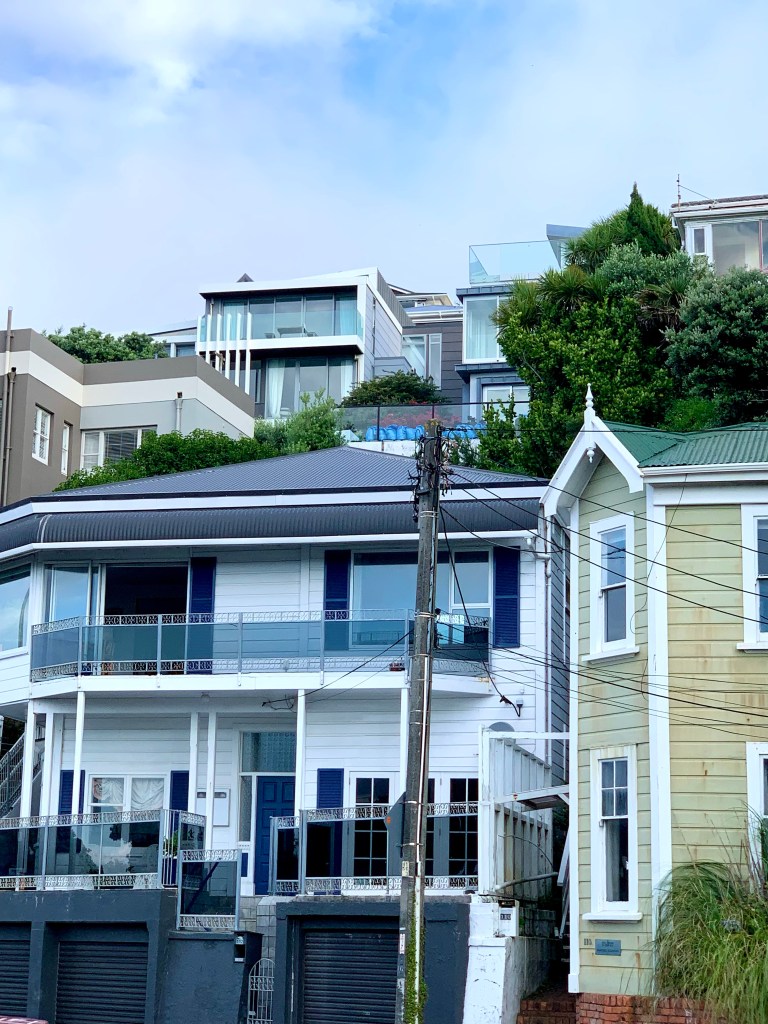
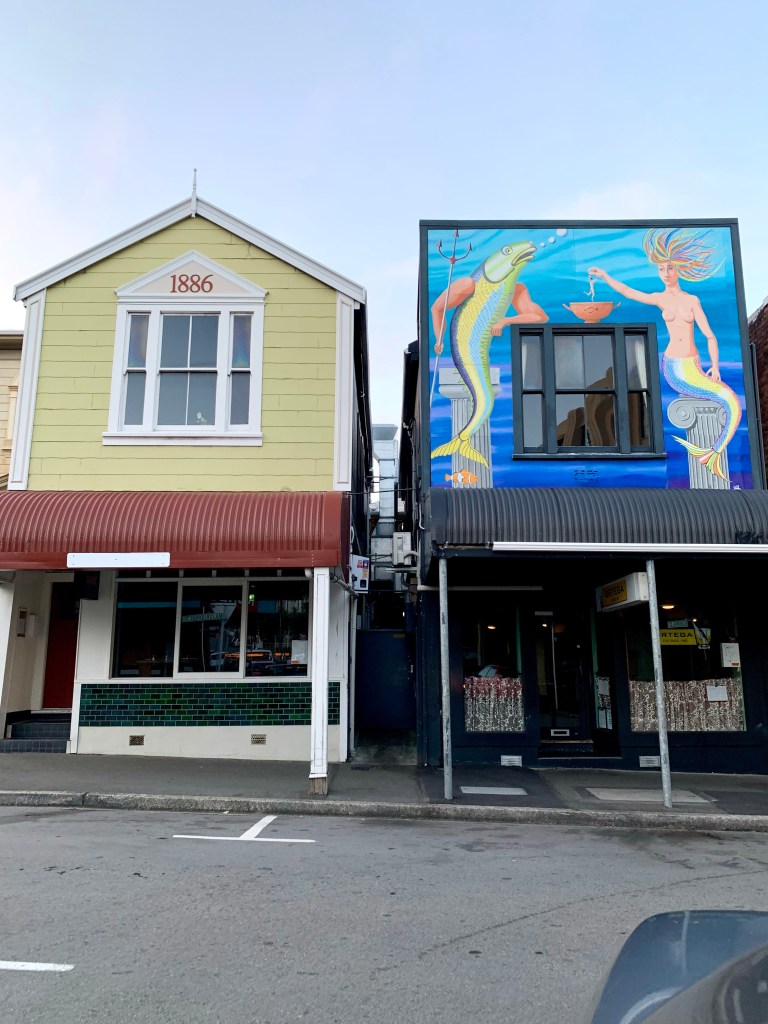
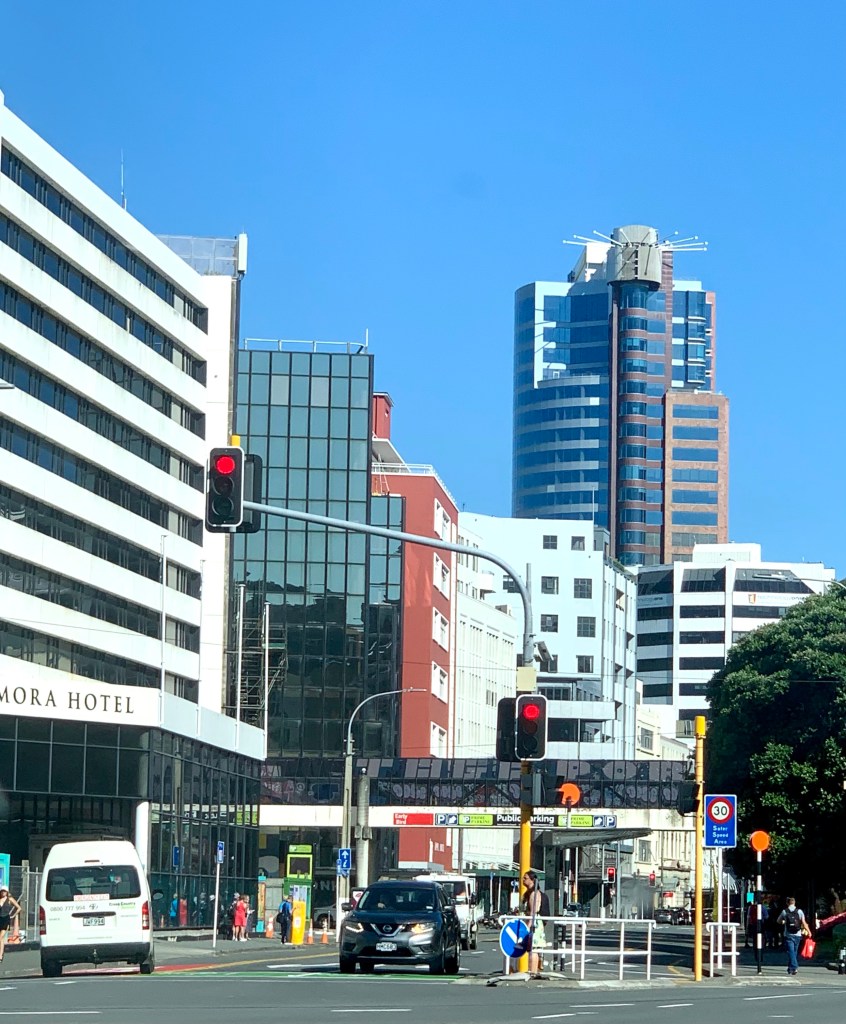
Some of the houses and buildings in Oriental BayCheeky slogan! Driving out of the city past the harbour
As well as being New Zealand’s windiest city, Wellington is also the country’s hilliest city. There are 38 mountains in and around Wellington City, the highest and the most prominent of which is Outlook Hill with an elevation of 537m. The whole of the Wellington region, which covers an area of 8,049 square km, is mountainous. It comprises 480 named mountains, the highest and the most prominent peak of which is the Bannister summit with an elevation of 1573m.
Within a short period of time, we were already out of the city and into the countryside. Rather than retracing our steps back to Taupō on SH1, we decided to drive back via SH2, through the Hutt Valley to Palmerston North and then back onto SH1 via SH54. Michael had a lot of driving ahead of him today because we had to cover 384km which Google maps estimated would take 5 hours and 44 minutes with no stops.
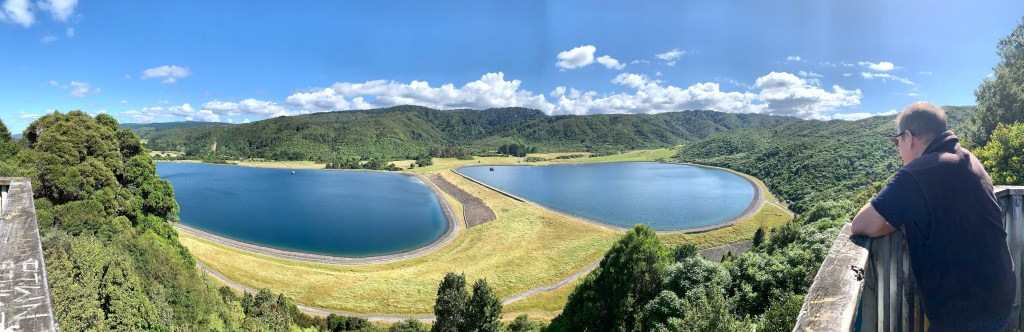
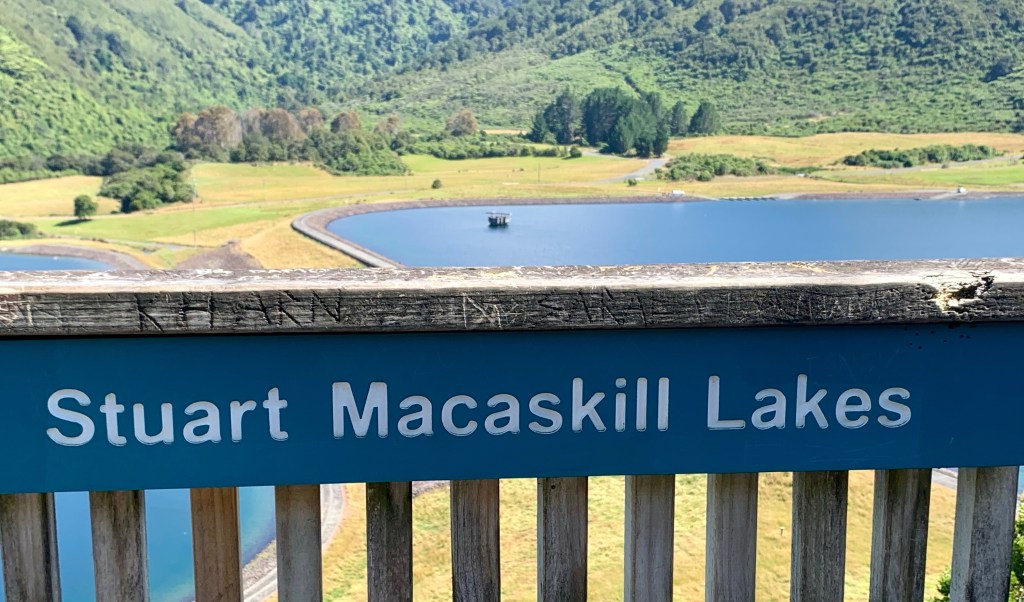
About 42km from Wellington we stopped at a scenic lookout to see the two Macaskill Lakes. They are named for Stuart Alisdair Macaskill who retired in 2001 after 30 years of elected public service, many of them as chairman of the Wellington Regional Council. He was a driving force behind the concept and construction of the lakes between 1980 and 1987 to provide an alternative and supplementary drinking water supply for Wellington, Porirua, Hutt and Upper Hutt Cities.
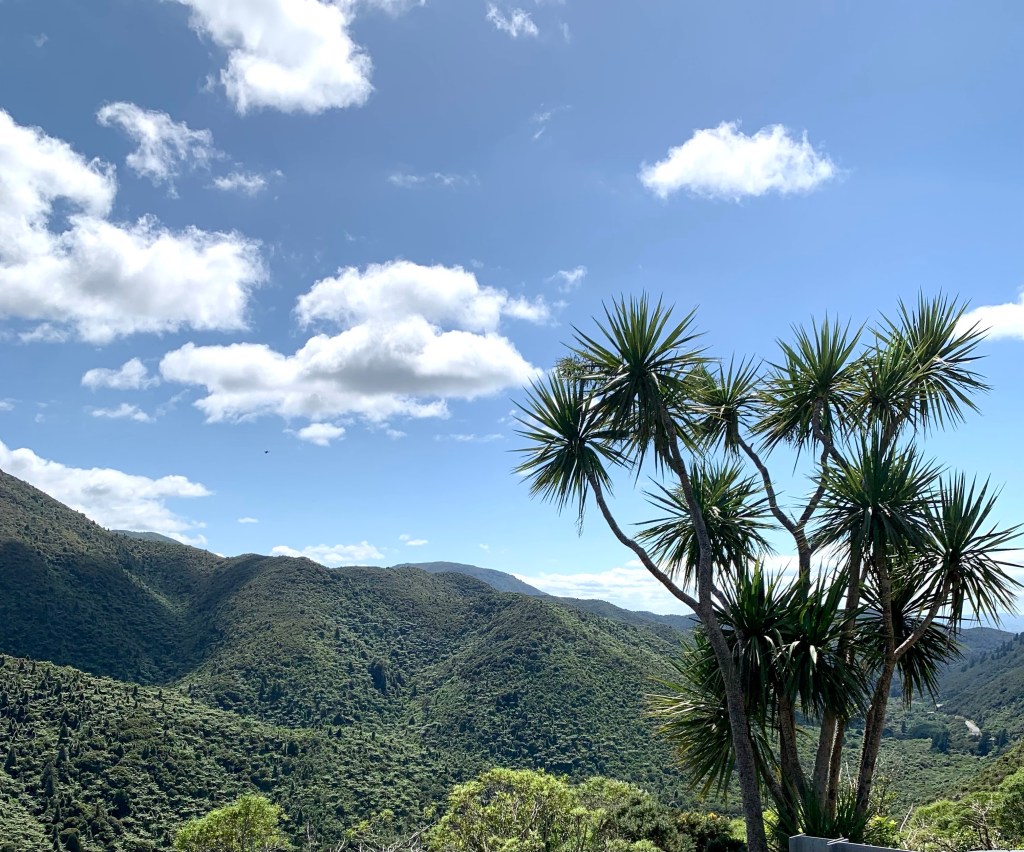
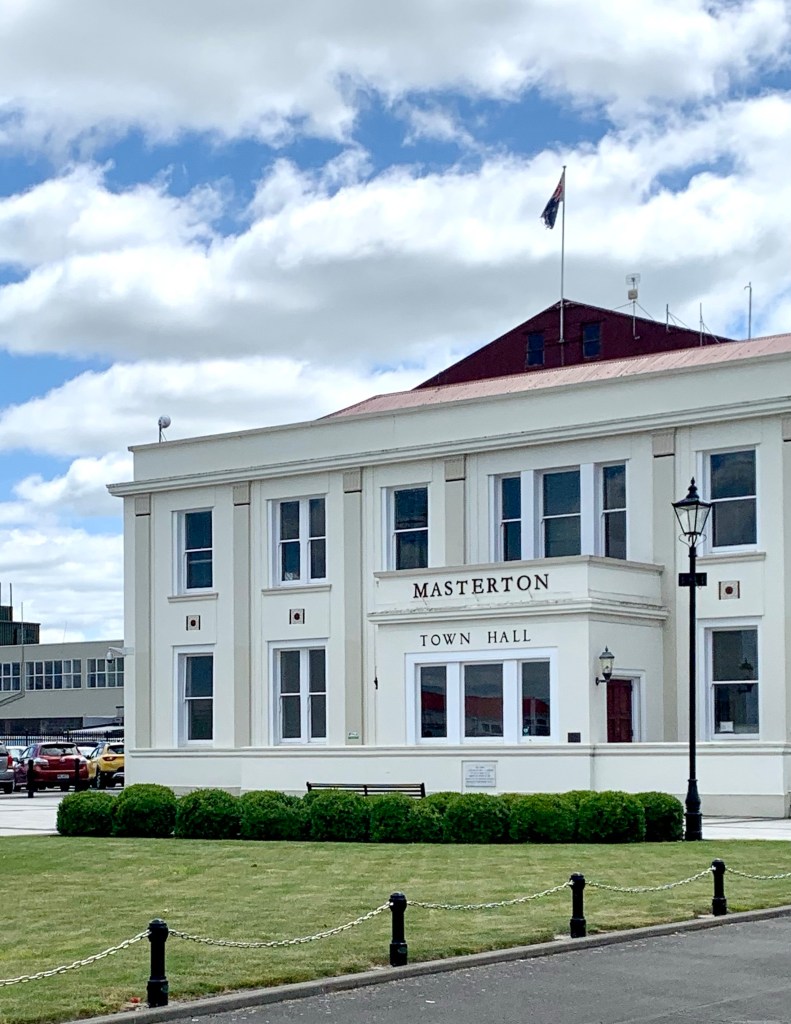
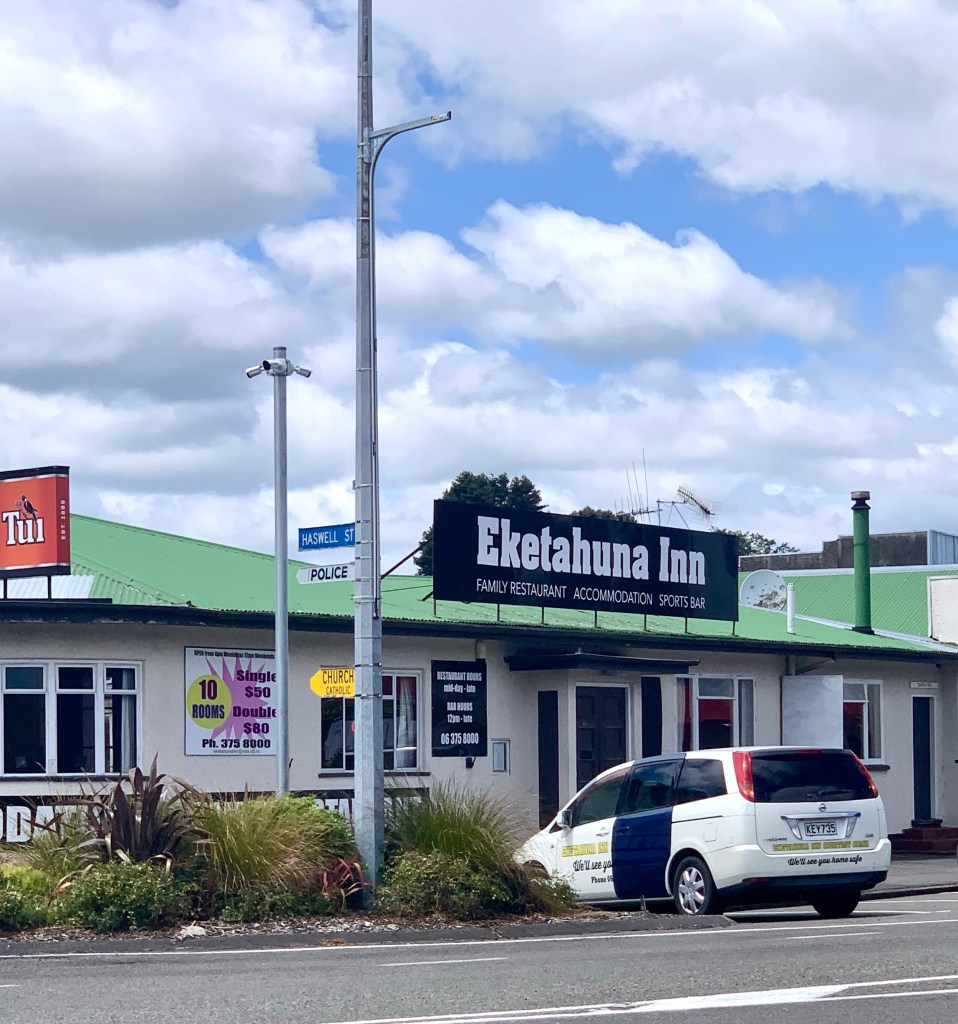
SH2 goes through countryside that is very mountainous and wooded but there is also a lot of farmland. The road goes through some small settlements and towns in this Manawatū-Whanganui region in the lower half of the North Island on the way to Palmerston North: Featherston, Greytown, Carterton, Masterton, Mount Bruce, Eketāhuna, Pahiatua.
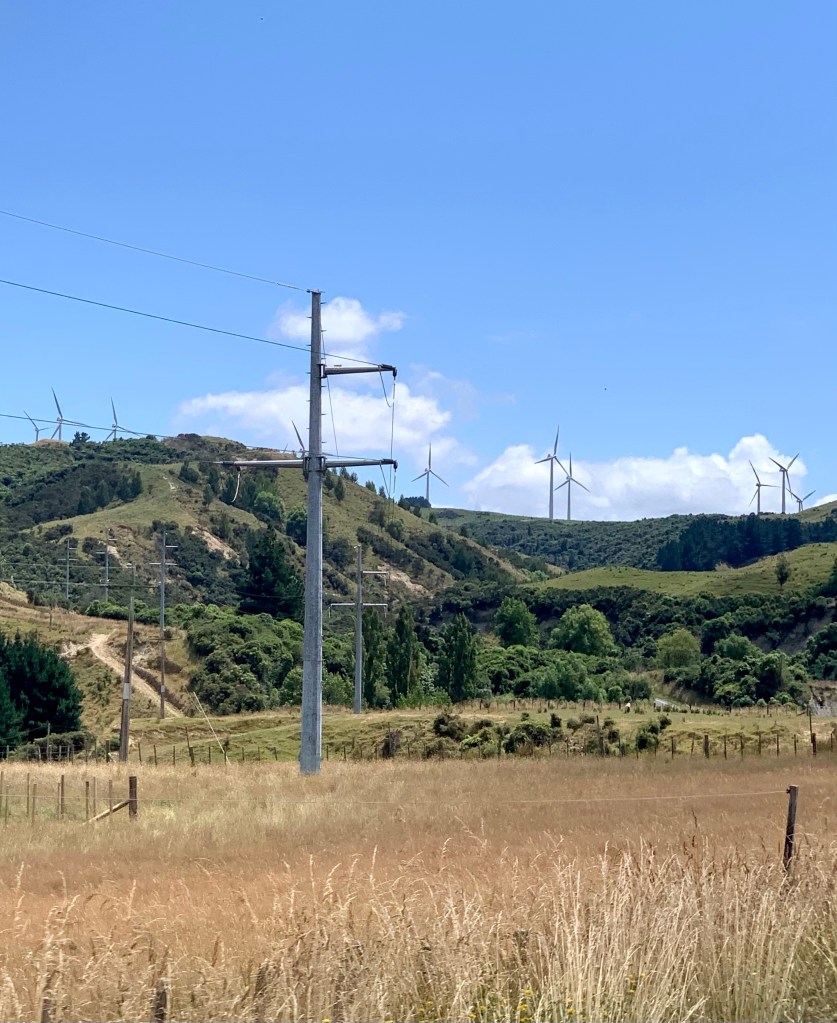
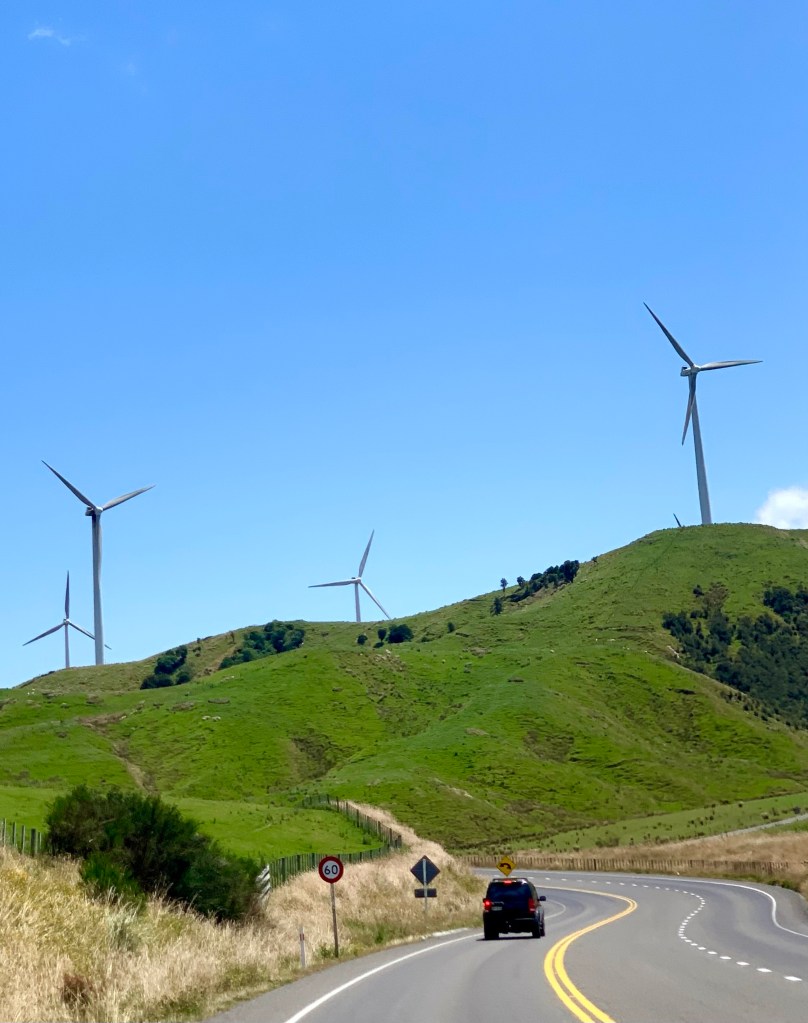
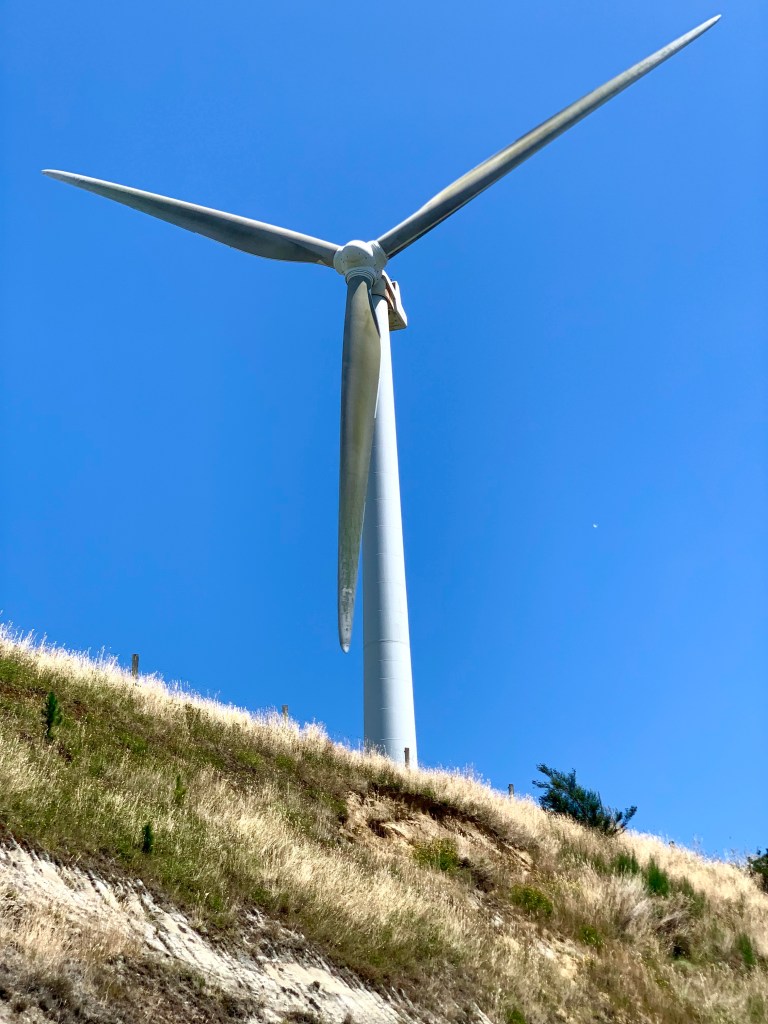
About 10 km from Palmerston North, we were surprised to find ourselves in the middle of a huge field of wind turbines. It was strange to see so many of them and to be so close to them.
Tararua wind farm, operated by TrustPower, is located on 700 hectares of private sheep and beef farming land on the south side of the Manawatu Gorge in the Tararua Ranges. It is New Zealand’s largest wind farm, both in terms of number of turbines and output. Its 134 turbines have a combined capacity of 161 megawatts and an average annual output of 620,000 megawatt hours. The wind farm has 103 Vestas V47 660 kilowatt turbines and 31 Vestas V90 3 megawatt turbines.
From Palmerston North, we took SH54 for 59km to rejoin the SH1 just after Vinegar Hill. After another 43km back on SH1, we stopped for a very late lunch at Taihape at 14.45. On the way down south 7 days ago we had stopped at Taihape for lunch too.
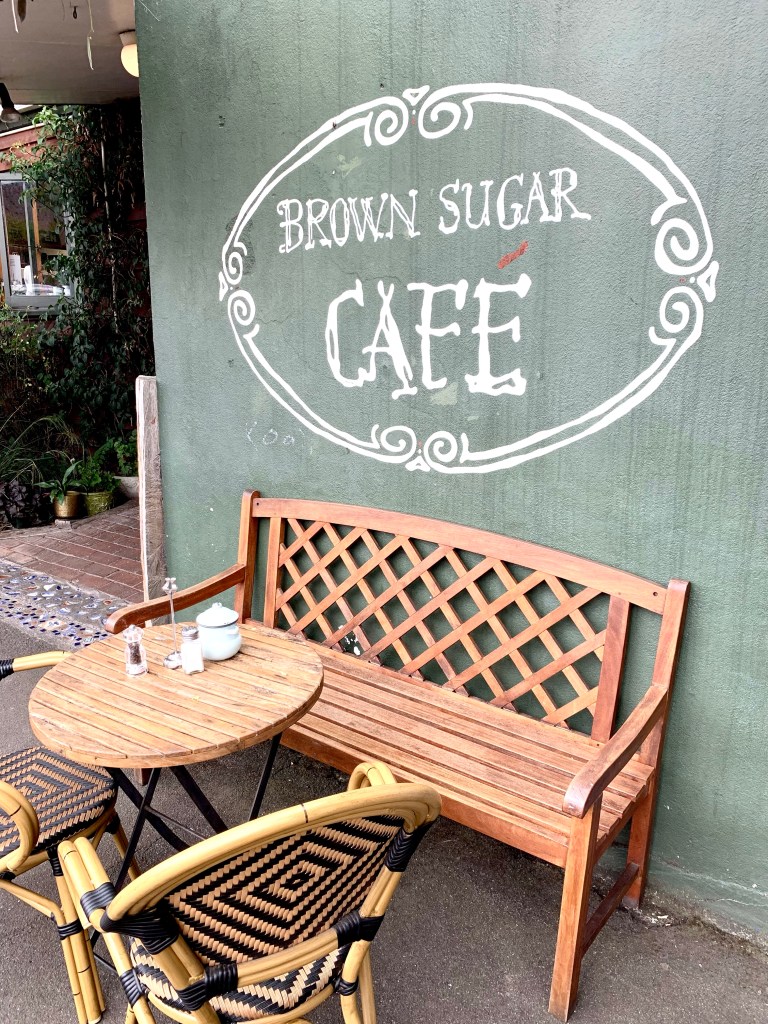
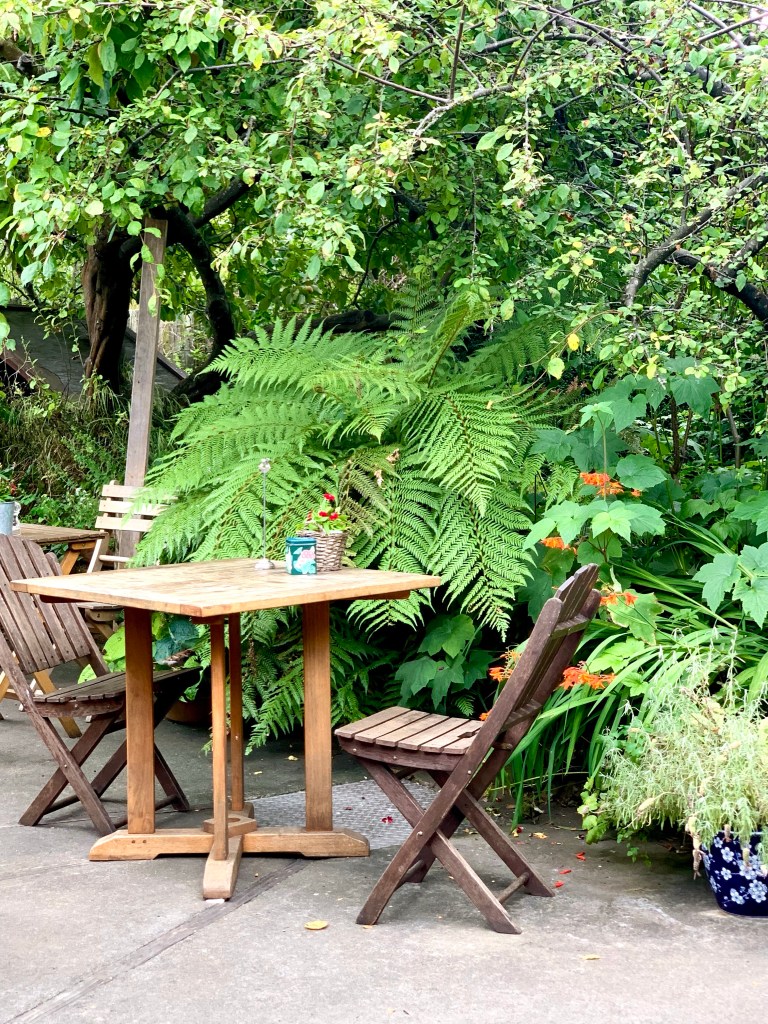
We decided to try another one of Peter’s café recommendations, the Brown Sugar Café this time. It is right across the road from Le Café Telephonique where we stopped before. The Brown Sugar Café turned out to be a good café, with very nice food, an interesting range of unusual and attractive objects for sale – including attractive Polish porcelain pieces and some intriguing books – and a beautiful garden out back. It was a very pleasant place to stop and have a refreshing break. Another great recommendation from Peter!
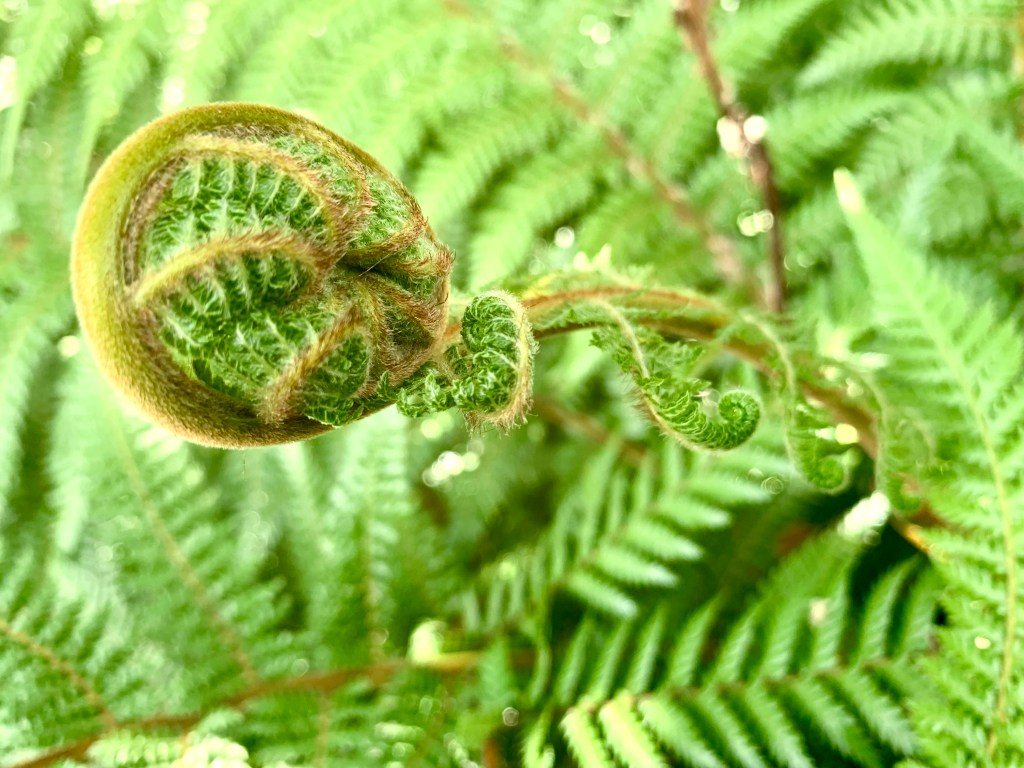
I managed to take a lovely photo of an unfurling fern frond in the café’s garden.
The koru is a spiral shape that is significant in Māori art. Based on the appearance of an unfurling silver fern frond, it symbolises new life, growth, strength and peace. I read that “it’s shape conveys the idea of perpetual movement, while the inner coil suggests returning to the point of origin.” The koru spiral has also more generally become a symbol of New Zealand flora, along with the silhouette of a silver leaf fern leaf.
After Taihape, which is 141km south of Taupō, we were back on SH1 following the striding giants again but northwards this time. The sky began to darken and the clouds got heavier and lower in the sky and we could see the rain starting over the mountains on the western horizon. A little later we went through some very heavy rain but it didn’t last long and the sky cleared somewhat as we started driving alongside the eastern shores of Lake Taupō.
Then we were back at Peter and Jackie’s lovely house at the bend of the river. Michael has driven for many hours this past week and we have seen so many things. It’s been a really great road trip to the South Island from Taupō, covering about 1769km of road. Very well done done to Michael for some epic driving! Much appreciated! ♥️
A river is time in water; as it came, still so it flows, yet never is the same. – Leonardo da Vinci
Family is not an important thing. It’s everything. Michael J. Fox.
Anika living the good life
17th February 2023
One of the purposes of our trip is to connect and reconnect with family and friends in New Zealand and Australia and it has been very good to see Peter, Jackie and Kirsty. Today will be our last full day with Peter and Jacky and we intend to savour and store up every moment. Jackie and I went out to an interesting and quirky café in nearby Acacia Bay for morning tea while Michael went to work with Peter to find out all about thermal energy.
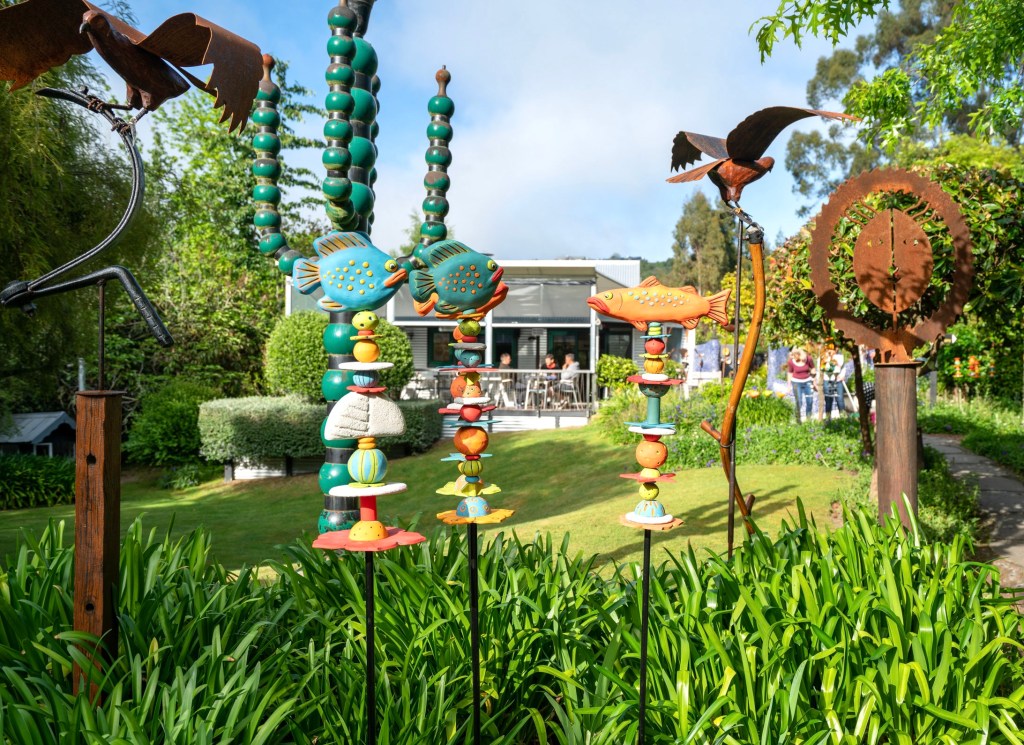
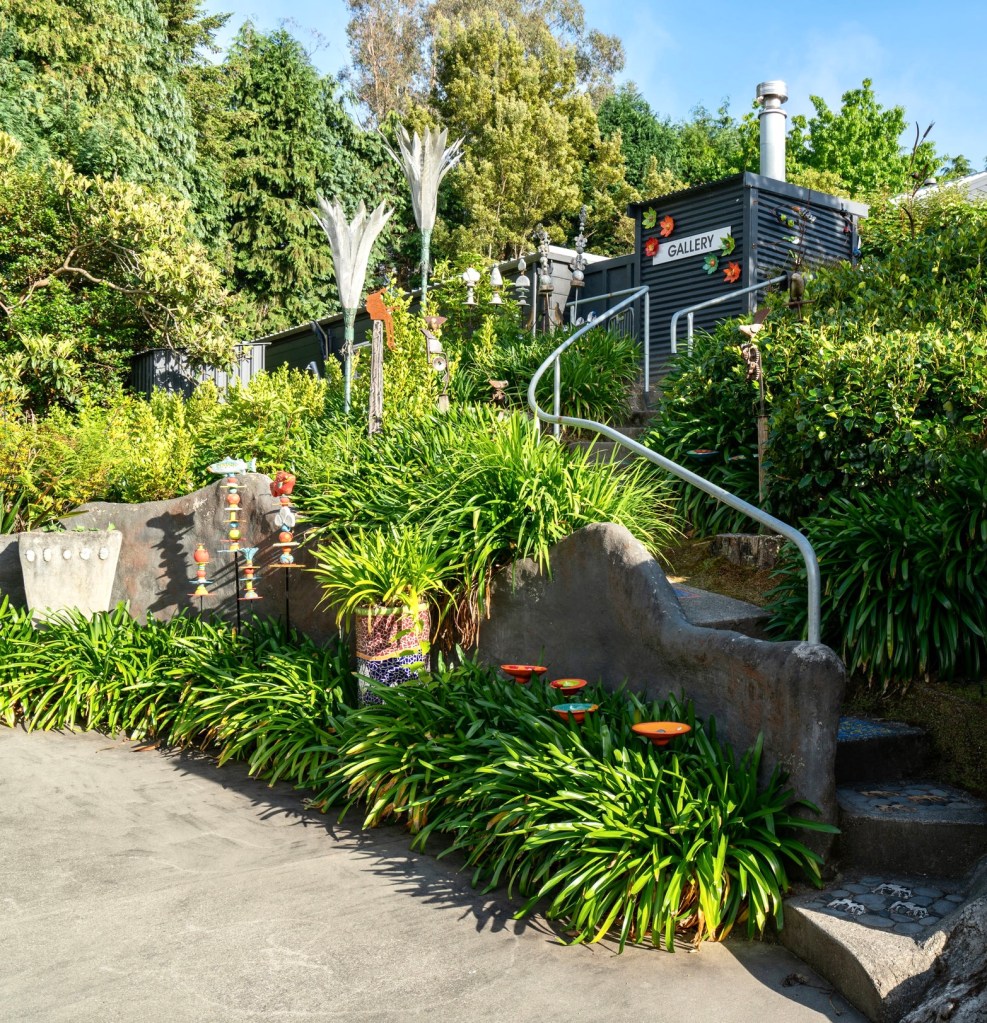
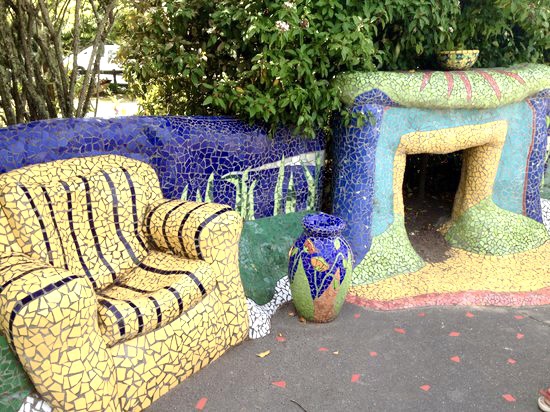
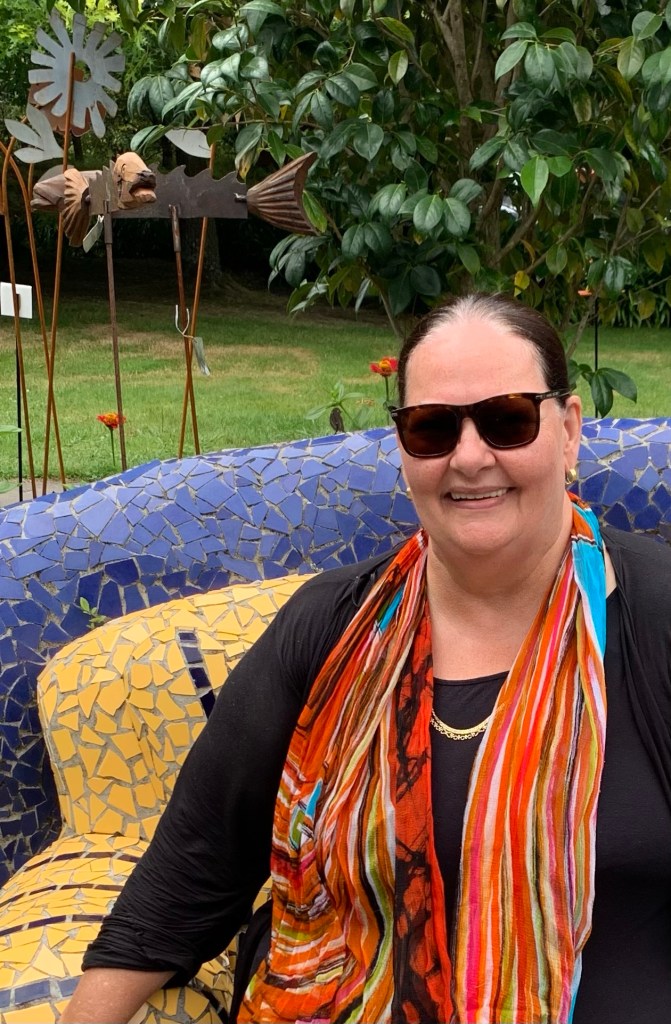
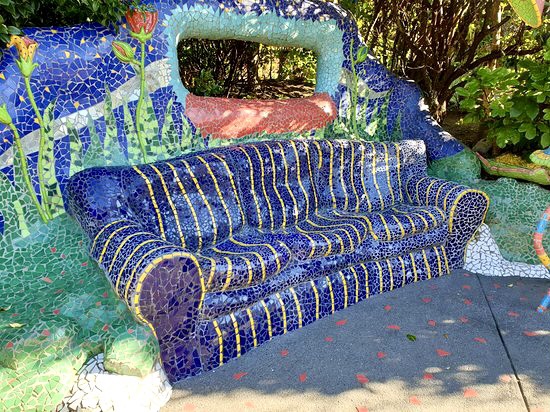
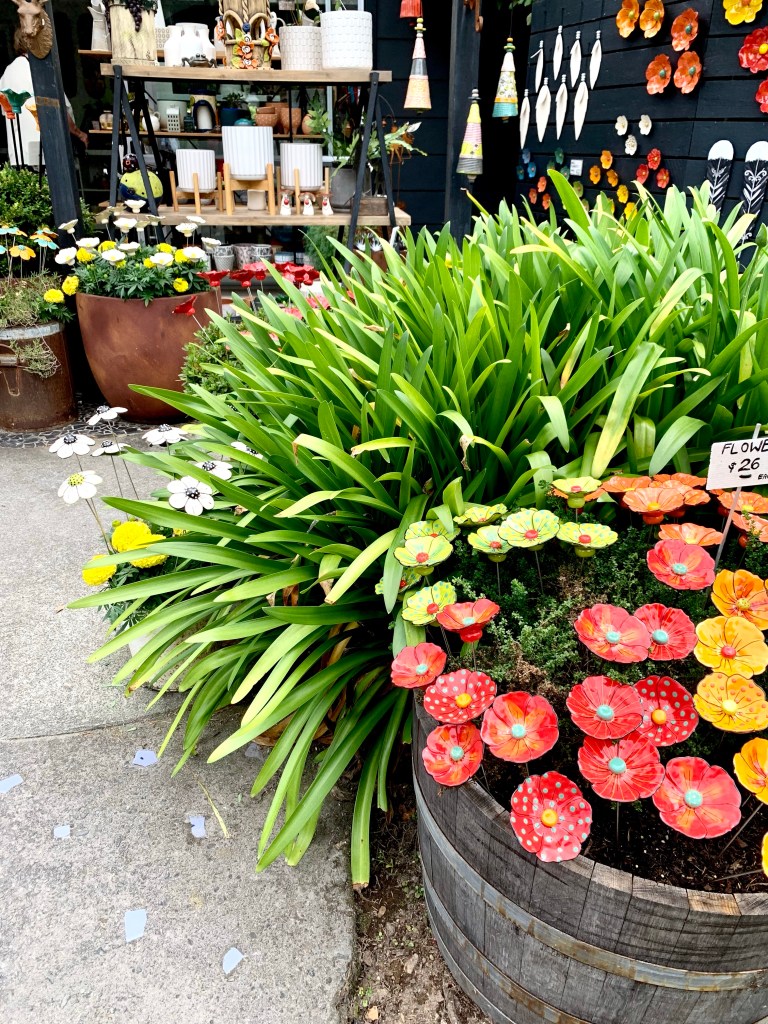
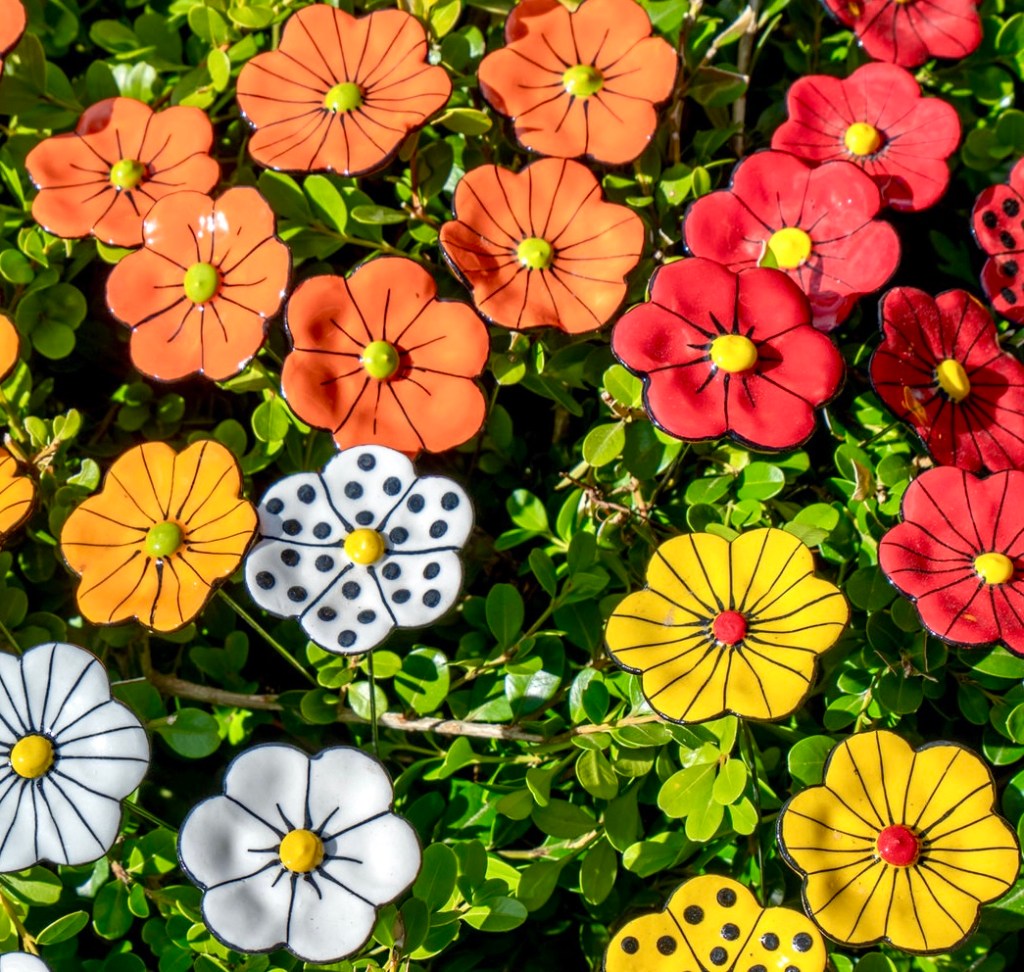
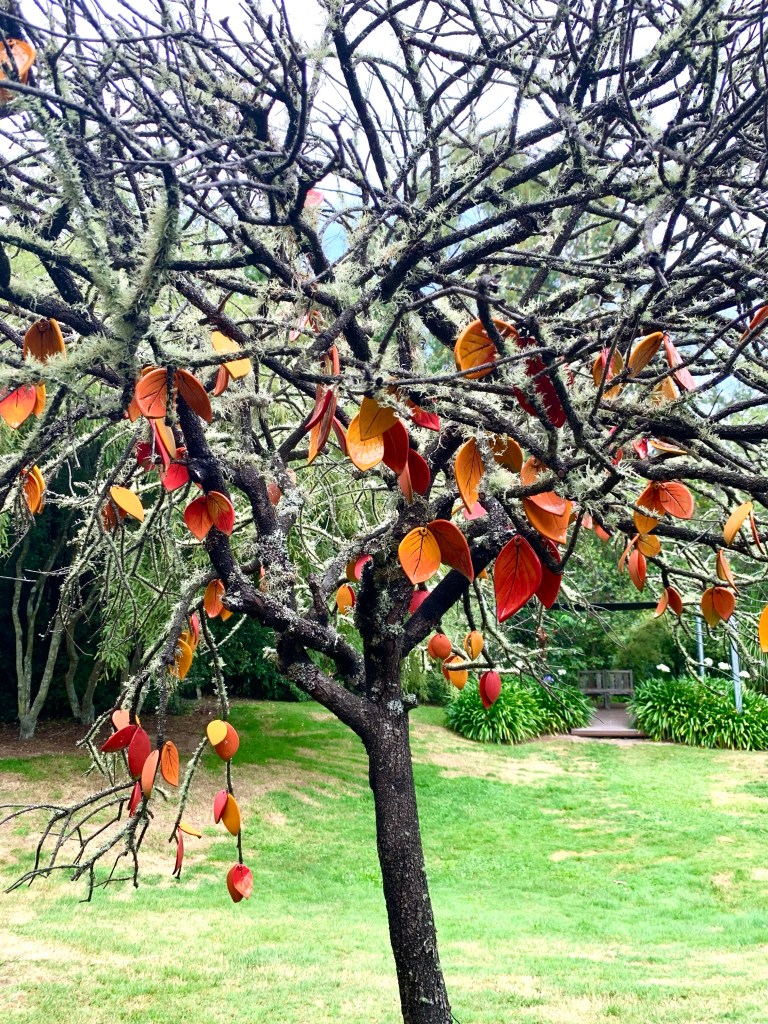
There is plenty to see at L’Arté Café, which comprises well established gardens intersected by meandering pathways; various pieces of art interspersed throughout the garden; a large scale outdoor mosaic living room; a gallery and a shop; a pottery studio and a last but not least, a café serving delicious food.
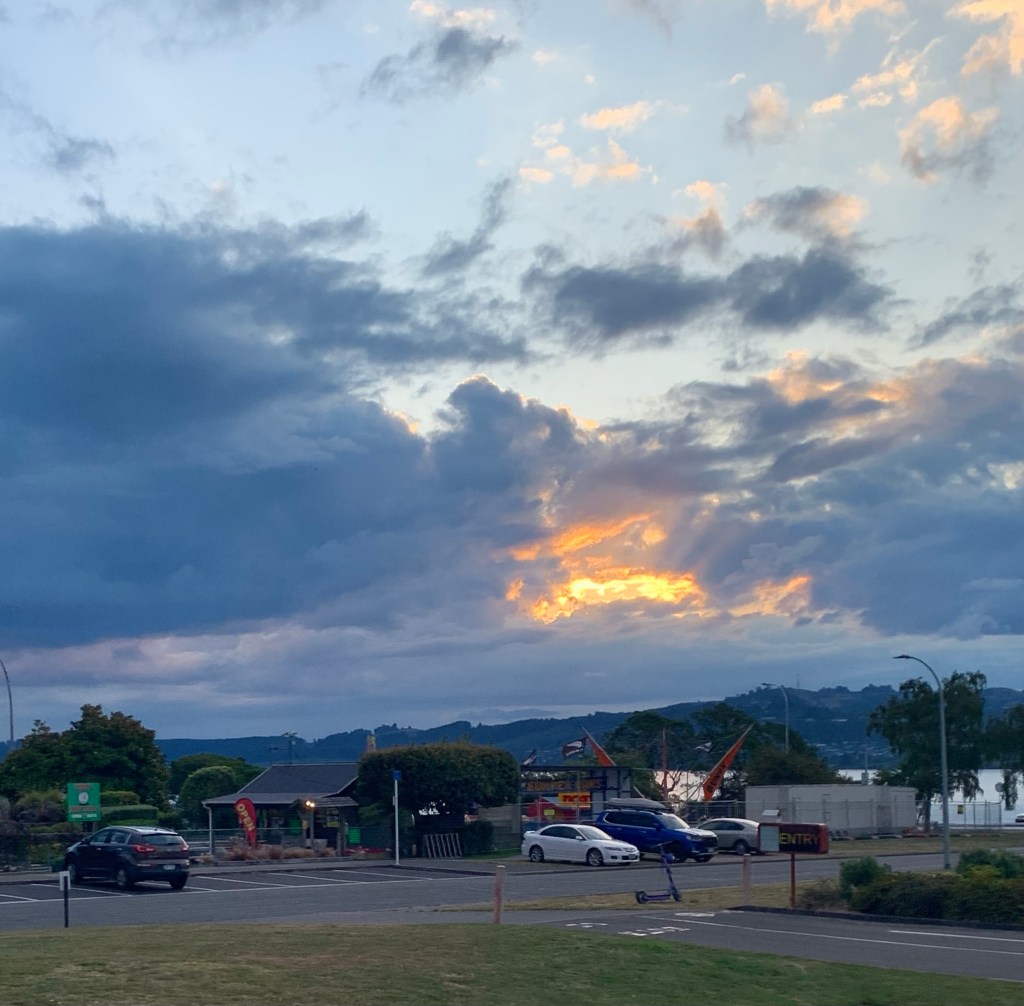
We had a lovely day and finished it off with a good dinner out together. Out last day in Taupō this trip ended with a beautiful sunset over Lake Taupō.
Families are like branches on a tree. We grow in different directions yet our roots remain as one.





 Unhitched